



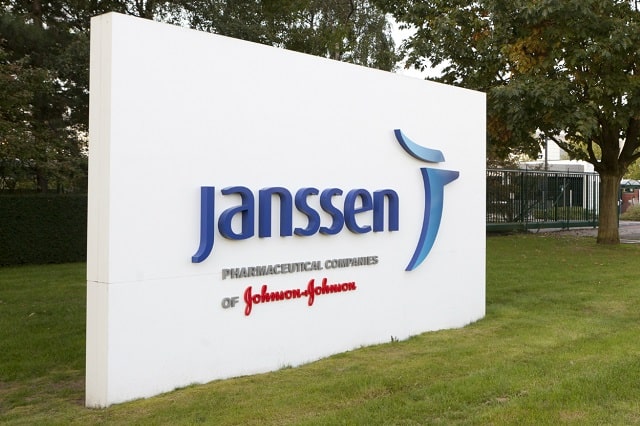
The Janssen Pharmaceutical Companies of Johnson & Johnson has announced new data from a phase 1b/2 study, supporting the safety and efficacy of the combination treatment of Rybrevant (amivantamab-vmjw) and lazertinib for patients with non-small cell lung cancer (NSCLC) and epidermal growth factor receptor (EGFR) mutations.
The phase 1b/2 CHRYSALIS-2 study is an ongoing clinical trial evaluating Rybrevant in combination with lazertinib, a third-generation EGFR tyrosine kinase inhibitor (TKI), in patients with advanced NSCLC with EGFR exon 19 deletion mutations or L858R activating mutations.
The combination of Rybrevant, lazertinib and platinum-based chemotherapy (carboplatin and pemetrexed) was evaluated in one cohort of the study. After a median follow-up of 7.1 months, the combination therapy yielded an overall response rate of 50%, with 15 out of 20 patients remaining on the treatment. No new safety signals were observed.
Lung cancer is one of the most common cancers worldwide, with NSCLC making up 80-85% of all lung cancers. Among the most common driver mutations in NSCLC are alterations in EGFR, a receptor tyrosine kinase supporting cell growth and division. The five-year survival rate for all people with metastatic NSCLC and EGFR mutations treated with EGFR TKIs is less than 20%.
Rybrevant was granted accelerated approval by the US Food and Drug Administration (FDA) in May 2021 for the treatment of adult patients with locally advanced or metastatic NSCLC with EGFR exon 20 insertion mutations, as detected by an FDA-approved test, whose disease has progressed on or after platinum-based chemotherapy.
Alexander Spira, Fellow of the American College of Physicians, chief executive officer and clinical director of NEXT Oncology Virginia and study investigator, said: “Patients with relapsed/refractory NSCLC with EGFR mutations currently have few treatment options. For them, the promise of precision medicine has the potential to change the trajectory of their disease.
“The data we’ve seen with the combination of [Rybrevant] with lazertinib and chemotherapy further demonstrates the potential of this treatment regimen for these patients, and we are optimistic about future study to improve outcomes for those with EGFR-positive NSCLC.”
These findings and additional updates, including data on Rybrevant in combination with lazertinib in the frontline setting for patients with NSCLC will be presented at the International Association for the Study of Lung Cancer (IASLC) 2022 World Conference on Lung Cancer in Vienna, Austria, in August.