



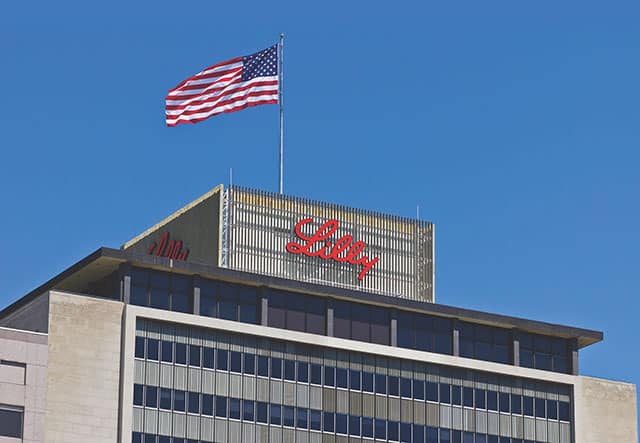
Eli Lilly has shared positive top-line results from a late-stage study of its once-weekly GIP/GLP-1 receptor agonist, tirzepatide, in adults with heart failure with preserved ejection fraction (HFpEF) and obesity.
HFpEF accounts for nearly half of all heart failure cases and almost 60% of those affected in the US also live with obesity.
The condition, which occurs when the heart’s left pumping chamber becomes stiff and unable to fill properly, is associated with physical limitations including fatigue, shortness of breath and a reduced ability to exercise.
Lilly’s tirzepatide, administered as a subcutaneous injection, already holds approvals for weight management and to treat type 2 diabetes.
The phase 3 SUMMIT trial randomised more than 730 HFpEF patients with obesity, with and without type 2 diabetes, to receive one of three tirzepatide doses or placebo.
Tirzepatide demonstrated a 38% reduction in the risk of heart failure outcomes, such as hospitalisation and cardiovascular death, compared to placebo.
The drug also showed statistically significant benefits in the second primary endpoint of improvements in heart failure symptoms and physical limitations, as measured by the Kansas City Cardiomyopathy Questionnaire clinical summary score, compared with placebo.
All key secondary endpoints were met, including improvement in exercise capacity as measured by six-minute walk-test distance and mean body weight reduction from baseline at 52 weeks.
Jeff Emmick, senior vice president, product development, Lilly, said: “Previous incretin studies in this population focused on symptoms and physical limitations. In a first-of-its-kind trial, tirzepatide reduced severity of symptoms and improved heart failure outcomes in people with HFpEF and obesity.”
Lilly said it will continue to evaluate the SUMMIT results and plans to submit them to the US Food and Drug Administration and other regulatory agencies starting later this year.
The data comes less than two months after tirzepatide showed promise as a treatment for the fatty liver disease metabolic dysfunction-associated steatohepatitis (MASH).
Detailed results from the mid-stage SYNERGY-NASH trial, which has been evaluating the investigational use of the drug in 190 adults with biopsy-proven MASH and stage 2 or 3 fibrosis, showed that 51.8%, 62.8% and 73.3% of patients taking 5mg, 10mg and 15mg doses of tirzepatide, respectively, achieved an absence of MASH with no worsening of fibrosis on liver histology compared to 13.2% of those in the placebo cohort at 52 weeks.