




Is our health at risk by delaying Dr appointments?
June 7, 2019 | awareness, cervical cancer
It’s Cervical Screening Awareness week 10-16 June, so now is the perfect time to check when your last appointment was.

It is Cervical Screening Awareness Week from 10-16 June #cervicalcancer, so now is the ideal time to start thinking about cervical screening (a smear test), and when your last appointment was. It’s an easy thing to put off; it’s not exactly something that one looks forward to. Not like like a champagne lunch with a best pal or a spa appointment. It’s uncomfortable, some might say painful, and embarrassing lying there, while a near stranger examines your inner self, followed by a worrying few weeks waiting for the results. So, life gets in the way and you put it off… you’ll do it when you get back from holiday.
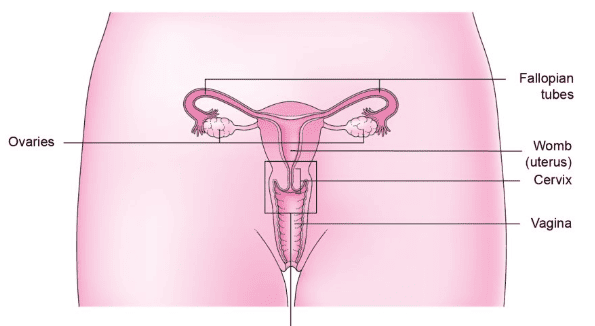
Nevertheless, a smear test is one of the most crucial appointments we can make, as it is our best chance of protection against developing cervical cancer through detection of cell abnormalities. Caught early, abnormal cells can be treated easily and very successfully.
The reality is, at least in my experience, the appointment takes around 5 minutes. It isn’t painful, just a few seconds of mild discomfort, and the nurse is not in the slightest bit bothered by your pant-free environment. She’s seen a million human bodies, at all stages of life, varying levels of undress, and so to her, you are unremarkable. I can relate to this in a very small way, in that many years ago I qualified as a massage therapist and by the time I took the exam, I was so focused on muscle groups and lactic acid, I had become totally de-sensitised to the all but naked form lying before me and could massage any body part in a fairly detached manner.
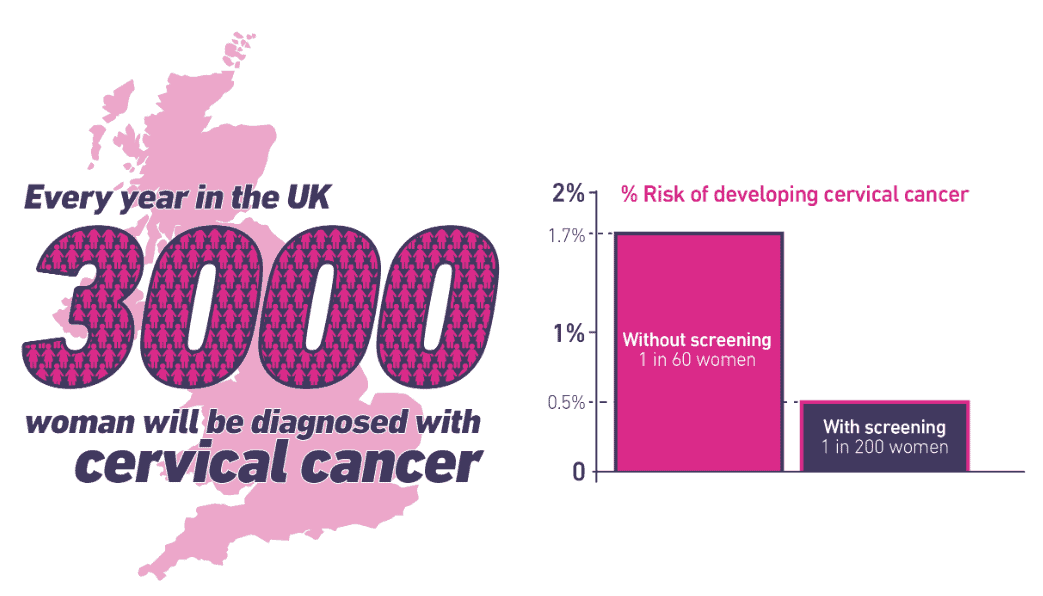
Statistics indicate that the risk of developing cervical cancer without screening is 1 in 60, but with screening, the risk reduces to 1 in 200. Screening is a vital service, and one that saves 5,000 lives per year in the UK.1 If you are aged between 25 to 49, you should have a test every 3 years. If you are aged between 50 to 64, it’s every 5 years.
It is now widely accepted that the main cause of cervical cancer globally is from the virus infection human papillomavirus (HPV), which is found in about 99% of cervical cancers. HPV is extremely common, with 4 in 5 (80%) sexually active adults contracting it at some point in their life. Cervical cells are most likely to become abnormal if there is a persistent HPV infection, but the body’s own immune system will usually clear the virus without the need for treatment. Not all HPV infections lead to abnormal cells; out of over 100 types of HPV, only a few are high risk (HPV 16 and HPV 18). Therefore, it is now common practice for doctors’ surgeries to test patients for HPV first, before conducting a smear test.2
It is understood that another contributory factor for the development of cervical cancer is smoking cigarettes. The chemicals found in tobacco can damage the DNA of cervical cells, weakening the immune system around the cells of the cervix, making it harder to both prevent and clear HPV infections. Therefore, cutting down on smoking could help to reduce the risk of developing cervical cancer.3
The symptoms of cervical cancer can include:
- Abnormal bleeding during or after sexual intercourse, or between menstruation
- Discomfort or pain during sexual intercourse
- Post-menopausal bleeding (if you are not on HRT)
- Unusual vaginal discharge
- Lower back pain4
So, if you are wondering when your last smear test or HPV test was, or are worried about any of the above symptoms, call your GP and book an appointment without delay.
For more information, or if you wish to make a charity donation, click on the link.
References:
1-4 “Cervical Screening Awareness Week”, Jo’s Cervical Cancer Trust, 6/6/2019, https://www.jostrust.org.uk/about-cervical-cancer
Author: Michelle Burt
This content was provided by Page & Page Health
Company Details

Latest Content from Page & Page Health
The secret nobody told you about how to go viral
How to create content people actually want to read and share online
Cultivating authenticity in healthcare communications: breaking through the conventional shackles
The ever-evolving landscape of healthcare communication is shifting. Hear eight strategies to enhance authenticity in healthcare communications.
AI in healthcare communication, today and tomorrow.
Advances in AI technology have meant that agencies can now provide genuine utility to healthcare communications.
Empowering Employees: Unleashing Potential for a Bright Future
We believe that true empowerment is not just giving a person a voice, but the freedom and ability to act.
Whitepaper: Closing the gap with compelling healthcare communications
Want to learn how to close the distance between a person’s current health and their healthiest possible self?
ChatGPT AI copywriter: Looming threat or opportunity to evolve?
Even as someone who makes a living working in healthcare communications, I can still spend many hours copywriting without much progress – it is the nature of the beast [come…
You’re sitting on a time bomb, so think harder and give more!
A new philosophy for a new age?
Can Artificial Intelligence Solve the Healthcare Crisis?
Healthcare systems around the world are already struggling to meet the demands of an ageing population, the rising incidence of chronic diseases, escalating healthcare costs and a deficit of healthcare…
What constitutes a great creative brief?
We asked, you answered, and the results are in… what really does go into a great creative brief?