



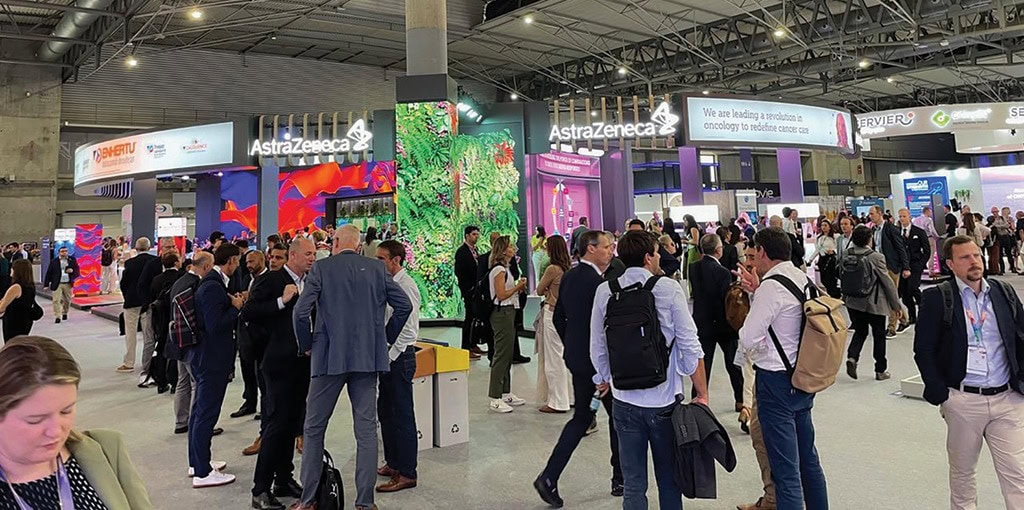
We are witnessing an important shift in cancer communications. ESMO’s flagship annual congress has just taken place in Barcelona, once again laying down new markers of hope for the future of oncology.
The meeting provided the usual mix of breakthrough science, landmark data and the promise of better outcomes in a range of cancers. But, aside from the science, the most interesting trend from a marketing perspective was the clear change of emphasis in the language of cancer, with companies across the space reframing the narrative to focus on ‘living’ rather than just ‘surviving’. It feels like a milestone moment for marketing that, alongside advances in therapeutic innovation, could help change the trajectory of cancer care everywhere.
The evolution of cancer communications was just one of many key take-homes from ESMO 2024. Here are our top picks, starting, of course, with the science.
1. IO is leading the charge
Immuno-oncology (IO) continues to redefine the treatment landscape, with novel agents increasingly being brought into new disease areas with high unmet need.
Studies presented at ESMO underlined their value, either as monotherapies or in combination in the peri-surgery setting, significantly improving outcomes as both neoadjuvant and adjuvant therapies.
For example, in early-stage triple-negative breast cancer, data from the KEYNOTE-522 study showed that neoadjuvant IO plus chemotherapy, followed by adjuvant IO monotherapy, significantly prolongs overall survival in this difficult-to-treat subtype. In anal cancer – a disease usually diagnosed in the advanced stages where rates of relapse from chemoradiotherapy are high – the combination of an immune checkpoint inhibitor and standard-of-care chemo is associated with encouraging gains in progression-free and overall survival. And in muscle-invasive bladder cancer, the addition of an immunotherapy-based treatment alongside neoadjuvant chemotherapy shows potential for ‘practice changing’ improvements in event-free and overall survival.
In fact, throughout the Congress, studies showed IOs improving long-term survival in a variety of cancers, including small-cell lung cancer and stage 3 melanoma.
Citing advances in the latter, ESMO Scientific Chair, Dr Rebecca Dent, said the arrival of immune checkpoint inhibitors and combination therapies has “dramatically changed the situation for melanoma patients”, with ten-year survival outcomes as an outstanding result. However, she said that clinicians need to understand what happens to these patients over time in order to better determine which patients are most suitable for IOs based on the expected benefits. This challenge translates to novel treatments across all cancer types.
Read the article in full here.