




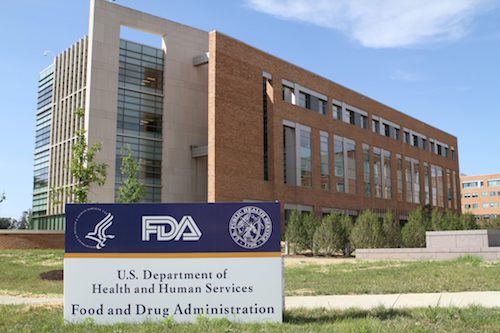
Ahead of the meeting of its advisory board this week, an analysis by the Food and Drug Administration (FDA) says the benefits of the Pfizer/BioNTech vaccine, Comirnaty, outweigh the risks of side effects including myocarditis in children aged 5-11 years.
While stating that the benefit of the vaccine was ‘highly dependent’ on the incidence of COVID-19, the impact numbers of clinically significant COVID-19 related outcomes that were prevented ‘clearly outweighed’ the number of myocarditis cases. It added that this may still be the case where incidence of the virus was very low.
The analysis will be presented to the FDA’s Vaccines and Related Biological Products advisory committee on Tuesday 26 October.
Pfizer/BioNTech’s own analysis agrees with the favourable risk-benefit analysis, stating that Comirnaty was 90.7% effective in the 5 to <12 age group.
“COVID-19 is a serious and potentially fatal or life-threatening infection for children,” said the companies, citing a significant rise in paediatric cases of COVID-19 since the widespread dissemination of the delta variant. “Although the mortality rate for COVID-19 in children is substantially lower than that in adults, COVID-19 was among the top 10 leading causes of death for children 5 to 14 years of age between January and May 2021 in the US.”
CDC data shows that there have been approximately 1.8 million COVID-19 cases in children – including 143 deaths – in 2021 so far. Approximately one-third of the children who were hospitalised with COVID-19 did not have any underlying comorbidities.
Pfizer/BioNTech’s submission to the advisory committee is based on data from its phase 1/2/3 trial of 4,500 children aged 6 months to 11 years of age in the US, Finland, Poland and Spain. The trial was designed to evaluate the safety, tolerability and immunogenicity of the Pfizer/BioNTech vaccine on a two-dose schedule given 21 days apart in three age groups (5-11 years, 2-5 years and 6 months to 2 years).
Children aged 5-11 years received a two-dose regimen of 10 µg administered 21 days apart, a smaller dose than the 30 µg dose used for people 12 and older. The data showed “a favourable safety profile and robust neutralising antibody responses”, said the company.
Last week, the European Medicines Agency announced that it had started to evaluate an extension for the use of Comirnaty to children aged 5 to 11.