



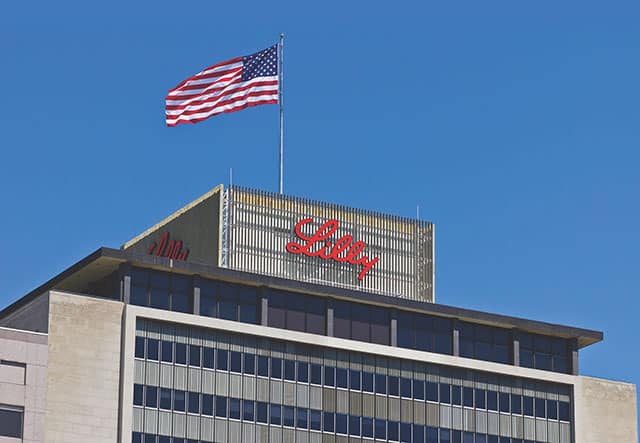
Eli Lilly has agreed to pay Radionetics Oncology $140m upfront to partner on the biotech’s G protein-coupled receptor (GPCR)-targeting small-molecule radiopharmaceuticals.
The strategic agreement also gives Lilly the exclusive right to acquire Radionetics for $1bn.
Radiopharmaceuticals are a class of precision oncology medicines that can selectively deliver the power of radiation directly to tumours throughout the body.
Radionetics is working on small-molecule drugs that target GPCRs, which the company has described as an “expansive and largely unexplored target space for radiopharmaceuticals”.
“Given GPCR overexpression in many tumours, they can be targeted in a vast range of cancer indications, from common to rare tumours,” it said.
Jacob Van Naarden, executive vice president and president, Lilly Oncology, said: “Furthering our commitment to radiopharmaceutical therapies, this relationship provides access to novel GPCR targets and the discovery capabilities of Radionetics Oncology.”
“Our platform uniquely pairs the power of radiopharmaceuticals with the precision of small-molecule targeting to novel GPCRs,” explained Radionetics’ chief operating officer, Brett Ewald.
Ewald added that the company has a specialised team focused on “rapidly advancing each of [its] promising programmes” to bring the therapies to patients.
The agreement comes just over six months after Lilly completed its previously announced $1.4bn acquisition of Point Biopharma, which gave the company access to a pipeline of clinical and preclinical-stage radioligand therapies being developed to treat cancer.
At the time of the acquisition announcement in October, Point had two lead programmes in late-stage development, including a prostate-specific membrane antigen-targeted radioligand therapy, PNT2002, being developed for patients with metastatic castration-resistant prostate cancer who have experienced disease progression after hormonal therapy.
Van Naarden, said: “We are excited by the potential of this emerging modality and see the acquisition of Point as the beginning of our investment in developing multiple meaningful radioligand medicines for hard-to-treat cancers, as we have done in small molecule and biologic oncology drug discovery and development.”
Lilly also entered into a strategic multi-target discovery collaboration agreement with Aktis Oncology in May to develop novel anticancer radiopharmaceuticals.
Under the collaboration, worth over $1bn, the companies are using Aktis’ proprietary miniprotein discovery platform to generate therapeutics for a variety of solid tumours.