



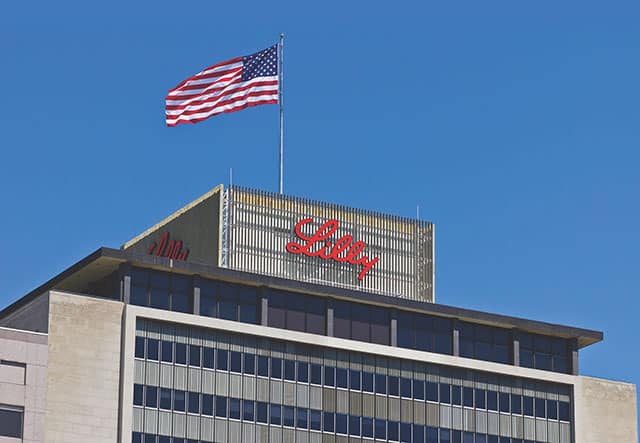
Eli Lilly and OpenAI have entered into a collaboration aimed at discovering new medicines to treat drug-resistant pathogens.
Though financial details of the partnership have not been disclosed, Lilly said it will gain access to OpenAI’s generative artificial intelligence (AI) to invent antimicrobials.
Designated by the World Health Organization (WHO) as one of the top ten global public health threats, antimicrobial resistance (AMR) occurs when bacteria, viruses, fungi and parasites change over time and find ways to resist the effects of antimicrobial drugs. As a result, infections become harder to treat and the risk of serious complications and death increases.
Diogo Rau, executive vice president and chief information and digital officer at Lilly, said the collaboration represents a “groundbreaking step forward in the fight against the growing but overlooked threat of AMR”.
“Generative AI opens a new opportunity to accelerate the discovery of novel antimicrobials and the development of custom, purpose-built technologies in the battle against drug-resistant pathogens,” he said.
Although AMR occurs naturally, inappropriate and excessive use of antimicrobials can accelerate the process, and national surveillance data announced by the UK government in November last year demonstrated an increase in antibiotic-resistant infections and associated deaths in England.
Brad Lightcap, chief operating officer at OpenAI, said: “We’re excited to work with Lilly to find new ways to treat microbial infections.
“Advanced AI has the potential to deliver innovative breakthroughs in pharma, and we’re committed to working together with industry leaders to deliver tangible benefits for patients.”
The collaboration comes just a few weeks after Lilly entered into an exclusive licence agreement worth over $620m to gain rights to QurAlis’ investigational precision therapy for neurodegenerative diseases. The company also recently partnered with Aktis Oncology in a deal worth more than $1bn to develop novel anticancer radiopharmaceuticals.
OpenAI has made a number of agreements this year, including its collaboration with Sanofi and Formation Bio, aimed at accelerating drug development and bringing new medicines to patients more efficiently. The partnership, announced last month, will see the three teams bring together data, software and tuned models to develop custom, purpose-built solutions across the drug development lifecycle.