



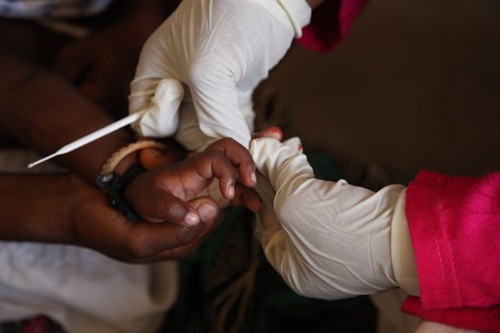
A health care worker tests a child for malaria, (c) GSK
GlaxoSmithKline’s experimental malaria vaccine has shown ‘modest’ efficacy when tested in infants aged six to 12 weeks, but was less effective than in earlier studies of older children.
The vaccine – known as RTS,S – reduced clinical malaria episodes by 31 per cent and severe cases by 37 per cent in the younger age group, according to new data from GSK’s phase III trial reported in the New England Journal of Medicine.
The investigators published a study in the NEJM a year ago which found GSK’s vaccine cut clinical and severe episodes by 55 per cent and 47 per cent, respectively.
One of the trial’s principal investigators, Salim Abdulla of the Ifakara Health Institute in Tanzania, said the finding was something of a surprise, but added that the researchers will “gather and analyse more data from the trial to determine what factors might influence efficacy against malaria and to better understand the potential of RTS,S”.
The investigators suggest that the most likely explanation for the disparity in the results is an “age-dependent differential immune response to the vaccine”, which could have been related to the co-administration of other vaccinations in this age group.
The implications of the lower efficacy in infants are hard to gauge without additional studies, and the researchers note that follow-up analyses from this trial will help them explore other factors which could impact the vaccination, such as malaria exposure and immune responses.
GSK chief executive Andrew Witty said the results were “frustrating”, but added he believed that RTS,S “has a role to play in tackling malaria”.
In Africa more than 80,000 people, predominantly children under five, are killed by malaria each year, and as yet there is no vaccine available to protect against the disease.
RTS,S is being developed by GSK and the PATH Malaria Vaccine Initiative (MVI), alongside African research centres, with funding support from the Bill & Melinda Gates Foundation, and the project has been funded to the tune of around $500m to date.