



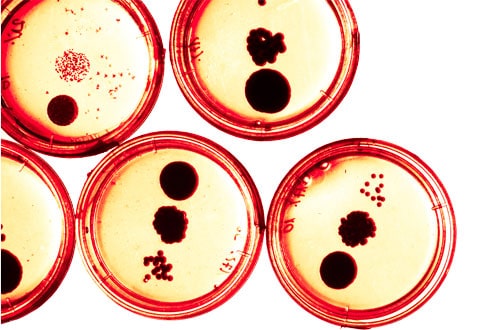
Researchers from King’s College London’s (KCL) department of chemistry have developed a new method that could speed up the discovery of antibiotics in the fight against antimicrobial resistance (AMR).
Published in the Journal of the American Chemical Society, researchers created a new, rapid method for making cyclic peptides, an important class of antibiotic molecules, within minutes.
Designated as one of the top ten global public health threats facing humanity by the World Health Organization (WHO), AMR occurs when bacteria, fungi and parasites change and adapt to antibiotics over time.
Due to the complexity of antibiotics’ molecular structure, modifying or designing them is challenging. In particular, cyclic peptides, strings of amino acids joined together in a circle, are difficult to replicate in labs.
In some cases, due to the over-reliance on the same antibiotic products, the fungi and bacteria that are fermented to produce antibiotics become more resistant, ultimately contributing to AMR.
Researchers produced a cyclic peptide that shows promising activity against Mycobacterium tuberculosis, the bacteria that causes tuberculosis (TB) and encoded a sequence of amino acids to develop synthetic peptides. In doing so, this enabled their peptides to close into cycles quickly.
Responsible for 1.3 million deaths in 2022, according to WHO, TB is an infectious disease that spreads through the air when people sneeze, cough or spit and that often affects the lungs.
The team believes that this simple approach could be used to develop modified versions of the molecules used in antimicrobials to develop new antibiotics.
In addition, researchers have tested the approach on a range of other peptides, potentially leading to cyclic peptide discovery for a range of therapeutic needs, including anti-cancer agents.
Dr Sarah Barry, senior lecturer, chemical biology, KCL, commented: “We urgently need to invest in antibiotic development and we hope that breakthroughs like our new method at KCL can inspire renewed efforts towards this goal.”
Dr Yaoyu Ding, research assistant, KCL, said: “We have made a key part of the chemistry involved in making these molecules far easier and quicker [and]… hope that… [it] will enable researchers to make libraries of derivates to enable screening for new antimicrobials.”