




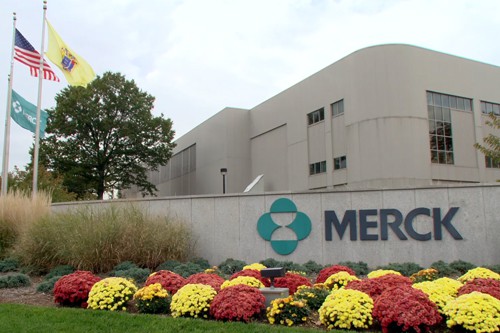
Merck & Co – known as MSD outside the US and Canada – has announced that Keytruda (pembrolizumab) has been approved by the US Food and Drug Administration (FDA) for a new subset of cervical cancer patients.
The anti-PD-1 can now be used alongside chemoradiotherapy to treat newly-diagnosed patients with stage 3 to 4a disease, according to the FIGO scale.
The FDA’s decision was supported by positive results from the late-stage KEYNOTE-A18 trial, in which the combination reduced the risk of disease progression or death in this patient population by 41% compared to placebo plus chemoradiotherapy.
Despite cervical cancer being on the decline in the US thanks to screening and prevention programmes, the disease is the fourth most common cancer in women globally, according to the World Health Organization.
Merck’s Keytruda works by enhancing the ability of the body’s immune system to help detect and fight tumour cells.
The FDA’s decision marks the third approved indication for Keytruda in cervical cancer and the 39th indication for the therapy in the US, Merck said.
Dr Gursel Aktan, vice president, global clinical development, Merck Research Laboratories, said: “Building on the established role of Keytruda in advanced cervical cancer, Keytruda plus chemoradiotherapy is now the first anti-PD-1-based regimen approved in the US for the treatment of patients with FIGO 2014 stage 3 to 4a cervical cancer regardless of PD-L1 expression.
“This approval provides newly diagnosed patients with an anti-PD-1-based treatment option that has the potential to reduce the risk of disease progression or death compared to chemoradiotherapy alone.”
Beyond cervical cancer, Keytruda holds approvals to treat a wide variety of cancers, including specific cases of bladder cancer, melanoma and Hodgkin’s lymphoma.
In November, the therapy was approved in the US as part of a combination treatment for a group of gastric cancer patients.
Keytruda can now be used alongside fluoropyrimidine- and platinum-containing chemotherapy for the first-line treatment of adults with locally advanced unresectable or metastatic HER2-negative gastric or gastroesophageal junction adenocarcinoma.
The month prior, the therapy was approved in the US as part of a combination treatment for patients with earlier stages of lung cancer.