


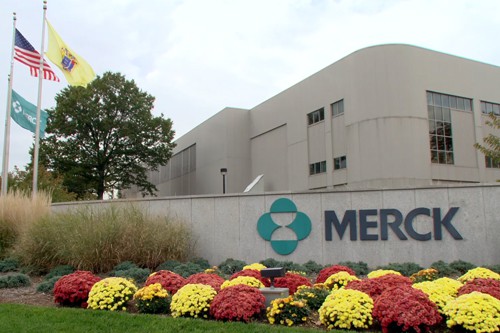
Merck & Co – known as MSD outside the US and Canada – has announced that the US Food and Drug Administration (FDA) has approved its anti-PD-1 therapy Keytruda (pembrolizumab) to treat earlier stages of lung cancer.
The decision, which specifically applies to patients with resectable non-small cell lung cancer (NSCLC), means that Keytruda can now be used in combination with platinum-containing chemotherapy as a neoadjuvant therapy to prepare patients for the surgical removal of their tumour and then as a single agent as an adjuvant treatment after surgery.
Lung cancer is the second most common type of cancer and NSCLC accounts for approximately 81% of all lung cancer cases.
Merck outlined that the approval marks the sixth NSCLC indication for Keytruda, which works by increasing the ability of the body’s immune system to help detect and fight tumour cells.
The FDA’s latest approval was supported by data from the late-stage KEYNOTE-671 trial, in which the Keytruda regimen demonstrated statistically significant improvements in the dual primary endpoints of event-free survival and overall survival versus neoadjuvant placebo plus chemotherapy followed by adjuvant placebo alone.
Dr Marjorie Green, senior vice president and head of late-stage oncology, global clinical development at Merck Research Laboratories, said: “Keytruda continues to change the way NSCLC is treated across earlier and metastatic disease regardless of PD-L1 expression.
“This approval marks a pivotal moment for the lung cancer community by providing certain patients with earlier stages of NSCLC and healthcare providers with an important new treatment option.”
Beyond lung cancer, Keytruda holds approvals to treat a wide variety of cancers, including specific cases of bladder cancer, melanoma and Hodgkin’s lymphoma.
There are also currently more than 1,600 trials studying the therapy, including one evaluating it in combination with Merck and Moderna’s investigational skin cancer vaccine.
The partners announced at the end of July that the combination had entered late-stage development after being shown in a mid-stage study to cut the risk of recurrence or death of melanoma by 44% compared to Keytruda alone.
The primary endpoint of the trial is recurrence-free survival, with overall survival and metastasis-free survival as secondary endpoints.