



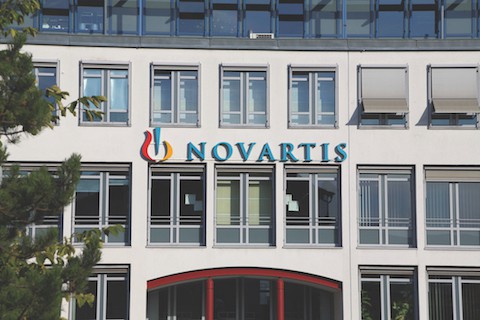
Novartis’ Kisqali (ribociclib) has been recommended by the European Medicines Agency’s human medicines committee to reduce the risk of recurrence in early breast cancer patients.
The Committee for Medicinal Products for Human Use (CHMP) has recommended that the drug be used in combination with an aromatase inhibitor as an adjuvant treatment for adults with hormone receptor (HR)-positive/human epidermal growth factor receptor 2 (HER2)-negative early breast cancer at high risk of recurrence, including those with node-negative disease.
The CHMP’s recommendation comes just one month after the US Food and Drug Administration approved Kisqali in this setting and was supported by positive results from the late-stage NATALEE trial.
Adjuvant Kisqali plus endocrine therapy reduced the risk of cancer recurrence by 25.1% compared to endocrine therapy alone in patients with HR-positive/HER2-negative stage 2 and 3 early breast cancer, and demonstrated a consistent, clinically meaningful invasive disease-free survival (iDFS) benefit across key pre-specified subgroups.
Data from an updated analysis of the trial, presented at this year’s European Society for Medical Oncology Congress, also showed a deepening iDFS benefit beyond the three-year treatment period in all patient subgroups.
Breast cancer is the most commonly diagnosed cancer in Europe and HR-positive/HER2-negative disease accounts for approximately 70% of all cases.
Already approved in the EU for certain cases of advanced or metastatic breast cancer, Kisqali is designed to inhibit the CDK4/6 proteins which, when over-activated, can enable cancer cells to grow and divide too quickly.
The European Commission will now consider the CHMP’s recommendation as it makes a final decision on Kisqali in this indication, expected within approximately two months.
Patrick Horber, president, international at Novartis, said: “Today, many people diagnosed with HR-positive/HER2-negative early breast cancer in Europe lack options beyond endocrine therapy to help reduce their risk of cancer coming back. If approved, Kisqali could nearly double the number of patients eligible for CDK4/6 inhibitor adjuvant therapy.”
The company outlined that regulatory reviews for Kisqali as an early breast cancer treatment are ongoing globally.