



Researchers from the University of Oxford’s Oxford Martin Programme on Antimicrobial Resistance Testing have revealed that artificial intelligence (AI)-based testing can detect antibiotic resistance faster than gold-standard testing.
Published in Communications Biology, a combination of fluorescence microscopy and AI was successful in detecting antimicrobial resistance (AMR).
Designated as one of the top ten global public health threats facing humanity by the World Health Organization (WHO), AMR occurs when bacteria, fungi and parasites evolve and adapt to antibiotics over time.
According to the Global Research on Antimicrobial Resistance project, AMR was responsible for around 1.3 million deaths in 2019.
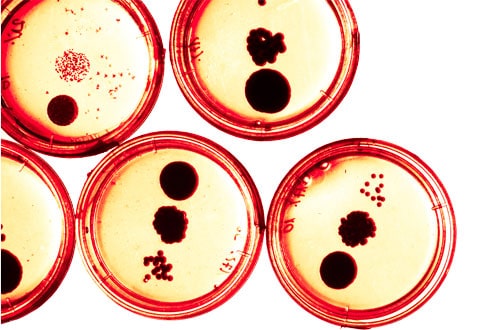
Currently, the gold-standard testing for AMR relies on growing bacterial colonies in the presence of antibiotics, a process that can take up to several days to understand how resistant certain bacteria are to antibiotics.
The Oxford team’s method tested a range of E. coli clinical isolates with a trained deep-learning model to analyse bacterial cell images and detect structural changes that could occur in cells when treated with antibiotics.
Detecting AMR at least ten times faster than the current clinical methods, the method was effective across multiple antibiotics, with at least 80% accuracy on a per-cell basis, within 30 minutes.
The team has suggested that their model could be used to distinguish whether cells in clinical samples are resistant to a large variety of antibiotics in the future.
Upon further investigation, researchers hope to develop their method to become faster and more scalable for clinical use, decrease treatment times, minimise side effects, and adapt its potential use for different forms of bacteria and antibiotics to slow down the rise of AMR.
Dr Piers Turner, postdoctoral researcher, Oxford Martin Programme on AMR Testing, said: “This innovation may hold the potential to revolutionise the way we respond to infectious diseases, allowing for more precise and timely treatment decisions, ultimately saving lives.”
The study was published to mark World Antimicrobial Awareness Week (18 to 24 November 2023), which has focused on the theme “Preventing Antimicrobial Resistance Together”, combining leaders and communities across several sectors to fight resistance and improve antimicrobial use in humans around the world.