



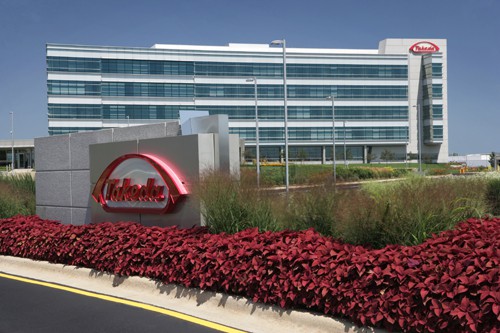
Takeda and Kumquat Biosciences have entered into a collaboration agreement worth over $1.2bn to advance an oral immune-oncology drug candidate.
The deal gives Takeda an exclusive global licence to develop and commercialise the selected small molecule inhibitor as a monotherapy, combination therapy or both.
Subject to Kumquat’s option, Takeda will assume and fund all development and commercialisation activities following the early-stage trial activities headed by Kumquat.
In exchange, Kumquat will receive up to $130m in near-term payments and will also be eligible for more than $1.2bn if all future clinical, regulatory and commercial milestones are achieved during the term of the agreement, as well as tiered royalties on potential net sales.
Phuong Khanh Morrow, head of the oncology therapeutic area unit at Takeda, said: “This collaboration aligns with our mission to advance a cutting-edge pipeline focused on maximising the benefit of the immune system to address the continued unmet needs of cancer patients.
“We look forward to working with Kumquat to accelerate the development of this exciting asset.”
Kumquat’s chief executive officer, Yi Liu, added: “We are proud of our persistent and innovative breakthrough, and we are thrilled to collaborate with Takeda, [which] shares our vision and strategy for realising the benefit of small molecule-based transformative immune-oncology treatments.
“This collaboration empowers this immune-oncology programme to advance to the clinic quickly and holds potential to benefit a broad population of cancer patients.”
The alliance comes less than three months after Takeda and Protagonist Therapeutics announced a worldwide licence and collaboration agreement worth over $300m to develop and commerc ialise an investigational injectable hepcidin mimetic peptide of the natural hormone hepcidin to treat the rare blood disorder polycythaemia vera.
The company also entered into a strategic collaboration and licence agreement with F-star Therapeutics in July focused on developing next-generation multi-specific immunotherapies for patients with cancer, with the deal potentially worth over $1bn.
The transaction marked the third deal between the two companies, with licence agreements for a first and second immune-oncology bispecific antibody announced in July 2022 and March 2023, respectively.