



From ‘why’ to ‘how’: patient partnership across age groups in research and publications
February 27, 2026 | Publications, patient engagement
By Sarah Mohamad
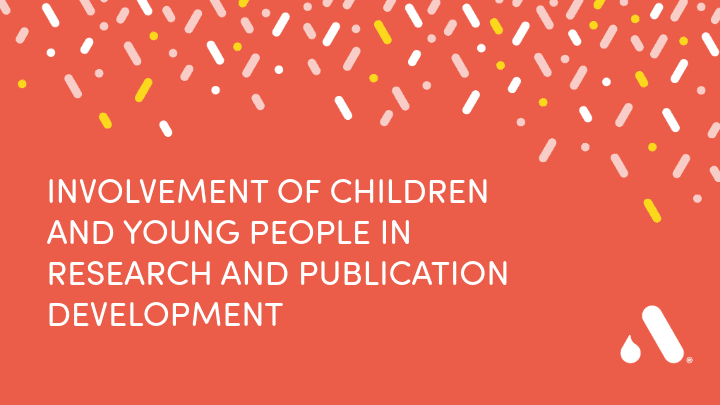
At ISMPP Europe this year, we shared a poster in collaboration with Ashifa Trivedi on involving children and young people in research and publication development (1). This sparked conversations about where patient engagement is going next and what that means for young people living with long-term conditions.
Our poster shared the process applied within an observational study exploring medicines use and decision-making among 11–16-year-olds transitioning from paediatric to adult care. Children and young people were involved across the full research and publication life cycle – from study design to manuscript development and co-authorship – using a structured approach designed by the study team* after finding limited practical guidance on how to do this meaningfully and ethically (1–3).
The focus here was specifically on children and young people, but the discussions at ISMPP made it clear that this level of patient involvement sits within a shift in patient engagement practice.
Has the patient engagement conversation moved from ‘why’ to ‘how’?
Involving children and young people across the full co-research and publication process remains relatively rare, but there was little debate about the real-world value that patient partnership brings.
Clinical development data help explain why:
- Early, structured patient involvement has been linked to fewer costly protocol amendments – each substantial amendment can cost around $535K and delay trials by over 60 days (4)
- Programmes embedding meaningful patient-centred elements can increase the likelihood of successful launch by around 20%, translating into projected asset value gains of up to $25 million (4)
- Engagement across the research life cycle is associated with improved alignment with real-world patient priorities, strengthening the relevance of research questions and outcomes (5)
Across our conversations, there was also clear recognition that lived experience is a form of expertise, so it makes sense that patients across all ages can contribute meaningful, decision-relevant perspectives. Our conversations with attendees reflected this interest in the ‘how’ via questions about practicalities, communication needs, compliance, journal feedback, scalability and measurable impact.
When does patient involvement actually shape decisions and outcomes?
If patient involvement is going to shape outcomes, it needs to happen early.
Embedding patient-centred elements early in development has been associated with positive trial outcomes in up to 87% of cases (4), as well as improved participant recruitment, experience, and reduction in costly delays (6–8).
Plain language summaries are often positioned as an example of good patient engagement practice. However, they should represent a minimum standard rather than the end goal of meaningful involvement. If patients are only involved at the late publication stage, they are unable to inform research priorities, endpoint selection, protocol design or research interpretation.
What changes when patients are children and young people?
When the research team began this work, there were limited practical examples of how to ethically and meaningfully involve children and young people across both research and publication development. So, a new process had to be designed.
That meant embedding:
- A research and authorship feasibility and suitability assessment
- Alignment with ICMJE (International Committee of Medical Journal Editors) and Good Publication Practice
- Researchers experienced in discussing complex health information with children and young people
- Age-appropriate communication and techniques to ensure understanding
- Structured frameworks for involvement across each stage of research and co-authorship, including consent considerations
- Parent and school involvement and logistical support
- A safe, supportive environment for participation
ISMPP attendees were curious about when children and young people were involved, informed consent and autonomy, alignment with publication best practices, feasibility in other settings, and where their involvement added unique value. Importantly, no one questioned whether they should have a voice in matters affecting their health.
Many of the people most engaged with our poster were already advocates, which may explain why the focus shifted quickly to ‘how’. Still, it feels important to keep both the ‘why’ and the ‘how’ in the conversation so that patient partnership is purposeful and our patient advocacy colleagues can build support.
What does this mean for paediatric research?
As patient partnership develops, pharmaceutical companies running paediatric studies have an opportunity to reconsider when and how they involve children and young people as lived-experience experts. Is that involvement early and sustained enough to meaningfully inform research prioritization, study design, outcome measures and interpretation?
The question is no longer whether children and young people can contribute meaningfully to research that affects their lives; the experience presented at ISMPP shows that they can. As the conversation shifts from ‘why’ to ‘how’, the priority now is ensuring this kind of partnership is planned early, is sustained throughout and becomes routine rather than exceptional.
*Sarah Mohamad: Amiculum, Bollington, UK; Independent researcher, London, UK
Ashifa Trivedi: The Hillingdon Hospitals NHS Foundation Trust, Uxbridge, UK; Evelina London Children’s Hospital, London, UK; Alder Hey Children’s Hospital, Liverpool, UK
Anne-Lise Goddings: London North West Healthcare NHS Trust, Greater London, UK; Imperial College London, London, UK
References
- Mohamad S, Trivedi A et al. Involvement of children and young people in research and publication development: learnings from a recent observational study. Poster presented at ISMPP Europe 22nd Annual Meeting. London, UK, 2026.
- Trivedi A, Mohamad S, Thoppil M et al. What do young voices tell us about medication needs during the transition to adult care? Arch Dis Child 2025;110:494–5. doi:10.1136/archdischild-2024-328085.
- Trivedi A, Mohamad S, Thoppil M et al. Medication needs of children and young people for successful transition to adult services (the SUCCESS study): an exploratory cross-sectional observational study. Eur J Hosp Pharm 2025. doi:10.1136/ejhpharm-2025-004528.
- Patient Focused Medicines Development (PFMD). The Business Case for Patient Engagement: A Financial and Operational Framework for Measuring the Return on Engagement. Investment, Sustainability and Impact Project, April 2025. Available at: https://patientengagement.synapseconnect.org/resources/the-business-case-for-patient-engagement.
- Forsythe LP, Carman KL, Szydlowski V et al. Patient engagement in research: early findings from the Patient-Centered Outcomes Research Institute. Health Aff (Millwood) 2019;38:359–67. doi:10.1377/hlthaff.2018.05067.
- Dobra R, Wilson G, Matthews J et al. A systematic review to identify and collate factors influencing patient journeys through clinical trials. JRSM Open 2023;14:20542704231166621. doi:10.1177/20542704231166621.
- Crocker JC, Ricci-Cabello I, Parker A et al. Impact of patient and public involvement on enrolment and retention in clinical trials: systematic review and meta-analysis. BMJ 2018;363:k4738. doi:10.1136/bmj.k4738.
- Johnson O. An evidence-based approach to conducting clinical trial feasibility assessments. Clin Investig (Lond) 2015;5:491–9. doi:10.4155/CLI.14.139.
This content was provided by Amiculum
Company Details

Latest Content from Amiculum
Winning in Pharma: the power of early strategic planning with patients
By Zoë van Helmond
Turn payer insights into impact with omnichannel engagement in market access
By Betty Charleshouse
How can pharma build genuine partnerships with patient communities?
Patient engagement is not optional in pharma – it’s integral. Meaningful partnerships with patients, caregivers and advocates must shape every stage of healthcare and medicines development, driving better outcomes, equity...
Amiculum earns EcoVadis silver medal for the 3rd year running
We’re proud to announce that we have once again strengthened our commitment to sustainability! Our 2025 EcoVadis reassessment has resulted in a score of 75/100, allowing us to maintain our...
AI persona generation for healthcare: quick wins & real-world impact
By Aaron Fletcher
VuuAI and Amiculum partner to transform content engagement in pharma
Amiculum, a global health communications agency, has entered into an exciting strategic collaboration with VuuAI, a GenAI-driven content production automation platform. The collaboration is designed to optimize the deployment of...
Does real-world use of AI in systematic literature reviews result in time and cost savings?
By Manca Povsic and Emma Griffiths