

Cuttsy+Cuttsy campaign takes health literacy to the North Pole
January 16, 2023 | Christmas, campaign, health literacy
Our 2022 Christmas campaign saw Santa’s agency elves creating tailored materials for patients. But were the examples guided by the principles of health literacy? Were they naughty or nice?
At Cuttsy+Cuttsy, we pride ourselves in making the complex, simple. By applying the key principles of health literacy and data visualisation we can take detailed medical information and transform it into something which people can understand, but most importantly act on. This helps give people the knowledge and confidence needed to manage their own health and wellbeing.
Breaking down barriers that limit access to information
Among adults in England, 7.1 million read and write at or below the level of a nine-year-old and 45% do not understand written health information. Therefore, it’s so important to us, as healthcare communicators, to ensure the information we produce is accessible to as many people as possible. It’s our belief that an informed patient is one who has better health outcomes, and an informed healthcare professional is one who can deliver better care.
Health literacy all year round (and at Christmas)
Incorporating health literacy into all that we do has been one of our guiding principles over the past decade, and throughout December 2022, health literacy and accessibility take centre stage in our festive campaign. Admittedly, these topics aren’t always the most glamorous, but they definitely deserve attention.
We took the universal story of Santa’s workshop as an analogy of a creative agency, where the elves are busy creating materials for patients. In a series of questions delivered via a social media quiz, we asked users to apply their own knowledge of health literacy to decide whether the elves had been ‘Naughty’ or ‘Nice’.
Health literacy in practice
Improving health literacy is a big part of what we do, and the questions highlight just some of the considerations that we run through daily to ensure all of our materials are as patient friendly as they can be. Words, visualisation and icons all have important roles to play, but through our campaign we demonstrate that it isn’t always about the beauty of a design, but of asking: ‘how can we make this more understandable for our audience?”.
In this article we share the top three health literacy principles we gave to Santa’s elves when developing any patient-facing materials.
Beauty may be in the eye of the beholder…
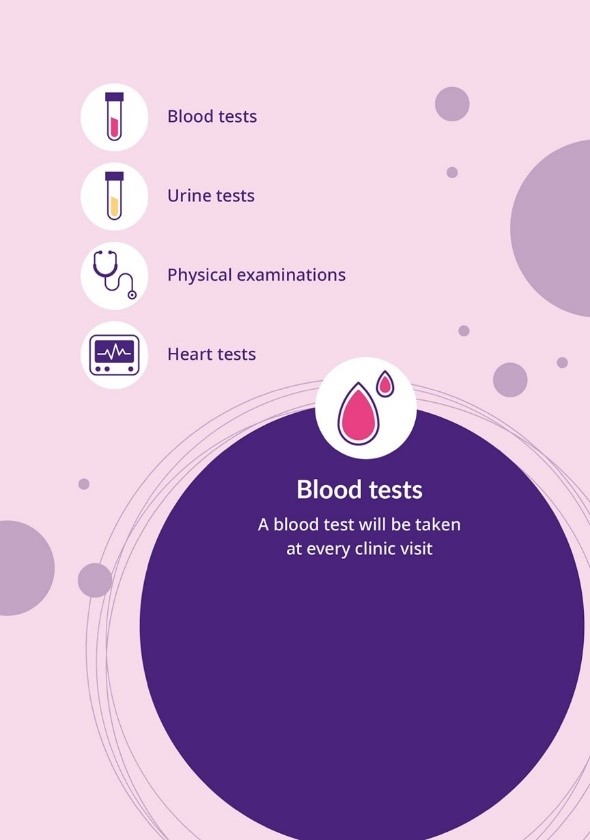
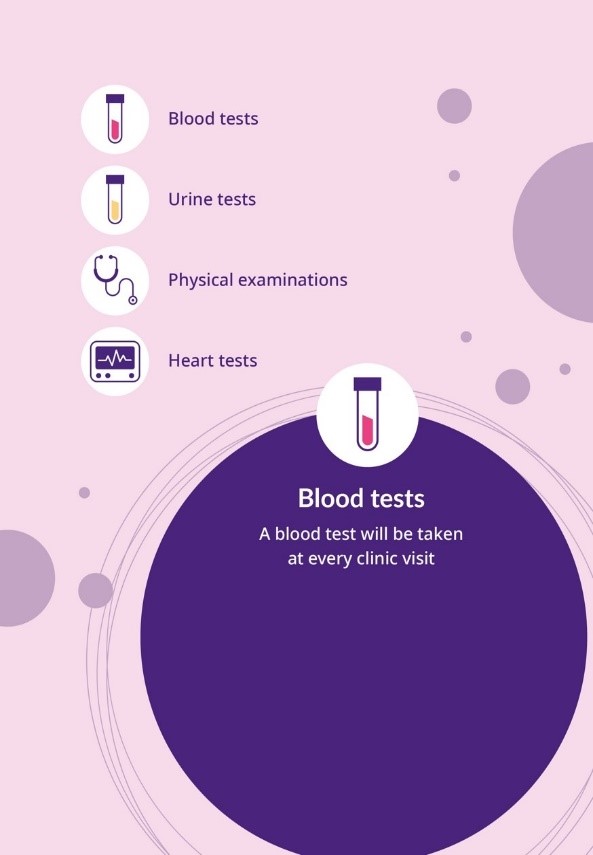
But when it comes to visualisation in healthcare materials, simplicity and consistency leads to greater levels of clarity. Icons are an effective way of presenting symptoms, test types, test results and even actions for people to take, in an easy-to-understand and accessible way. For maximum impact, icons should always follow a simple style guide and materials should adopt the same style throughout. The consistent brand style makes icons easy to recognise and their repetition reinforces the messages you are trying to deliver.
The following examples show that creating a multitude of interesting logos, has aesthetic interest but adds unnecessary complexity to medical guidance and information.
Naughty
Nice
Make every word count
Bursting with complicated language, random abbreviations, medical jargon and complex statistics, it is no wonder many people find health information difficult to understand. This struggle becomes even more difficult when you are suffering from an illness or being treated for a chronic condition. Therefore, choosing each word you use, really matters.
A health condition is just one aspect of somebody’s life; it isn’t their whole identity, and it doesn’t define who they are. By seeing the other person’s perspective or by putting yourself in someone else’s shoes, you can try to empathise with how they may be feeling. Using person-first language is just one way to acknowledge this and is a kinder, more empathetic approach.
When developing patient materials, it is a good idea to invite the intended audience to provide input and feedback on the terminology used.
Naughty
Nice
It isn’t what you do, but the way that you do it
Defined as the communication of health information in ways that others can understand and act on, ‘health literacy’ is a crucial step in helping people make informed choices about their own health. It ensures that they understand the information they have been given but most importantly that they can act upon it. Often this can take the form of highlighting when they need to seek medical help or support.
Emotional awareness is also an important consideration in design; it’s essential to highlight critical information without overwhelming or frightening people. Using a bright red to emphasise a call out box may alarm a person already in an emotionally vulnerable state. Being empathetic through design can make important information clear, but not scary.
Naughty

Nice

To test your health literacy knowledge on all the questions in our Naughty or Nice quiz, visit: https://www.cuttsyandcuttsy.com/latest/naughty-or-nice
If you’d like to know more about what we do or have something to share, let’s talk: https://www.cuttsyandcuttsy.com/lets-talk
This content was provided by Cuttsy + Cuttsy
Company Details

Latest Content from Cuttsy + Cuttsy
Invited, but not equipped: patient involvement needs more than an open door
Explore how pharma can help patients and patient organisations prepare for meaningful involvement in EU HTA without shaping their contribution.
The outcomes are already chosen. So when can patients really shape them?
Explore why involving patients early in Joint Scientific Consultations is critical to shaping the outcomes measured in clinical trials.
Long-term clinical trial engagement is a behavioural challenge – not just an informational one
Explore why long-term clinical trial engagement is a behavioural challenge, showing how proactive support from site teams can help participants stay connected, confident and committed throughout a study.
Patients are telling the truth — just not to you
Patients are often most honest outside the clinic—revealing vital insights that can help clinical trial teams build trust, improve participation and collect better data.
When what matters to patients is hard to measure
Patient-relevant outcomes sit at the heart of the EU HTA reforms, but ensuring they reflect lived experience requires you to look beyond what traditional clinical endpoints measure.
Permission to pause: making treatment breaks part of the cancer care conversation
Exploring how empathetic, patient-centred communication can make planned treatment breaks easier to discuss as part of cancer care.
A seat at the table: what the EU HTA reforms really ask of patient involvement
The EU HTA reforms give patients a formal role in assessing new medicines, but meaningful involvement requires more than simply offering them a seat at the table.
Why faster trials make participant understanding more important than ever
As clinical trials accelerate, clear, accessible consent is essential to help participants understand, engage with and remain in a study.
Older trial participants reject bad design, not technology
Older trial participants aren’t rejecting digital technology — they’re rejecting poorly designed, inaccessible experiences that make participation harder.
5 key takeaways from the Patient Centricity and Engagement Conference
Key takeaways from the Patient Centricity and Engagement conference, exploring how trust, inclusion and meaningful partnership can help turn patient engagement from intention into action.