


From text to context: Helping patients see side effects clearly
March 30, 2026 | health information, health literacy, healthcare communications
Discover how thoughtful design, clear language, and structured visuals can transform overwhelming side effect information into accessible, actionable insights for patients in our latest Health Literacy series.
Our Health Literacy series continues, and this time we’re sharing another example of how thoughtful design, structure and language are essential to inform, educate and empower patients — this time in identifying side effects.
If you have read a patient insert for a medicine, or an informed consent form, you will know that side effects lists are often long, confusing, and intimidating. This can make keeping track of what to look out for, and what to do about it, completely overwhelming.
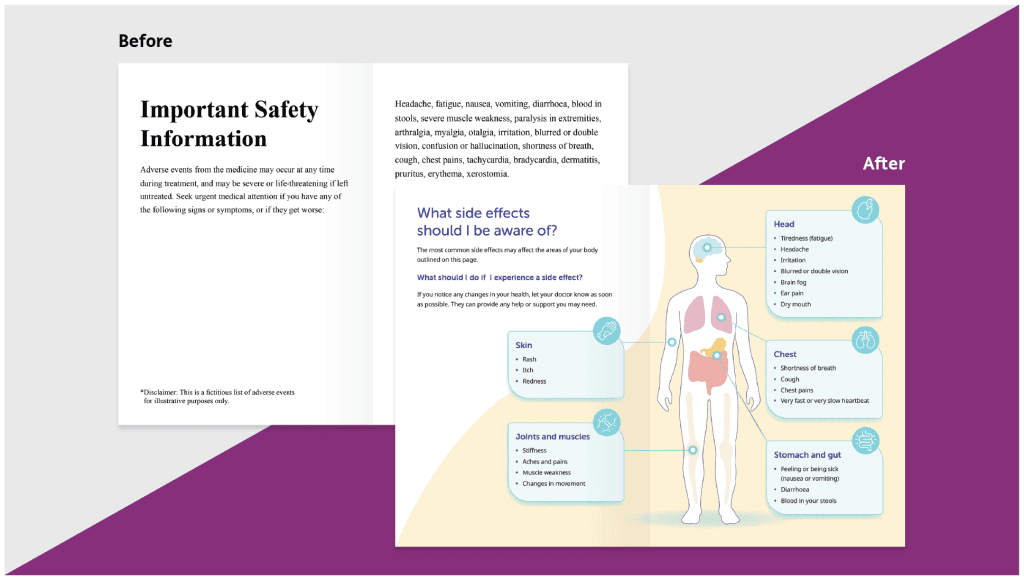
But it doesn’t have to be. For example, our ‘before’ and ‘after’ examples below include the same information, presented in very different ways. And it’s often this that makes the greatest difference to patients: how clearly and accessibly information is communicated.
Before:
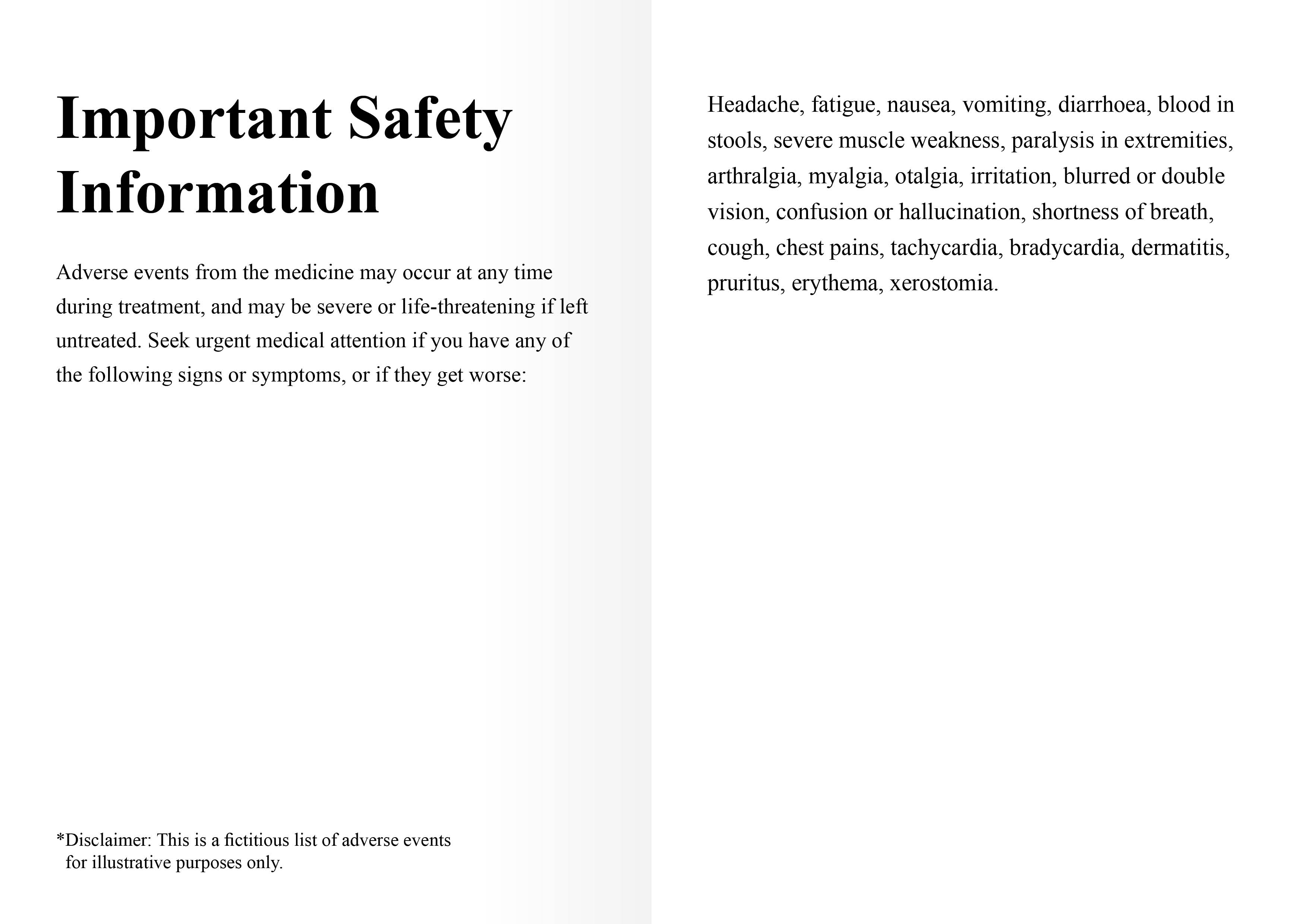
Safety information for patients included a dense, unformatted list of all potential side effects. The descriptions relied heavily on technical terminology, with no context, categories, or cues, making it difficult for readers to take away anything actionable.
After:
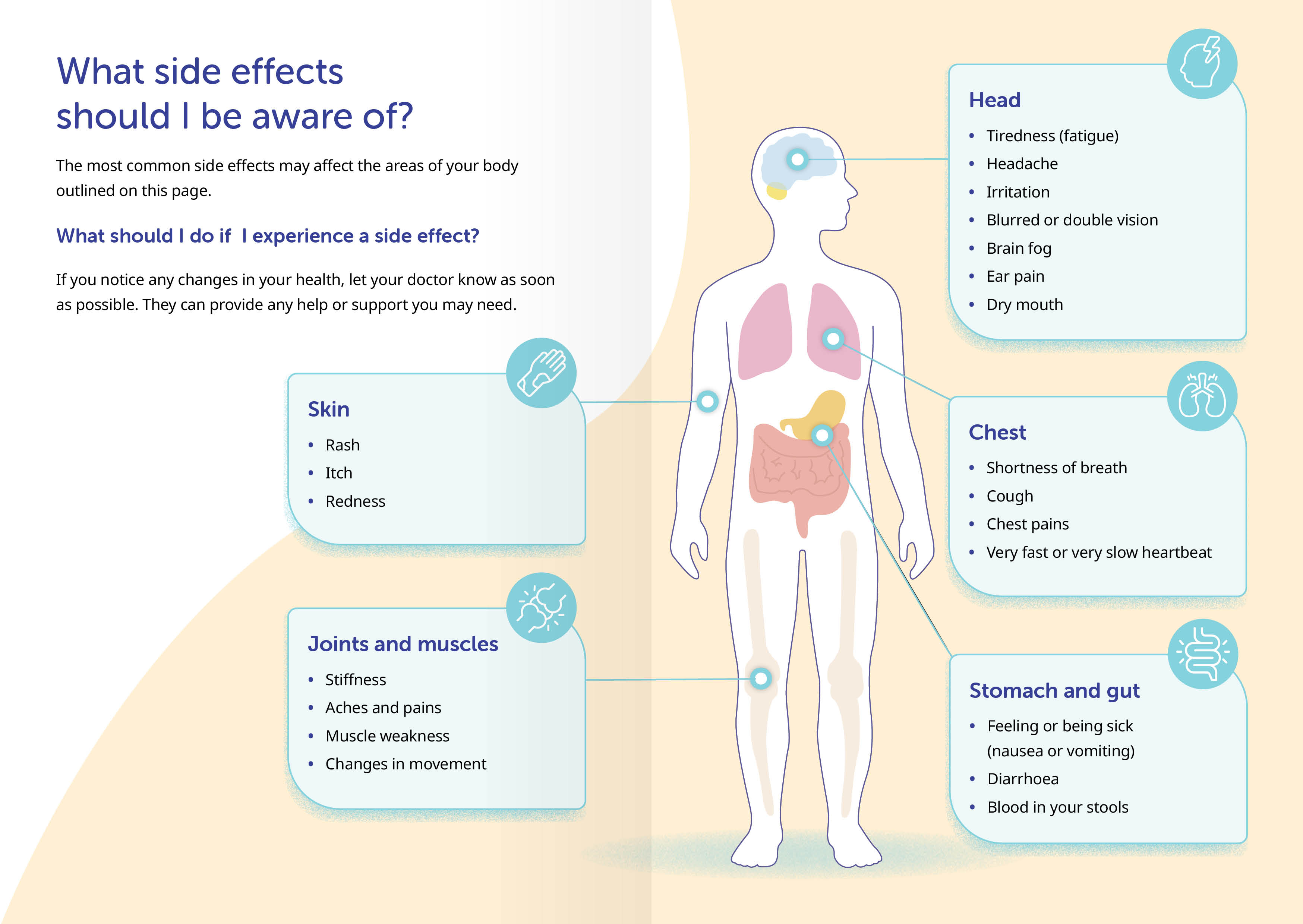
First, we translated all of the technical terms into lay language — “dry mouth” is just easier to process than “xerostomia”.
Next, we grouped everything by body system, so there’s no need to jump around the list for all related side effects.
Finally, we visualised each category on a silhouette, so readers know, at a glance, which body areas might be affected, and which specific changes to look out for.
By combining clear language and intuitive visuals, we’ve made potentially daunting side effect information easier to understand, recognise, and act on.
This content was provided by Cuttsy + Cuttsy
Company Details

Latest Content from Cuttsy + Cuttsy
Promoting trust: Cuttsy+Cuttsy become a PIF Tick accredited agency
Cuttsy+Cuttsy join a host of noteworthy healthcare charities and institutions as one of the first healthcare communications agencies to receive the Patient Information Forum’s seal of approval – the PIF...
Listening to heads AND hearts in healthcare
We talk a lot about using emotions in healthcare communications, but not as much about the business intelligence(BI) behind it. Find out why it matters and why we are proud...
Does being an independent agency really matter?
With Cuttsy+Cuttsy ranked as #6 in the Independent Agencies listing from PM Live’s T40 Creative Healthcare Agencies 2021, Mathew Cutts reflects on what being ‘independent’ means to him.
Opening up about patient engagement
Read the third blog of the series looking at key barriers to effective patient engagement in pharma
Committing time to making meaningful connections – top 5 tips
Read the second blog of the series looking at key barriers to effective patient engagement in pharma
Key barriers to effective patient engagement in pharma, and how to fix them: Making engagement processes more patient friendly
In the first of this blog series, Patient Engagement Lead, Philippa Pristerà looks at making engagement processes more patient friendly
Cuttsy+Cuttsy awarded Gold accreditation by Investors in People
Healthcare communications agency, Cuttsy+Cuttsy, has been awarded ‘We invest in People, Gold’ from Investors in People.
Cuttsy+Cuttsy marks its 10th anniversary with the launch of Cuttsy Cares
Healthcare communications agency, Cuttsy+Cuttsy, has announced the launch of Cuttsy Cares, in celebration of its 10th anniversary. The agency's charitable programme will deliver up to £10,000 to help improve the quality...
Caroline Benson and Colin Williams to Chair the PM Society from February 2020
For the first time both industry and agencies will be equally represented as the PM Society appoints a joint chair.
Clinical trials, Actually.
This Christmas, we’re thinking of the thousands of clinical trial volunteers across the UK, both patients and healthy participants. We have a lot to thank them for...