




From text to context: Helping patients see side effects clearly
March 30, 2026 | health information, health literacy, healthcare communications
Discover how thoughtful design, clear language, and structured visuals can transform overwhelming side effect information into accessible, actionable insights for patients in our latest Health Literacy series.
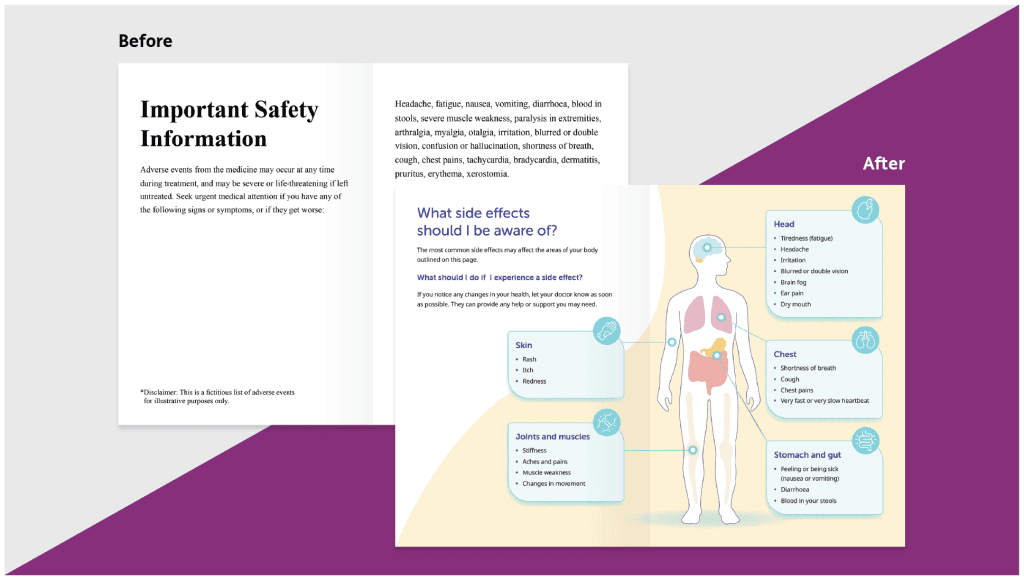
Our Health Literacy series continues, and this time we’re sharing another example of how thoughtful design, structure and language are essential to inform, educate and empower patients — this time in identifying side effects.
If you have read a patient insert for a medicine, or an informed consent form, you will know that side effects lists are often long, confusing, and intimidating. This can make keeping track of what to look out for, and what to do about it, completely overwhelming.
But it doesn’t have to be. For example, our ‘before’ and ‘after’ examples below include the same information, presented in very different ways. And it’s often this that makes the greatest difference to patients: how clearly and accessibly information is communicated.
Before:
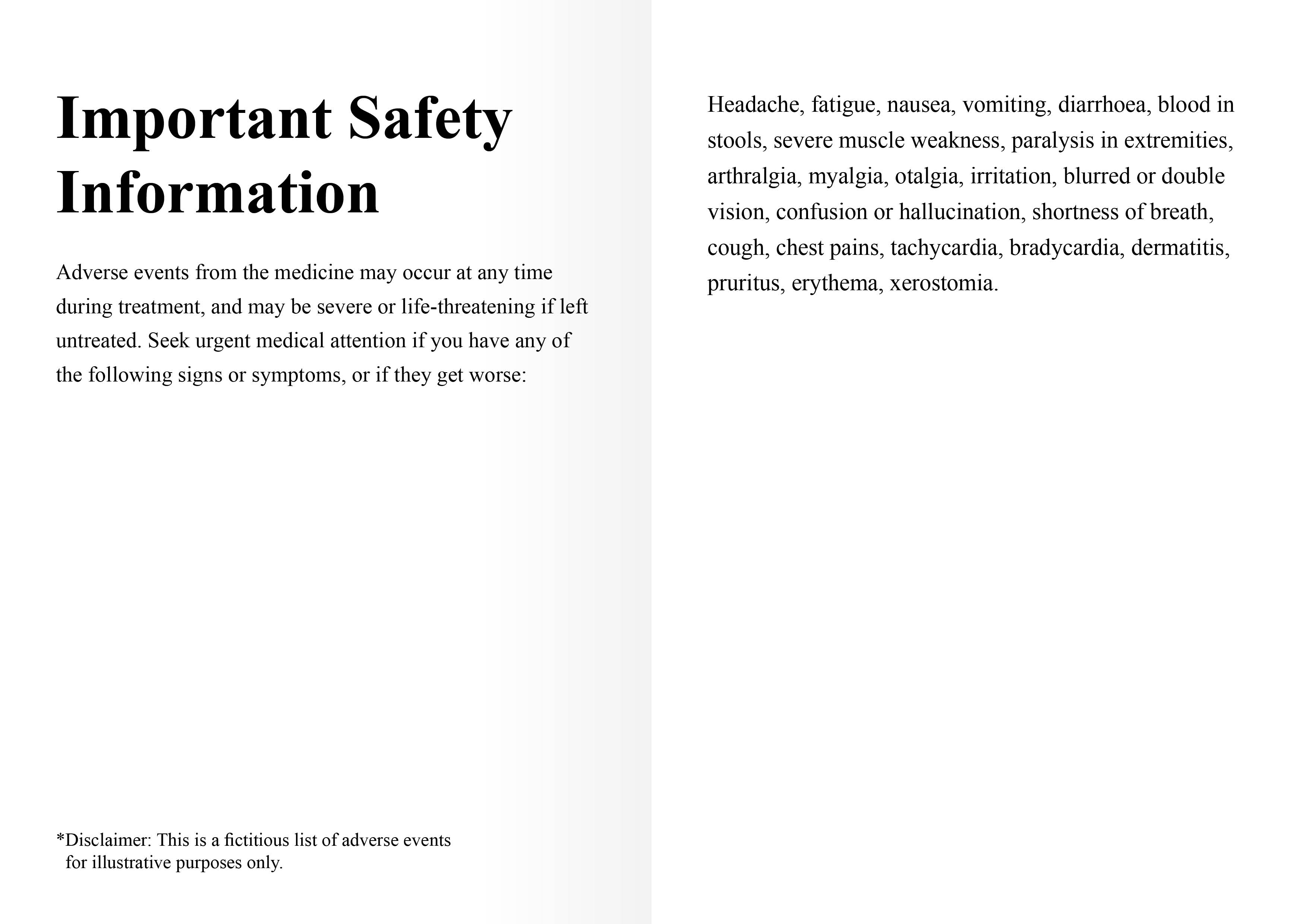
Safety information for patients included a dense, unformatted list of all potential side effects. The descriptions relied heavily on technical terminology, with no context, categories, or cues, making it difficult for readers to take away anything actionable.
After:
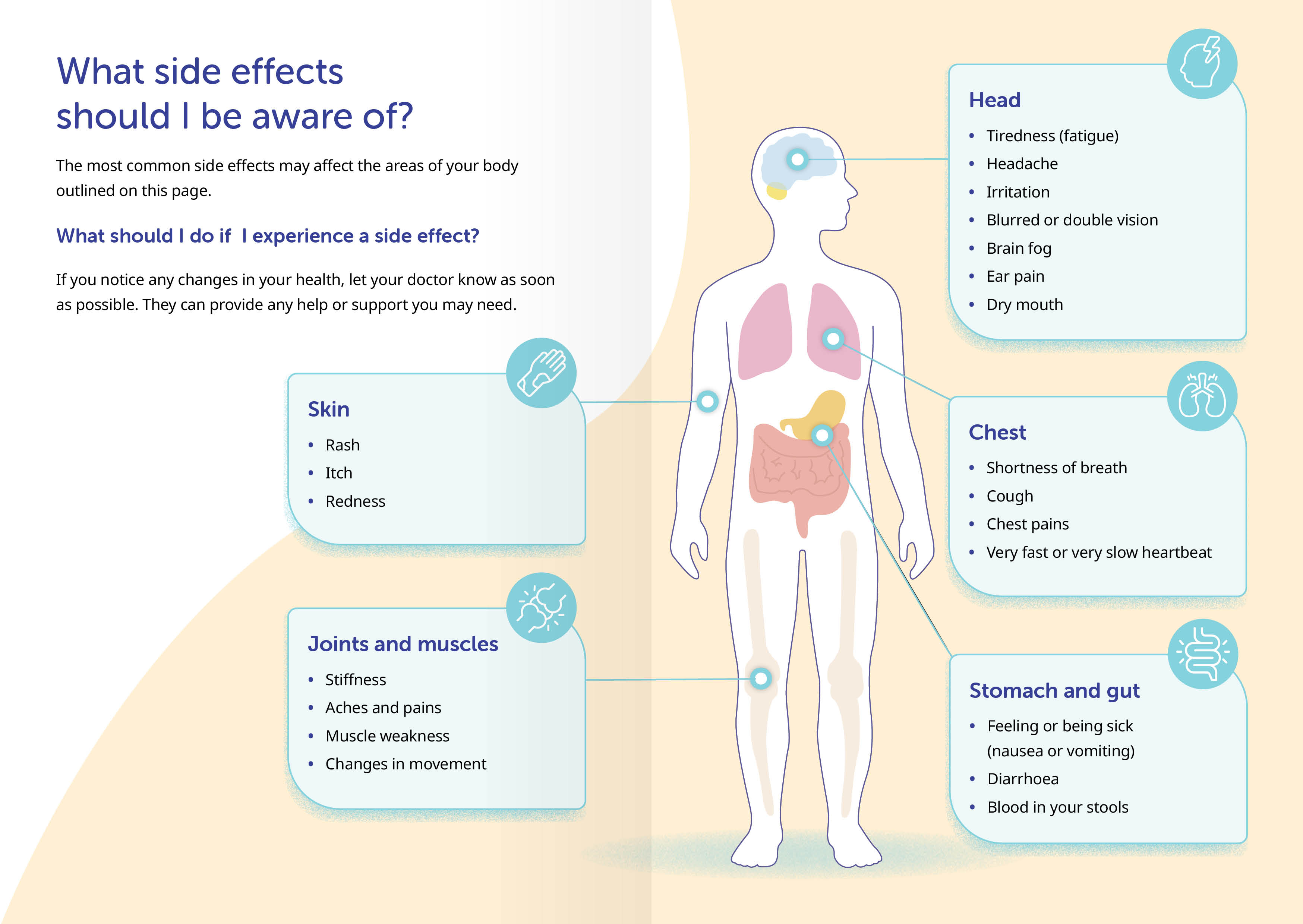
First, we translated all of the technical terms into lay language — “dry mouth” is just easier to process than “xerostomia”.
Next, we grouped everything by body system, so there’s no need to jump around the list for all related side effects.
Finally, we visualised each category on a silhouette, so readers know, at a glance, which body areas might be affected, and which specific changes to look out for.
By combining clear language and intuitive visuals, we’ve made potentially daunting side effect information easier to understand, recognise, and act on.
This content was provided by Cuttsy + Cuttsy
Company Details

Latest Content from Cuttsy + Cuttsy
Clarity in clinical trials
Discover how transparent, empathetic communication and health literacy principles can empower patients and enhance engagement in clinical trials, transforming participants into active partners in their healthcare journey.
Caring for patients’ mental health in clinical trials
We look at why ensuring continuous mental health support for patients in clinical trials is essential to enhance their overall well-being and trial engagement.
Driving equitable healthcare: The role of DE&I in clinical trials
Diversity, equity and inclusion (DE&I) is becoming a bigger topic of conversation and meaningful action within clinical trials. And for good reason, too. Find out why we embrace this and...
Empowering patients through more accessible clinical trial information
Senior Medical Writer, Scott Palmer explores the challenges and solutions in enhancing patient engagement in clinical trials, from the pivotal role of healthcare professionals, to the importance of user-friendly trial...
New report now available: Integrating ‘patient first’ into medicine development
A new report has just been published by Cuttsy+Cuttsy that collates all the current best thinking in the ‘patient first’ space, distilling it into a practical and actionable road map...
The digital prescription – enhancing the patient experience with technology
We explore how digital health innovations are revolutionising patient care by enhancing accessibility, personalisation, and engagement, promising a more connected and empowered patient experience.
Compliance — a driving force for influencing public perceptions of the pharma industry?
How does compliance play into public perceptions of pharma and why is it important for improving public opinion?
Another year, another B!
Louise Jones, Cuttsy+Cuttsy's Sustainability Officer reflects on their latest year of carbon reporting through CDP and on achieving another B rating.
Jon Hume Joins Cuttsy+Cuttsy as New Commercial Director
Cuttsy+Cuttsy is excited to announce the appointment of Jon Hume as Commercial Director, effective 1st March 2024.
Clinical trial considerations: Why supporting HCPs matters…
When HCPs have the necessary information, they can more easily communicate it to patients using simplified language and a confident, calm tone.