




Two Sides of the Same Coin: Patient Engagement vs Patient Involvement
February 10, 2025 | Patient involvement, clinical trials, patient engagement
Unpack the difference between patient engagement and patient involvement.
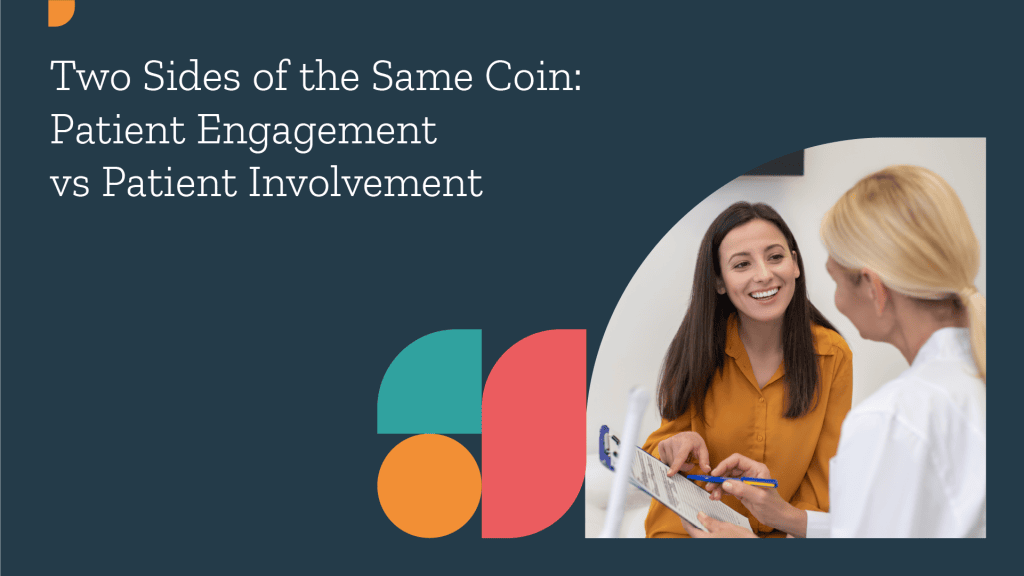
Anna had always been proactive about her health. When she was diagnosed with Type 2 Diabetes, she dove headfirst into learning everything she could about the condition and how she could help manage it. She went to her appointments, downloaded apps to help her track her blood sugar levels, and joined an online community of other diabetics to share experiences and tips.
When Anna’s doctor told her about a new clinical trial for a potential new diabetes treatment, she listened to the details and took a pamphlet to read more about it at home. After giving it some thought, Anna decided not to take part. She felt confident that she had everything she needed to manage her diabetes on her own.*
Would you class Anna’s approach to her health as patient engagement or patient involvement? Both are important aspects of patient-centred care, but some key differences define them. Let’s take a closer look.
Patient engagement: a personal journey
Patient engagement refers to the many ways patients can play an active role in their health. It ensures that every patient has the knowledge and tools they need to be confidently involved in their care so that it is suited to their individual experiences, preferences, and needs.1
Examples include:
- Providing patients with clear and concise information about their health, health conditions, and treatment options
- Healthcare professionals providing clear guidance, listening to patients’ worries, and answering their questions
- Involving patients in health-related decisions
- Encouraging patients to use apps or journals to monitor and keep track of their symptoms or interventions
Patient involvement: creating change through community
Patient involvement is a concept covering the ways people can share their views and experiences to shape the healthcare experience for everyone. The research is carried out with or by them, not to, about, or for them.2 Patient involvement reaches beyond personal health to influence policy, guidelines, and practice.
Some examples include patients:
- Taking part in a patient advisory board
- Contributing to the creation of new health research
- Advocating for changes to health-related policies
Two sides of the same coin
Both patient engagement and patient involvement are concepts that rely on activated patients.3 Both approaches aim to empower patients and promote the importance of their experiences and preferences being considered in decision-making.
Nothing about me without me
As the relationship between doctors and their patients has evolved, concepts like patient engagement and shared decision-making, once buzzwords for the ideals of patient-centred care, have become an important reality and part of everyday practice in healthcare systems around the world.4 But there’s still room for improvement.
Patient advocacy groups are now pushing for more patient involvement. Patient engagement models are encouraging patients to guide their healthcare journey. Now, there is a call for the collective voice of patients and caregivers to be heard and used to shape the healthcare experience for everyone.5
Changing the story
The possible benefits of encouraging patients to be actively involved in healthcare can’t be underestimated. We already know that when patients are actively involved, it can lead to the greatest benefit of all — better health outcomes.4,6
Patient-centred care cannot exist without patients being involved in conversations about their health, participating in their own healthcare decisions, and shaping the research and policy that informs those decisions.
How can we ever understand patients’ treatment priorities, what information they feel is missing from their materials, and what side effects they find the most difficult to manage if we don’t ask them?
This new perspective can reframe healthcare for everyone involved. It creates an environment where the question is no longer ‘What is the matter?’ but rather, ‘What matters to you?’
Had Anna been asked this question, do you think she would have felt differently about taking part in a clinical trial?
If you’d like to read more about this topic, take a look at our report: Integrating ‘patient-first’ into medicine development
*Anna is a fictional character whose story was created for this blog post.
References
- Marzban S, et al. J Patient Exp 2022;16(9):23743735221125439
- Patient and public involvement, engagement and participation definitions. Available here. Last accessed: August 2024
- Integrating ‘patient first’ into medicine development. Available here. Last accessed: August 2024
- Vahdat S, et al. Iran Red Crescent Med J 2014;16(1):e12454.
- Sacristán, JA., et al. Patient Preference and Adherence 2016;10:631–640 Krist AH, et al. Stud Health Technol Inform 2017;240:284–302
This content was provided by Cuttsy + Cuttsy
Company Details

Latest Content from Cuttsy + Cuttsy
Clinical research in 2026: The trends shaping tomorrow
Discover the key trends shaping clinical research in 2026, from patient-centric approaches to empowering site staff and fostering stronger human connections.
From overwhelming to actionable: Bringing lifestyle guidance to life
Discover how clear communication and health literacy principles can transform complex patient materials into simple, engaging, and empowering health information.
Behind the scenes: why we created ‘The participation equation’
Go behind the scenes of The participation equation – our call to put people, not just data, at the heart of clinical research.
Cuttsy+Cuttsy launches R:SQD – a new way to predict and improve trial success
Cuttsy+Cuttsy has launched R:SQD, an innovative recruitment and retention success scoring tool that helps clinical trial sponsors predict, measure, and improve participant engagement and trial outcomes.
New report, The participation equation, uncovers key drivers of patient engagement in clinical trials
Cuttsy+Cuttsy’s new report, The participation equation, uncovers what drives patient engagement and retention in modern clinical trials through insights from over 700 participants and industry experts.
Why patients drop out of weight management trials and what you can do about it
Discover the key barriers to retention in obesity and weight-management trials and explore actionable, patient-centered strategies to improve engagement, outcomes, and data reliability.
Cuttsy+Cuttsy welcomes new team members
Cuttsy+Cuttsy is excited to announce the addition of three talented professionals to the team: Flo, an enthusiastic Account Executive; Vicki, a creative Graphic Designer; and Jo, a detail-driven Artworker
Designing with patients in mind: How to build more inclusive clinical trials
Discover how patient-centred design transforms inclusive clinical trials. Learn to overcome trial recruitment challenges by listening to patients and creating studies that fit real lives.
Why fresh patient voices are critical to improve clinical trials outcomes
Discover why diverse patient voices, especially first-time participants, are key to improving clinical trials. Boost recruitment, retention, and patient-centric research.
Using patient personas to add a personal touch to clinical trial recruitment and retention
Discover how patient personas can revolutionise clinical trial recruitment and retention. Personalise outreach, build trust, and improve patient engagement.