
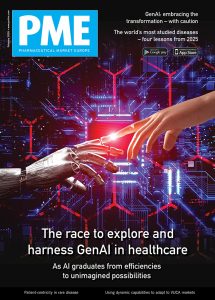



The future of heart health with AI-powered devices and treatment approaches
March 28, 2025 | #MedscapeEducation #AICardiology
Artificial intelligence (AI) is revolutionising the field of cardiology, offering new hope for patients with cardiovascular disorders. AI is no longer futuristic, it’s a real-world tool, transforming patient care and outcomes.

One of the key areas where AI is making a significant impact is in the early detection of cardiovascular diseases (CVD). Traditional methods often fail to diagnose CVD before symptoms appear, leading to delayed treatment and poorer outcomes. AI, however, can analyse vast amounts of data from electrocardiograms (ECGs) and other diagnostic tools to identify early signs of heart disease that might be missed by human eyes, which improves diagnostic accuracy and patient outcomes.1
Personalising cardiology treatment
AI also plays a crucial role in personalising treatment plans. By analysing patient data, AI can help doctors tailor treatments to individual needs, ensuring that each patient receives the most effective therapy. This personalised approach is particularly beneficial in managing complex conditions like heart failure, where treatment needs to be adjusted frequently based on the patient’s response.
AI-powered digital devices
The use of wearable and portable devices is another exciting development in AI cardiology. These devices, such as smartwatches and portable ECG monitors, enable continuous monitoring of heart health, providing real-time data to both patients and healthcare providers. This continuous monitoring can lead to early intervention and better management of chronic conditions, ultimately reducing hospitalisations and improving quality of life.2
Effective AI integration in healthcare
Despite these advancements, there are still significant challenges to overcome when it comes to getting healthcare professionals confident about realising the full potential of these AI-powered technologies and tools. Healthcare professionals already face an exponential rise in medical information which is doubling at least every 73 days.3 Furthermore, the integration of AI into healthcare systems requires robust data privacy measures and regulatory oversight to ensure patient safety and data security.4
Fully and safely realising AI capabilities
AI is poised to transform cardiology by enhancing early disease detection, personalising treatment and improving overall care quality. As technology continues to evolve, the potential for AI to improve outcomes for patients with cardiovascular disorders is immense; however, ongoing education is needed in its widespread adoption to ensure it is being utilised to its full capabilities. The future of cardiology is bright, with AI leading the way towards more efficient, accurate and personalised care.
[1] Attia, Z.I., et al. (2019). ‘An artificial intelligence-enabled ECG algorithm for the identification of patients with atrial fibrillation during sinus rhythm: a retrospective analysis of outcome prediction’, The Lancet, 394(10201), pp. 861–867. doi: 10.1016/S0140-6736(19)31721-07.
[2] Khunte, A., et al. (2023). ‘Detection of left ventricular systolic dysfunction from single-lead electrocardiography adapted for portable and wearable devices’, NPJ Digital Medicine, 6(1), p. 124. doi: 10.1038/s41746-023-00869-w.
[3] Koenig, H.G. (2012) ‘Religion, spirituality, and health: The research and clinical implications’, International Scholarly Research Notices, 2012, pp. 1–33. doi: 10.5402/2012/278730.
[4] Chustecki M. Interact J Med Res. 2024;13:e53616; Davenport T, et al. Future Healthc J. 2019;6:94-98; Khera R, et al. J Am Coll Cardiol. 2024;84:97-114; Khera R, et al. JAMA. 2023;330:2255-2257.
This content was provided by Medscape Education
Company Details

Latest Content from Medscape Education
Gaps in obesity care and education
Yesterday marked World Heart Day, and Medscape is at the forefront with a featured article in Media Planet's cardiology campaign highlighting gaps in obesity care and education. This important piece...
Realizing the Potential of Virtual Patient Simulation With Real-World Outcomes
We're celebrating Healthcare Simulation Week 2024 by highlighting the transformative power of our multi-award-winning medical simulation programs, which have proven impact in delivering significant improvements in clinical skills and outcomes....
Reaching Young Professionals at HFSA ASM 2024
HFSA will kick off at the end of September, and Medscape is proud to support the careers of young clinicians through the sponsorship of the Professionals in Training Lounge. “Providing...
Medscape Education and Comprehensive Medical Mentoring Program Partner to Empower the Next Generation in Dermatology
In a significant stride toward fostering diversity and inclusivity in dermatology, Medscape Education and the Comprehensive Medical Mentoring Program (CMMP) have established a unique alliance to address critical gaps in...
Making at Impact at the Alliance Industry Summit
The Medscape team will be returning to the Alliance Industry Summit in Philadelphia this year, bringing with them Best in Class Outcomes and support for the event. As part of...
Hear From Her: Extraordinary Women Who Are Redefining Healthcare Leadership
That’s a wrap for Season 2 of Medscape Education’s Award-Winning Podcast Series, Hear From Her: Women in Healthcare Leadership! (Not to worry, Season 3 is just around the corner.) And...
Bringing Clinicians Together for Oncology Education at ESMO 2024
ESMO 2024 comes with the debut of 2 new, exciting symposia hosted by the MedscapeLIVE! team. The symposia build on nearly 30 years of Medscape’s experience and excellence in both...
Empowering Women in Health Care Through Education
In a bold stride toward empowering women in health care, Medscape proudly announces its sponsorship of the highly anticipated Women in Medicine Summit, September 13-14, 2024 in Chicago, Illinois. This...
Leading the Way at ESC 2024
Anticipation is building at Medscape Education as the team prepares for the ESC 2024 Congress. We are excited to announce a significant presence during the congress including a booth (#H500)...
Always Be in a Growth Mindset: Chief Strategy Officer Christina Hoffman’s Return to Her Education Roots
Medicine is always changing, and the career of Medscape Education’s Chief Strategy Officer, Christina Hoffman, is no exception. The 17-year Medscape veteran recently said goodbye to her role as leader...