
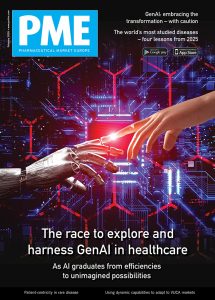



The future of heart health with AI-powered devices and treatment approaches
March 28, 2025 | #MedscapeEducation #AICardiology
Artificial intelligence (AI) is revolutionising the field of cardiology, offering new hope for patients with cardiovascular disorders. AI is no longer futuristic, it’s a real-world tool, transforming patient care and outcomes.

One of the key areas where AI is making a significant impact is in the early detection of cardiovascular diseases (CVD). Traditional methods often fail to diagnose CVD before symptoms appear, leading to delayed treatment and poorer outcomes. AI, however, can analyse vast amounts of data from electrocardiograms (ECGs) and other diagnostic tools to identify early signs of heart disease that might be missed by human eyes, which improves diagnostic accuracy and patient outcomes.1
Personalising cardiology treatment
AI also plays a crucial role in personalising treatment plans. By analysing patient data, AI can help doctors tailor treatments to individual needs, ensuring that each patient receives the most effective therapy. This personalised approach is particularly beneficial in managing complex conditions like heart failure, where treatment needs to be adjusted frequently based on the patient’s response.
AI-powered digital devices
The use of wearable and portable devices is another exciting development in AI cardiology. These devices, such as smartwatches and portable ECG monitors, enable continuous monitoring of heart health, providing real-time data to both patients and healthcare providers. This continuous monitoring can lead to early intervention and better management of chronic conditions, ultimately reducing hospitalisations and improving quality of life.2
Effective AI integration in healthcare
Despite these advancements, there are still significant challenges to overcome when it comes to getting healthcare professionals confident about realising the full potential of these AI-powered technologies and tools. Healthcare professionals already face an exponential rise in medical information which is doubling at least every 73 days.3 Furthermore, the integration of AI into healthcare systems requires robust data privacy measures and regulatory oversight to ensure patient safety and data security.4
Fully and safely realising AI capabilities
AI is poised to transform cardiology by enhancing early disease detection, personalising treatment and improving overall care quality. As technology continues to evolve, the potential for AI to improve outcomes for patients with cardiovascular disorders is immense; however, ongoing education is needed in its widespread adoption to ensure it is being utilised to its full capabilities. The future of cardiology is bright, with AI leading the way towards more efficient, accurate and personalised care.
[1] Attia, Z.I., et al. (2019). ‘An artificial intelligence-enabled ECG algorithm for the identification of patients with atrial fibrillation during sinus rhythm: a retrospective analysis of outcome prediction’, The Lancet, 394(10201), pp. 861–867. doi: 10.1016/S0140-6736(19)31721-07.
[2] Khunte, A., et al. (2023). ‘Detection of left ventricular systolic dysfunction from single-lead electrocardiography adapted for portable and wearable devices’, NPJ Digital Medicine, 6(1), p. 124. doi: 10.1038/s41746-023-00869-w.
[3] Koenig, H.G. (2012) ‘Religion, spirituality, and health: The research and clinical implications’, International Scholarly Research Notices, 2012, pp. 1–33. doi: 10.5402/2012/278730.
[4] Chustecki M. Interact J Med Res. 2024;13:e53616; Davenport T, et al. Future Healthc J. 2019;6:94-98; Khera R, et al. J Am Coll Cardiol. 2024;84:97-114; Khera R, et al. JAMA. 2023;330:2255-2257.
This content was provided by Medscape Education
Company Details

Latest Content from Medscape Education
A Passionate Cause: Elevating Women to Reshape Medicine
“We need more outstanding leaders from underrepresented communities, including women and those from different ethnicities”, says Antonella Chadha Santuccione, co-founder and CEO of the nonprofit Women's Brain Project in Zurich,...
Hear from her: Meet your hosts
Every day, women leaders are changing the healthcare landscape for the better. Our Women in Healthcare Leadership Podcast Series features some of the women working to elevate equity, achieve gender...
Message from the Women in Medicine™ Summit: “Be the Change You Want to See”
What are some of the biggest gaps that women still face in healthcare today?“So many I could talk for hours!” says Shikha Jain, MD, FACP, President, CEO, Founder Women in...
Changing What’s Possible for Women in Healthcare
Career choices are driven by many factors. In medicine, doctors are often drawn to a particular specialty following a personal experience.That’s the case with both of the renowned speakers in...
Honoring Educational Partners at ACG
The recent ACG conference was an opportunity for members of the Medscape team to shine a light on their educational partners and honor them for their exceptional work.On October 21,...
The Power of Disease Awareness in Infectious Disease Education at IDWeek 2023
Medscape Education had one of its biggest conferences of the year with IDWeek 2023, hosting six educational symposia and presenting five scientific posters highlighting the outcomes of recent infectious disease...
Hear From Her: Announcing The Women in Healthcare Leadership Series Podcast
On the 8th November 2023, Medscape will launch the first episode of their new podcast: the Women in Healthcare Leadership Podcast Series.This insightful series was designed to elevate and empower...