
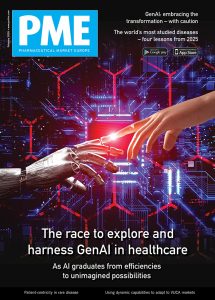



The future of heart health with AI-powered devices and treatment approaches
March 28, 2025 | #MedscapeEducation #AICardiology
Artificial intelligence (AI) is revolutionising the field of cardiology, offering new hope for patients with cardiovascular disorders. AI is no longer futuristic, it’s a real-world tool, transforming patient care and outcomes.

One of the key areas where AI is making a significant impact is in the early detection of cardiovascular diseases (CVD). Traditional methods often fail to diagnose CVD before symptoms appear, leading to delayed treatment and poorer outcomes. AI, however, can analyse vast amounts of data from electrocardiograms (ECGs) and other diagnostic tools to identify early signs of heart disease that might be missed by human eyes, which improves diagnostic accuracy and patient outcomes.1
Personalising cardiology treatment
AI also plays a crucial role in personalising treatment plans. By analysing patient data, AI can help doctors tailor treatments to individual needs, ensuring that each patient receives the most effective therapy. This personalised approach is particularly beneficial in managing complex conditions like heart failure, where treatment needs to be adjusted frequently based on the patient’s response.
AI-powered digital devices
The use of wearable and portable devices is another exciting development in AI cardiology. These devices, such as smartwatches and portable ECG monitors, enable continuous monitoring of heart health, providing real-time data to both patients and healthcare providers. This continuous monitoring can lead to early intervention and better management of chronic conditions, ultimately reducing hospitalisations and improving quality of life.2
Effective AI integration in healthcare
Despite these advancements, there are still significant challenges to overcome when it comes to getting healthcare professionals confident about realising the full potential of these AI-powered technologies and tools. Healthcare professionals already face an exponential rise in medical information which is doubling at least every 73 days.3 Furthermore, the integration of AI into healthcare systems requires robust data privacy measures and regulatory oversight to ensure patient safety and data security.4
Fully and safely realising AI capabilities
AI is poised to transform cardiology by enhancing early disease detection, personalising treatment and improving overall care quality. As technology continues to evolve, the potential for AI to improve outcomes for patients with cardiovascular disorders is immense; however, ongoing education is needed in its widespread adoption to ensure it is being utilised to its full capabilities. The future of cardiology is bright, with AI leading the way towards more efficient, accurate and personalised care.
[1] Attia, Z.I., et al. (2019). ‘An artificial intelligence-enabled ECG algorithm for the identification of patients with atrial fibrillation during sinus rhythm: a retrospective analysis of outcome prediction’, The Lancet, 394(10201), pp. 861–867. doi: 10.1016/S0140-6736(19)31721-07.
[2] Khunte, A., et al. (2023). ‘Detection of left ventricular systolic dysfunction from single-lead electrocardiography adapted for portable and wearable devices’, NPJ Digital Medicine, 6(1), p. 124. doi: 10.1038/s41746-023-00869-w.
[3] Koenig, H.G. (2012) ‘Religion, spirituality, and health: The research and clinical implications’, International Scholarly Research Notices, 2012, pp. 1–33. doi: 10.5402/2012/278730.
[4] Chustecki M. Interact J Med Res. 2024;13:e53616; Davenport T, et al. Future Healthc J. 2019;6:94-98; Khera R, et al. J Am Coll Cardiol. 2024;84:97-114; Khera R, et al. JAMA. 2023;330:2255-2257.
This content was provided by Medscape Education
Company Details

Latest Content from Medscape Education
Medscape Celebrates Eight Groundbreaking Publications at ATS 2025 International Conference
Medscape Education is proud to announce the presentation of eight innovative educational research publications at the American Thoracic Society (ATS) 2025 International Conference, held May 16–21 in San Francisco, CA....
The Future of CME in the Virtual World
The future of CME is here—and it’s personal, powerful, and primed for impact. In an era where clinician time is stretched thin, AI and digital innovation are transforming continuing medical...
Stronger Together: Medscape Education Celebrates Accomplishments in Rare Disease and Anticipates the World Health Assembly Adoption of the Resolution on Rare Diseases
Medscape Education is proud to be showcasing the power of working together in rare disease education and advocacy by co-hosting a side event at the 78th World Health Assembly in...
Intersection of Leadership and Advocacy: Driving Change Together for Women
We can’t talk about challenges to women’s reproductive health without acknowledging that we’re living in unprecedented times, say two mission-driven women’s healthcare leaders. Stephanie Sober, MD, MSHP, Global Director, Medical...
Shaping the Future of Hematology and Women’s Health
Changes in the healthcare world are likely to limit opportunities for young researchers, especially women.Three leaders in hematology — Belinda Avalos, Sarah O’Brien, and Marty Liggett — share the initiatives...
Are Clinicians Still Feeling the Burn? A Look at HCP Mental Health and Well-Being
One of the most critical topics to address in health care today is the mental health and well-being of physicians and other healthcare professionals. The 2020 COVID-19 pandemic shined a...
Medscape Women’s Health Joins Supporters in Sponsorship of SWHR’s 2025 Gala
Medscape Women’s Health is proud to announce its sponsorship of the Society for Women's Health Research (SWHR) 2025 Gala, which took place on Wednesday, April 30, 2025, celebrating 35 Years...
Dermatology in Focus: Medscape Sponsors SDNP’s 2025 National Conference
Medscape Education is a proud sponsor of the 2025 SDNP National Conference, taking place from April 30 to May 3 at the Renaissance Esmeralda Resort and Spa in Indian Wells,...
Medscape Education: Proud Friend of COA Sponsor at the Community Oncology Conference
Medscape Education is honored to be a Friend of COA sponsor at the Community Oncology Conference, taking place from April 28-30th in Orlando, FL. This partnership highlights our commitment to...
A Commitment to Elevating Patient Engagement and Integration
Medscape is honored to be the lead sponsor of the upcoming Measuring Patient Engagement Summit, taking place in Boston from April 29 to May 1. This event marks a pivotal...