



The Mission to Humanize Healthcare
August 7, 2025 | Patient Integration, medical education, patient engagement
Medical and scientific innovation are in a fast lane closely pursued by digital advances but their dynamism can mute a vital element of progressive healthcare – patient integration.
Awareness of the potency, and imperative, of including the patient voice across the entire health spectrum is growing but a landmark round table meeting of pharmaceutical industry leaders and patient advocates identified key areas that need to be appreciated and developed to unlock its full potential.
The meeting, organised by Medscape Education and co-facilitated by Emma Sutcliffe, Chief Patient Officer and co-founder of the fast-growing International Society of Patient Engagement Professionals (ISPEP), and held at the 2025 Medical Affairs Professional Society EMEA conference, in London, turned the spotlight on the benefits of incorporating the lived experience of patients into the DNA of pharmaceutical companies and medical education for healthcare professionals.
Drawing on experts from across the pharmaceutical and healthcare consumer industry and patient advocacy, delegates revealed a world of good intentions but muddled mechanics as this new, critical strand of patient science wrestles to find a home in company structure and to claim resources in strained budgets.
It was clear that medical education – empowering HCPs to listen to and understand the patient and caregiver perspectives combined with the communication skills to connect clearly with them – will help power a new era of patient integration in healthcare.
A rising number of HCPs, who want to make the most of innovative and existing therapies, yearn to improve their communication techniques and a senior global medical affairs executive told the meeting that a recent survey by his company revealed that 40% of doctors wanted to develop their patient consultation skills.
“We did a survey in functional gastric disorder surveying 500 experienced GPs with 10, 20, 30 years on the job and in detail analysing 5000 patient conversations and one of the outcomes was that 40% of those experienced GPs were interested in communication,” he said.
Crystallising the importance of strengthening patient consultation skills with a comprehensive approach that includes research and data analysis as part of medical education, he added. “Listening to and understanding patients might reveal important elements not considered previously,” he commented. “For example, we did one study in patients with benign prostatic disorder who had stopped their medication. We generated a survey, and one outcome was they never went back to their physician to report that they had stopped the medication, which the physicians were not aware of. This was a very interesting finding and shows that if we want to integrate patient perspectives, we need data and research on patient perspectives and have a broader information service than single patient cases. This is important and also valuable for physicians.”
The desire to improve skills along with the growing awareness of its efficacy for patients, healthcare system resilience and HCP job satisfaction presents an inflexion point. A Medscape Whitepaper last year outlined the potential to revolutionise outcomes in oncology by tailoring education programmes to boost HCPs’ patient engagement and communication skills.
Despite this trend, the patient integration landscape is still cratered with inconsistencies and uncertainty with responsibility for defining and harnessing the patient voice spread around departments and budgets in some companies.
A senior industry medical director, who attended the round table meeting, echoed the value of listening to and understanding patients and added that the economic case for companies to invest in patient integration needs to be more convincing.
He observed: “The larger picture is that we need to drive that culture in the pharma companies. Everyone should feel proud of working towards this as all of us who are working in the company are ultimately working to improve patient outcomes.”
Ineffective patient integration, resulting from a lack of resources across medical affairs, R&D, and marketing, not only hinders therapy uptake but can also lead to disengagement from influential patient advocacy groups, commented Robert Mitchell-Thain, Chief Executive Officer of the PBC Foundation, the world’s largest support organization for patients with primary biliary cholangitis.
“We work with multiple companies in our disease area and always strive to be fair and equitable,” he added. “We naturally find ourselves working more closely with partners who are patient-centric, as this leads to a better relationship. Because our resources are limited, we have to prioritize productive engagement and focus our energy on partnerships that are collaborative from the start.”
It is a critical observation that will resonate through many condition areas where competition is high with companies fighting to stand-out and have productive relationships with patient communities.
The meeting also heard that social media channels can inform HCPs with a wealth of insights not available in standard approaches and a global medical manager with responsibilities across digital delivery, said her company was supporting HCPs by ‘helping them to understand patients’ needs’ through social media listening exercises that reveal inconsistencies between how HCPs and their patients recall consultations.
Trishna Bharadia, a multiple award-winning patient engagement professional and health advocate who also lectures on patient engagement at the Centre for Pharmaceutical Medicine Research at King’s College London, underscored that social media was a source of knowledge and understanding of patient perspective that often remains hidden or unsaid.
“When you’re in the clinic, you don’t have enough time to tell the HCP everything. Some patients don’t have good relationships with their HCPs so sometimes they’re just not honest with them. So, I’m a big advocate for social media listening. With it, you get a very honest perception of not only the disease burden, but also what people think about treatment and what the burden of treatment is. Through social media, more often than not, they’re talking to their peers, and that is a more open conversation than people might have with their healthcare professional.
“We cannot use HCPs as a proxy for what patients think.”
Emma Sutcliffe, who has extensive medical affairs experience within the pharmaceutical industry, believes patient integration needs to advance on many fronts, such as training and educating HCPs, restructuring companies to enshrine it as a medical affairs essential, and evidencing both the economic and ethical return on investment.
She told the meeting: “In health and the pharmaceutical industry, we are trained to pursue the medical model at all costs so patient groups challenge us and our thinking; it’s not that we aren’t patient centric, it is that we’ve been trained in the medical model so the focus is all about how we can advocate and be ambassadors for a new patient integration model. How do you help your colleagues to step out of that medical pharmaceutical training model and step into the world of patient science.”
She added that HCPs can benefit from education that enhances their ability to form productive relationships with all patients, stating: “Not every patient is a member of a patient organisation. We, of course, need to work with patient organisations but we need to remember that the person sitting in front of a doctor is a person and, quite often, they will be afraid of what is happening to them. Medscape is leading ways to educate HCPs around the patient perspective.”
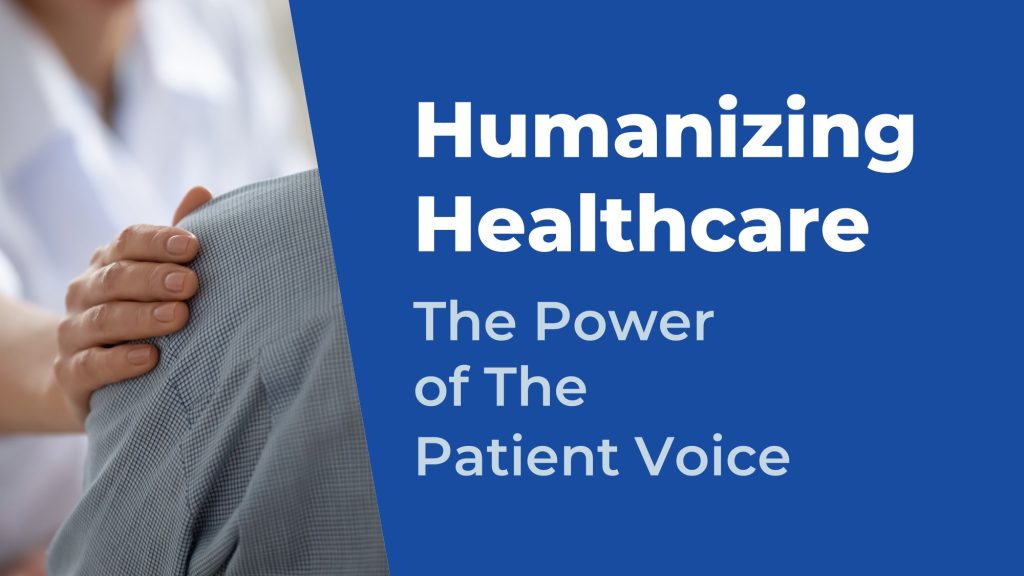
Victoria Harvey-Jones, Worldwide Patient Integration Lead at Medscape, said: “Our mission is to humanize both healthcare and education. These discussions have underscored the vital role of integrating the patient perspective into HCP education—whether through sharing personal stories of lived experience or leveraging impactful patient experience data from advocacy groups that represent entire communities. Recognizing that HCPs are often pressed for time, our educational initiatives are designed to support them, ultimately empowering them to better serve their patients with empathy and understanding.”
Major Points from the Landmark Meeting
Integrating the Patient Voice is Essential for Humanizing Healthcare
Integrating patient perspectives—through lived experiences and patient experience data from advocacy organizations—into HCP education is critical for truly person-centered care. This approach not only enriches medical education but also fosters empathy, understanding, and more effective communication between HCPs and patients and their families.
Improved Communication Skills Drive Better Outcomes
There is a clear demand among HCPs to enhance their patient consultation and communication skills. Empowering HCPs with these skills, supported by targeted education, enables them to listen to, understand, and act on patient needs, which can lead to improved patient outcomes, greater HCP job satisfaction, and a more resilient healthcare system.
Patient Integration Requires Structural and Cultural Change
True patient integration goes beyond good intentions; it demands organizational commitment, clear responsibility, and adequate resources. Companies and healthcare institutions must embed patient-centric approaches into their clinical, commercial and communication strategies including education structures, so that it becomes part of their DNA structure, processes, and educational programs, ensuring that patient voices inform decision-making and care delivery at every level.
Medscape Call to Action
Join Medscape in advancing the humanization of healthcare by actively integrating patient perspectives into HCP education, and help build a healthcare system where every patient is heard, understood, and valued. Together, we can transform care—one conversation at a time. This will not only empower healthcare professionals but also advance a culture of care where every patient is heard, respected, and better served.
Now is the time to provide education that humanizes healthcare—because when HCPs learn from and with patients, everyone benefits.
You can read our award-winning white paper here and sign up to our newsletter to be the first to receive our new one here.
VICTORIA HARVEY-JONES PHD
Director of Clinical Strategy & Worldwide Patient Integration Lead
This content was provided by Medscape Education
Company Details

Latest Content from Medscape Education
Medscape Education Invites Clinicians to Connect to the Conversation With New Mental Health and Wellness Learning Center
Medscape Education, the leading destination for continuous professional development for healthcare professionals, has launched Building Bridges Between Mental Health and Wellness, a learning center focusing on mental health and wellness for both patients...
Medscape Education Receives Joint Accreditation with Commendation to Deliver Continuing Education for Healthcare Providers
Medscape Education has been awarded Accreditation with Commendation, the highest designation possible by the Joint Accreditation for Interprofessional Continuing Education™, ensuring quality accredited continuing education for members of the healthcare...
Abstract Highlights from EHA 2022 : A Spotlight on CLL
Spotlight on CLLAhead of EHA 2022, Medscape Education Chief Medical Officer, Hansa Bhargava, MD, caught up with Prof John Gribben, UK, on the most important abstracts to look out for in...
Abstract Highlights from EHA 2022 : A Spotlight on Lymphoma
Spotlight on LymphomaAhead of EHA 2022, Medscape Education Chief Medical Officer, Hansa Bhargava, MD, caught up with Dr Loretta Nastoupil, US, on the most important abstracts to look out for in...
TECHNOLOGY TRENDS AND THE FUTURE OF MEDICAL DEVICES
A MEDSCAPE DIGITAL HEALTH AND INNOVATION EVENT
Device Technology and Innovations
The world of medical device technology is constantly evolving. From wearable devices to diagnostic technology, clinicians have more options than ever for monitoring and assessing their patients' health. The accessibility...
The Power of AI in Medical Education
Artificial intelligence (AI) is a rapidly growing field with many applications in the world of medicine, including continuing medical education. Ritu Kumar, Medscape lead data scientist, explains how Medscape Education...
Connect to the conversation around mental health: A spotlight on physician burnout
For more than 2 years, the COVID-19 pandemic has put emphasis on an issue that has long affected healthcare workers and physicians -- burnout. Every year, Medscape surveys thousands of...
MEDSCAPE EDUCATION: The Human Story in Virtual Patient Simulation
WHAT'S THE STORYStories are shared experiences, where meaning-centered approaches and coping strategies ascribe cultural meaningto events and emotions; a way to merge the individual and the collective experience into the...
It’s a Medscape wrap for EHA2022
EHA2022 Hybrid Congress has now come to a close with the Thematic Days finishing last week. The Medscape team were delighted to connect with so many physicians, colleagues and supporters...