



What Is the RDI-Lancet Commission for Rare Disease and What Will It Achieve?
December 23, 2025 |
Christy Rohani-Montez, Medscape’s Rare Disease Education Lead recently spoke with Dr Lucy McKay, CEO, and Megan Pullein, Strategic Operations Officer from the UK-based charity Medics for Rare Disease (MfRD). We discussed their involvement in the recently formed RDI-Lancet Commission for Rare Diseases, a global initiative aimed at developing evidence-based recommendations to improve the lives of the 400 million people living with rare diseases worldwide.
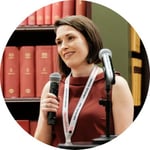
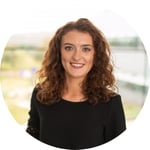
Lucy McKay Megan Pullein
CEO Strategic Operations Officer
Medics for Rare Disease Medics for Rare Disease
Christy: It’s lovely to be speaking with one of our favourite partners in rare disease, Medics for Rare Disease! Lucy, and Megan, could you start by introducing yourselves, Medics for Rare Disease, and its mission?
Lucy: Absolutely, I’m Dr Lucy McKay, the CEO of Medics for Rare Disease, and our vision is simple: equitable healthcare for everyone. Our mission is to shape a medical profession that can provide timely diagnosis and excellent care to people living with rare diseases.
Megan: I’m Megan Pullein, and I’m the Strategic Operations Officer at Medics for Rare Disease. My primary role is to help manage our work with the RDI-Lancet Commission, specifically for Working Group 2, which Lucy Co-Chairs.
Christy: What are the Lancet Commissions, and what is the RDI-Lancet Commission for Rare Diseases?
Megan: The Lancet Commissions are in-depth research initiatives that tackle urgent and complex global health issues. They gather experts from around the world to collaborate on solutions, which are then published in the renowned medical journal. The vision for this specific commission is to make rare diseases visible globally, ensuring that every person is seen, heard, and cared for, no matter where they live. The goal is to produce actionable recommendations that any government can take and implement within their society.
Christy: I understand that the commission is divided into 5 working groups. What is the focus of each?
Lucy: Before breaking down the groups, it’s important to state the golden thread that runs through all of this: human rights. The entire commission is fundamentally about achieving equity for patients around the world.
Megan: That leads perfectly into Working Group 1, which is focused on visibility for human rights. This is the core of the commission. Working Group 2, which we are leading, focuses on visibility for social justice. These are the 2 overarching themes. The other groups are more specific: Group 3 is looking at data and metrics; Group 4 is tackling visibility within healthcare systems, particularly the diagnostic odyssey; and Group 5 is focused on clinical pathways and trials.
Christy: Where does the work for each group start, and where does it end?
Lucy: We’re working in 3 phases. For example, in Working Group 2, first is a comprehensive literature review to answer the question: is social justice being achieved for people living with rare disease? If so, how? And if not, why not?
The second phase is generating new evidence. We want to fill the gaps we find in the literature, especially from geographical and demographical sources that are currently missing. We have a lofty goal of trying to represent advocates from every UN-recognized country, starting with the places from which we hear no voices.
The final phase will be to consolidate this evidence into concrete recommendations.
Christy: What do you find most exciting about RDI-Lancet Commission?
Lucy: For The Lancet to even highlight Rare Disease is a major milestone in history. What excites me is that this project forces us to pull back to focus on the individual. We constantly have to ask, for example, How is this recommendation going to help someone in rural Chile? It moves the conversation beyond tech, molecules, and industry chatter. Tech doesn’t matter to people if they can’t access it or are being treated without the respect every human being deserves.
It allows us to establish a global standard of provision for the rare disease community and will help shape The World Health Organisation’s Global Action Plan for Rare Disease. We hope that in the future there will be greater standardisation and transparency in how nations care for rare diseases. This will empower the rare disease community to understand what they are entitled to, the barriers to access and to demand accountability.
Christy: Thank you so much Lucy and Megan, it’s exciting to see this research moving forward, and we’re all looking forward to seeing the forthcoming publications.
For more information on the RDI-Lancet Commission:
https://www.thelancet.com/journals/lancet/article/PIIS0140-6736(25)00211-9/abstract
About Medscape Education
Medscape Education (medscape.org) is the leading destination for continuous professional development, consisting of more than 30 specialty-focused destinations offering thousands of free CME and CE courses for physicians, nurses, and other healthcare professional
This content was provided by Medscape Education
Company Details

Latest Content from Medscape Education
Shifting the Paradigm: A New Era for Parkinson’s Care
In this episode of “Hear From Her:” Hear from two leaders at the forefront of a much-needed change in how Parkinson’s is understood, diagnosed, and treated.
World Orphan Drug Congress 2025 in Amsterdam
Medscape Education will make its debut at the World Orphan Drug Congress (WODC) 2025, taking place in Amsterdam, the Netherlands, October 28-29.
Medscape Education: Pioneering Pathways at ESMO 2025
Medscape Oncology will be pioneering pathways at the 2025 ESMO congress taking place in Berlin, Germany this October.
Game On: Medscape Education Golfs for a Cause
Medscape Education is proud to stand alongside the National Kidney Foundation (NKF) as a sponsor of one of the nation’s most impactful charity events benefiting patients living with kidney disease,...
Innovation in Action at AAFP FMX 2025
This year, Medscape Education is redefining the live learning experience at AAFP FMX 2025. With 8 groundbreaking, accredited symposia, we are proud to be at the heart of the meeting,...
Shifting the Paradigm: A New Era for Parkinson’s Care
In this episode of “Hear From Her:” Hear from two leaders at the forefront of a much-needed change in how Parkinson’s is understood, diagnosed, and treated.
Global Healthy Living Foundation and Medscape Education Join Forces to Bridge the Gap Between Patients and Providers with Immunology Education
UPPER NYACK, N.Y.--(BUSINESS WIRE)--The Global Healthy Living Foundation (GHLF) today announced a new partnership with Medscape Education to advance patient-centered innovation within the Immunology Learning Nexus (Nexus), Medscape’s flagship multi-year...
Breakthrough Alzheimer’s Therapies Drive Early Detection Rates While Exposing Deep Treatment Disparities
Analysis from Komodo Health and Medscape Education shows cognitive screening up 10% and biomarker testing up 23%, yet significant disparities persist in detection for women and treatment access for Black...
Virtual Practice, Real Results: The Power of Virtual Patient Simulation
Simulation has never been more vital in medicine than it is today. As increasing numbers of physicians turn to large language models for clinical answers1, the real differentiator isn’t just...
A New Destination for Oncology Education
Medscape Oncology is pleased to announce the launch of a groundbreaking new learning space designed to provide education across tumor types and oncology disciplines: PIONEER – PrecIsion Oncology: Navigating EvidEnce...