



Good design saves lives
March 2, 2021 | Communications, creativity, design
Good design and creative thinking are essential if we are to improve on existing problems in new ways, which is why design and creativity within healthcare is vital. Health is core to every human beings’ existence, so communications in healthcare must be as effective as possible.
The words design and creativity are widely misunderstood. If you were to ask people what they first think of when hearing them, they might say painting or drawing. Given time, they might decide design covers architecture, website development, or packaging. And creativity encompasses fields of work like writing, acting, or singing.
More accurately and simply, however, design is the process of problem solving. Many people think of design and get whisked away into colour and noise but some of the best design goes totally unnoticed. That is because good design is a seamless solution to an existing problem.
Likewise, to think creatively is not to think in epic cinematic detail with fanfares and bright lights. It is to approach an issue or problem in a different way. After all, it would be madness to keep approaching the same problem in the same way but expecting a different result.
Redesigning healthcare communications
Good design and creative thinking are essential if we are to improve on existing problems in new ways, which is why design and creativity within healthcare is vital. Health is core to every human beings’ existence. Amid a global pandemic, it is obvious how important it is for humanity to be well-informed and quick to act on healthcare issues. Communications in healthcare must be as effective as possible.
The challenge with this is that the nature of communications in healthcare is both extremely diverse and extremely complex. It can encompass everything from sharing information on a disease, to inform doctors of a new treatment, to internal communications. When speaking to patients, complex healthcare information must be distilled into an understandable format, while internal communications may be more about educating employees.
Healthcare communication must respect the healthcare professional (HCP), avoid sentimentality, and enable patients and clinical professionals alike get a handle on new innovations. Good design and creativity are vital to this process.
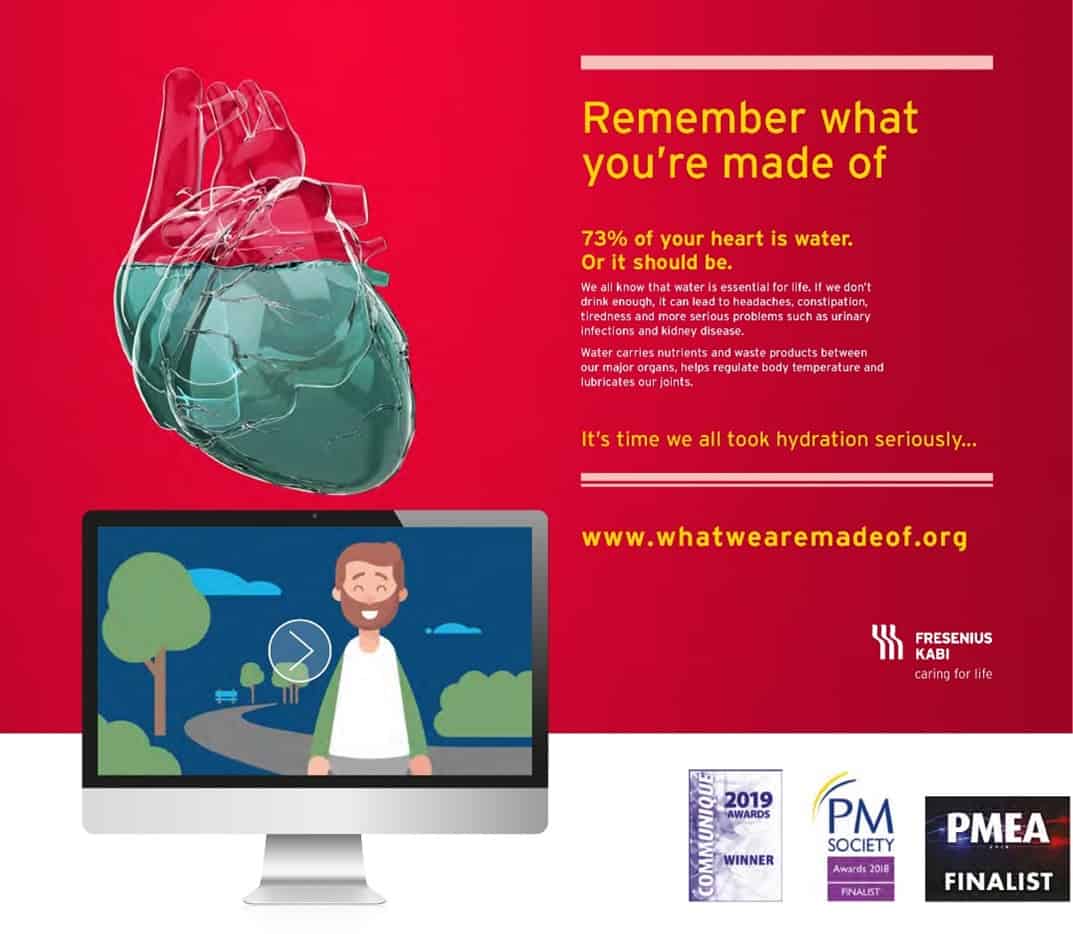
This campaign by Fresenius Kabi is a nice illustration of these ideas in practice. It quickly conveys a scientific matter visually and provides a call to action so that HCPs can explore the next steps.
The communications tools used need to convey to things well: Firstly, that the subject matter is rooted in science and that this isn’t marketing mumbo-jumbo. Secondly, that there are straightforward steps to taking things further, which wont be too time-consuming for audiences to follow up on.
What are the challenges?
Given that we understand the need for design and creativity within healthcare communications, you could assume that the industry is already making progress. But healthcare companies are facing a number of challenges, heightened by COVID-19.
- Audience – those delivering solutions to patients are under siege; they are short on time and are adapting to new platforms that were not designed to support practice. They are currently bereft of their usual congresses, symposia, company representatives and other tangible sources of reassuring information.
- Platforms – fear has fueled the increased demand for data-based digital communications from medical affairs teams as healthcare providers seek information from sources they respect and trust. When people are afraid it is human nature to seek the most accessible, clearest, and reliable information possible.
- Trust – following a surge in misinformation being spread, about vaccinations for example, the public is increasingly turning to patient associations, community healthcare providers, and patient-orientated digital resources to build a realistic picture of their ailments and treatment. People are self-diagnosing more and more.
What is the solution?
Knowing what the challenges are, and that we need creativity and good design to solve them, what can the healthcare industry do to overcome these?
The best way is to focus on digital – whether it be webinars, virtual events, chatbots, websites, social media and social listening are great way to engage with different stakeholder groups. However, technology can be a painful barrier for people who are time poor or unfamiliar with the way private healthcare advice differs from that of a GPs or hospitals. Most of what is offered to healthcare providers and the public does not optimise access or provide the clarity needed.
You only need to look at the NHS Track and Trace app to see this. Despite its affiliation with the NHS, a trusted institution, many people are wary of the application. A delayed roll-out, phantom notifications and a lack of alerts have all chipped away at public trust in the application.
In addition, The Times reported that crucial data sent to the app alerting it of contact with the virus had not been sent to users.
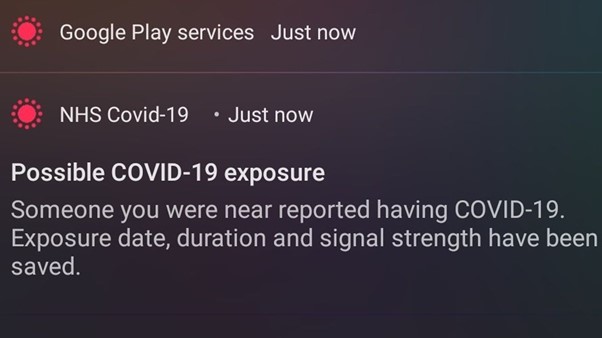
Below is an example of the kind of notification users have received, which then disappears and is not mentioned in the app at all:
A great deal of what is offered when focusing on digital is divorced from the one thing that would engender trust and create followers: the human factor. If there is no sense of a human being present, someone to hold your audience’s hand as they pick their way through healthcare challenges, then your digital offering is just a collection of pixels keeping your audience at an uncomfortable distance.
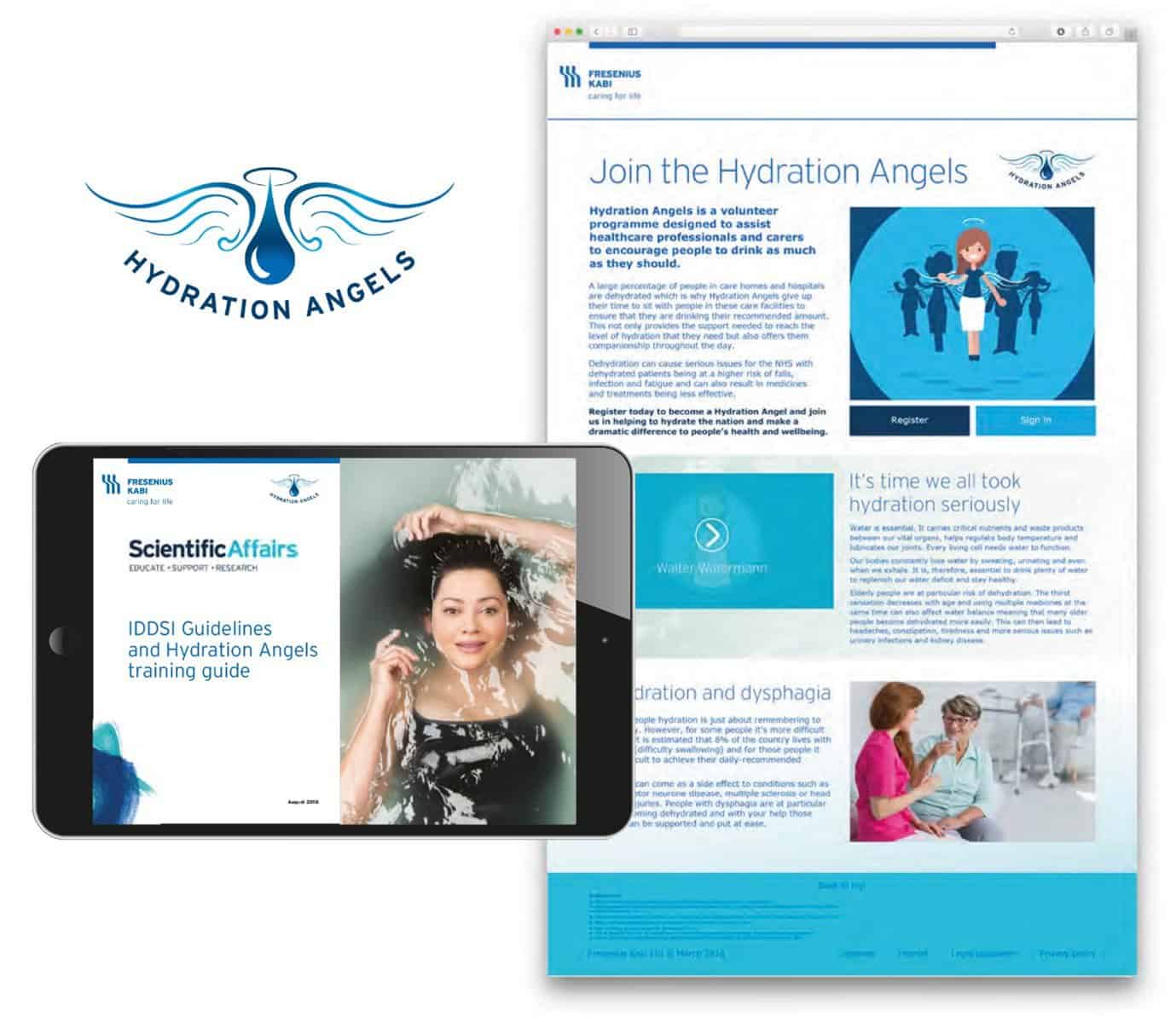
The integrated campaign, Hydration Angels, pictured above included animations, disease awareness education materials, and mobile and online communications to raise awareness and promote the availability of training. Since the launch of this campaign, market share of Thick & EasyTM Clear has grown by over 5%.
In addition, the Natural Hydration Council recently published UK population figures showing we are now consuming more water: 17 per cent more tap water and 9 per cent more bottled water.
Designing creative solutions for healthcare
Even before COVID-19 brought the healthcare sector into the global spotlight, society was becoming increasingly obsessed with finding reliable information. We live in a world in which we’re bombarded with information. Thanks to a combination of soaring social media usage and the mass spread of misinformation, trust is deteriorating across the board.
In this era of misinformation, informed and empowered patients are now a valuable asset. Brands will want to reach them, and people will want to be them. At worst, their actions inform the development of therapeutic pathways for healthcare professionals; at best, they are champions of the self-care agenda.
It is our job to join the dots in such a way that empowers patients. This is where design and creativity can genuinely save lives. When people receive advice they can trust, in a way they understand and can interact with easily, they will receive better treatment, faster. They then become safer and healthier.
This can only happen if the environment through which they travel must feel like it has been designed to meet their needs. It must be authentic, innovative, and crucially, it must be designed to solve people’s problems, rather than simply add the already deafening amount of colour and noise.
This content was provided by Page & Page Health
Company Details

Latest Content from Page & Page Health
Apple Watch Series 4: A life-saving tool or just making us more health obsessed?
Apple’s latest Watch boasts lots of new health and fitness features. But are these really beneficial? Or are they just making us more health obsessed?
Seduce anyone in four simple steps
You know the health of the global economy is dependent on our ability to seduce one another – don’t you? And you know that we need to be able to...
Money, sex and power
What really makes your world go round? Is it money, sex or power? Or is it something more subtle?
If you’re not thinking segmentation, you’re not thinking
Having a background in market research I’ve been lucky to work on a number of customer segmentations in my time but working in creative communications it is still too rare...
Omni-empathy
So, we’ve arrived. Our work has stepped beyond multichannel to omnichannel. We can be and in fact are everywhere, all the time. We are omni-present. We are God. Or are...
Using contextual moments in marketing
Marketers talk about giving the right message to the right consumer at the right time as a key factor for any campaign. This has become even more refined and targeted...
Creativity has lost its worth
Creativity has lost its worth, and sadly it is undermining effectiveness
Page & Page: How much longer can they keep it a secret?
With the appointment of Paul Townley-Jones as Director of Brand and Strategy and Richard Rizzo-Hills as Senior Account Manager, Page & Page continue to grow the agency’s offering across the...
No one is listening to you!
We know it is harsh but you know how frustrating it is. You want them to embrace change but they’ve got cloth ears. That’s why we have produced a guide,...
Could you tell a story in six words?
Today is the birthday of Ernest Hemingway – one of the greatest story tellers ever and a source of inspiration for anyone trying to communicate. Watch this short magical video...