




The 10-year Web Challenge
February 18, 2019 | Functionality, UI, UX, User interface, user experience, web design
Understanding your users’ needs is more critical online today than ever. A site should mould itself around these insights, deliver those needs quickly, efficiently and with plenty of white space.

The 10-year challenge, a task in which one posts comparative photo’s (now vs 10-years ago) has taken the online world by storm with the concept flooding social media. The challenge originally featured self-portraits (selfies I believe they’re called these days), but was then utilised for common causes such as global warming (the size of the polar ice cap) and plastic in the ocean. Here is one application of the concept I found interesting and nostalgic in equal measure: The 10-year challenge for the big websites, which highlights the evolution of web design (and therefore user experience and user interface). It illustrates how sites and companies can change based on the needs of the user.
It would seem, as I’m sure my fellow designers suspected, less is indeed more. Space is undoubtedly (as we knew) good for readability. It can be a fierce battle between designer and client when it comes to how much content is included in a piece of communication, even more so when it comes to creating a web page. One assumption (often that of the client) is that there is unlimited space, so more can be included. The reality is the opposite: the net is infinite, there are countless websites available, countless sites that are similar to the one you are currently creating – and users have a fairly low attention span. You must fulfil their needs, and quickly. Overpopulate your site, and you’ll lose them. Yahoo has to be one of the worst sites I’ve seen (from a designers perspective) when it comes to overpopulation. Even now, it’s barely better than it was 10 years ago (in my humble opinion).

Also, and potentially more importantly, of note are those sites (such as Google, Wikipedia, Craigslist and Facebook login) that haven’t changed their core functionality. Their users’ needs have remained the same, and the sites have remained single-minded. Not adding for the sake of adding and not complicating the experience for no reason. They have only undergone slight modernisation of fonts and style (alongside the aforementioned ‘more space’ update). Proving further that, as well as ‘less is more’, ‘form’ indeed ‘follows function’.
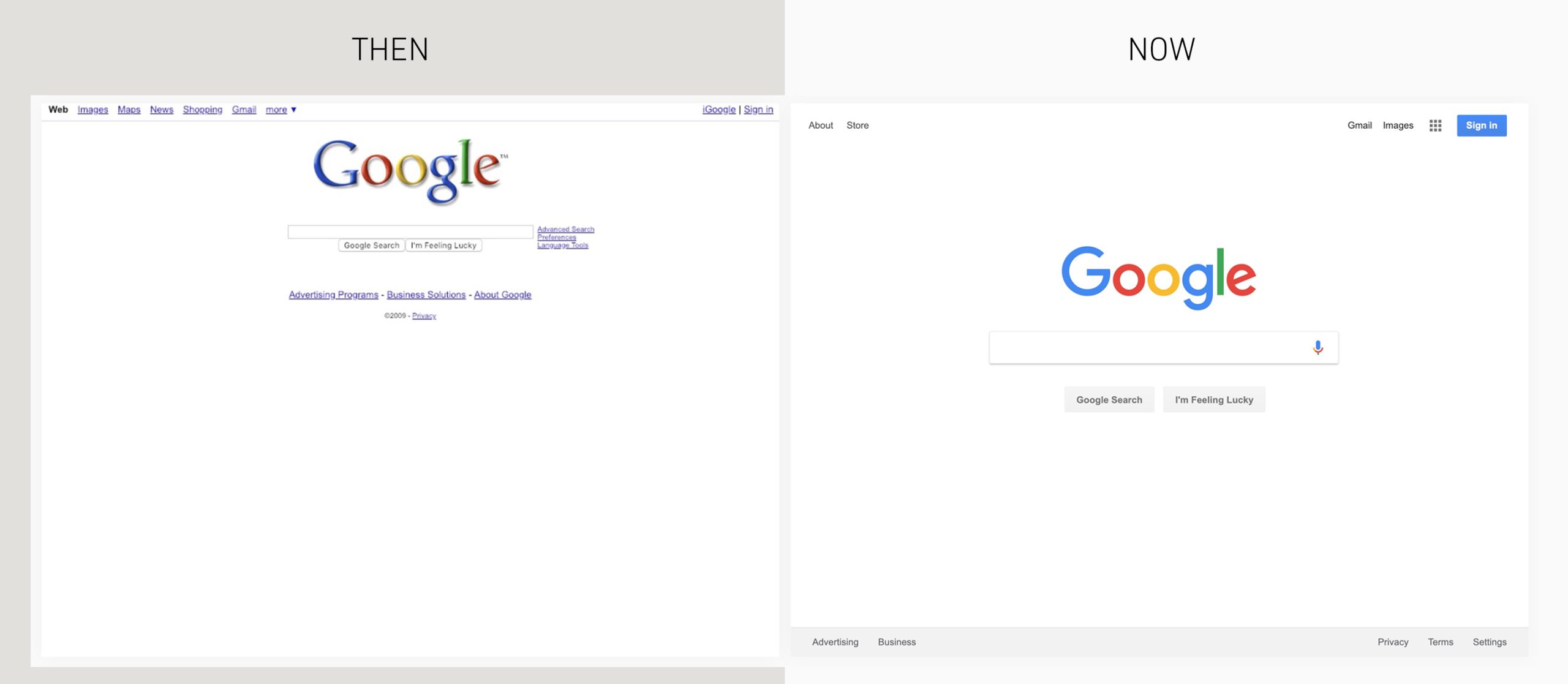
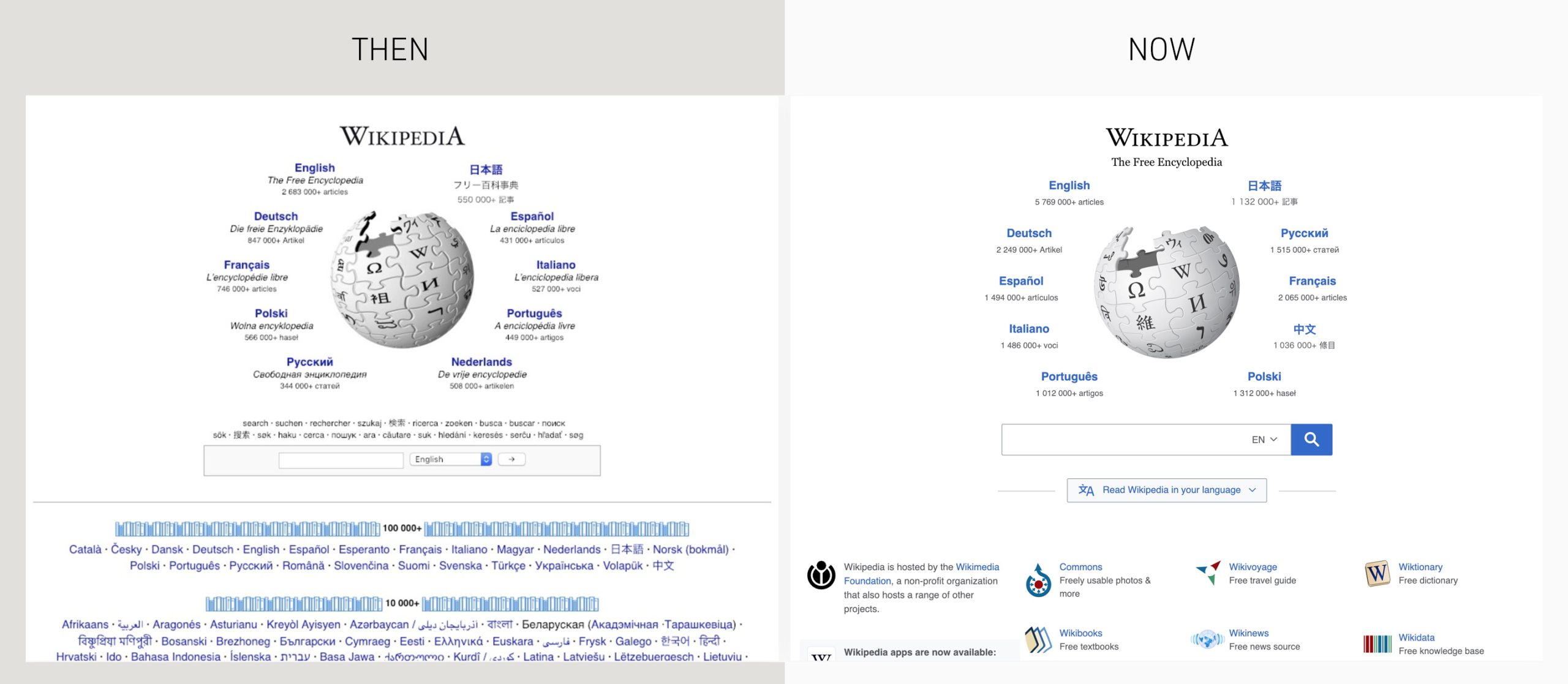
Overall, all these examples demonstrate the importance of understanding the users’ needs: What are they visiting sites to do? What content are they engaging with? What do they do once they’ve visited a site and what’s their onward journey? This should be the primary driver when it comes to design, layout and functionality. This understanding of the audience should result in a site that moulds to meet their needs.
Examples in point:
Microsoft – from technical Software needs to tools for lifestyle
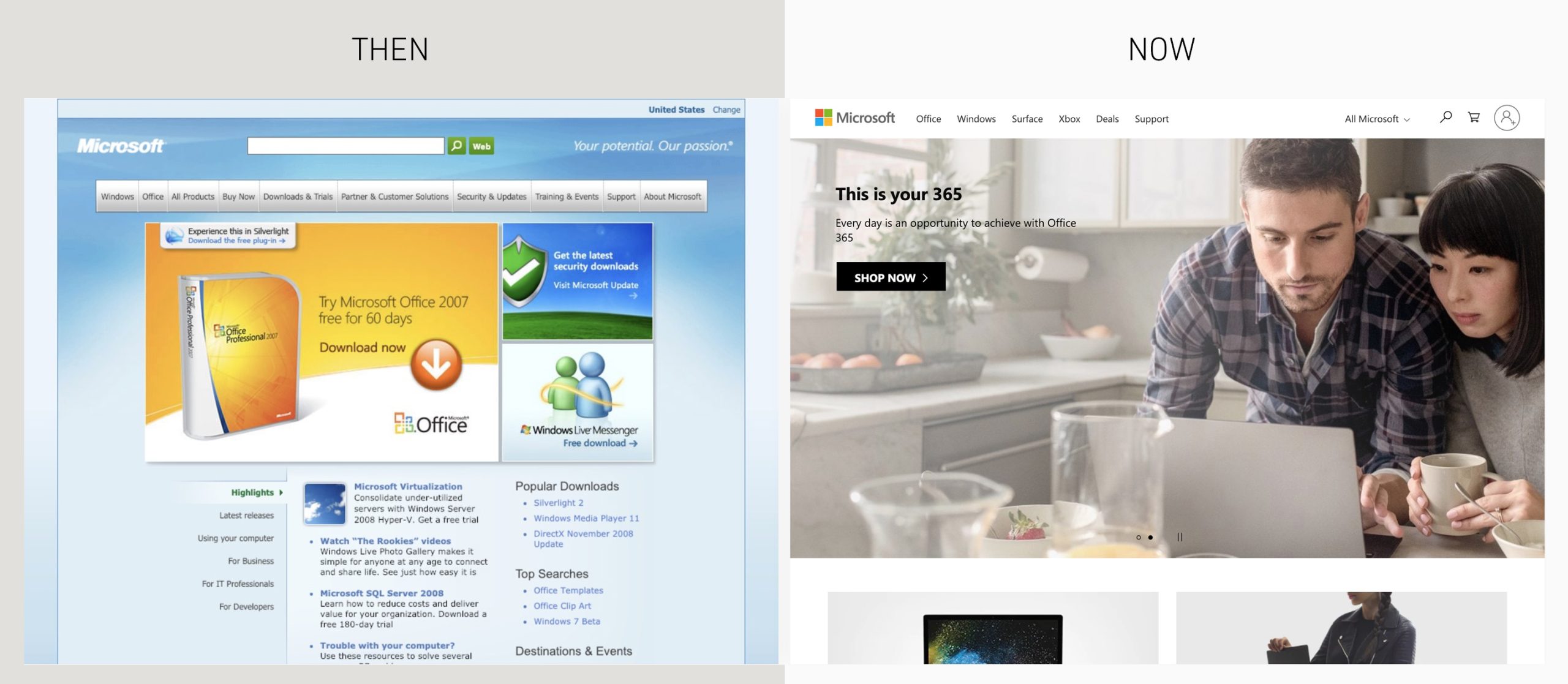
https://www.microsoft.com/en-gb/
Apple – from Software and Apps to Hardware

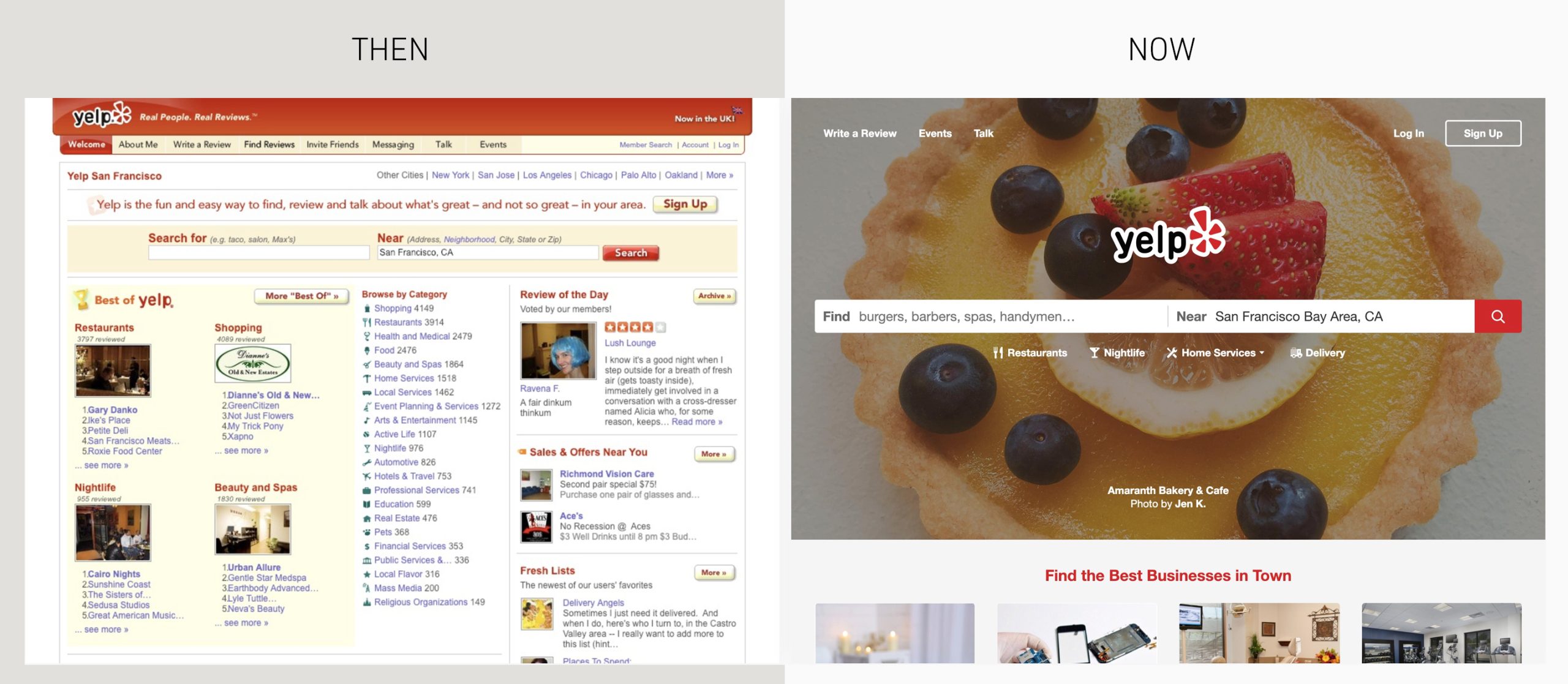
Yelp – from reviews to finding a restaurant
The ‘takeaway’ from this for me (so to speak), is that knowing your audience, knowing what they need and why they engage with your brand
is more critical today than ever. In such a crowded space as the good old fashioned electronic interweb, presence must be clear and your site must perform the job the user needs it to. It must do it quickly, efficiently and with plenty of white space.
See more comparisons here:
https://www.arun.is/blog/10-year-challenge/
Author: Paul Hunt
This content was provided by Page & Page Health
Company Details

Latest Content from Page & Page Health
The concordance conundrum: the art of active listening
The art of active listening explores the links between effective communication and better patient concordance and medical outcomes, why many HCPs still overestimate their ability to communicate effectively and the...
The concordance conundrum: understanding the complexities of behaviour change
Understanding behaviour change looks at the six fundamental steps required to change human behaviour and discusses why HCPs need to start here if concordance is to be improved.
The concordance conundrum: creating space for open dialogue
Growing numbers of patients want a partnership model with their HCP, whereby both parties are equally involved in the decision-making process. This model has been linked with an increase in...
The concordance conundrum: the tech divide
COVID-19 resulted in the rapid adoption of virtual consultations; while they offer increased accessibility and convenience for some, are they really all they are cracked up to be? Consultations in...
Improving patient concordance: where does industry fit in?
What’s in a name? explores the idea that those healthcare organisations that develop tools and support structures to improve concordance will be at an advantage when it comes to product...
The concordance conundrum: the value of improving patient experience
This is the first in a series of articles where we explore how the current climate presents companies with a multitude of opportunities to improve communication between healthcare organisations and...
The Pivot
In times of uncertainty it is critical for businesses to take action to protect their brand image and longevity.
Communicating through video
It's likely that video is about to replace a lot of your face-to-face appointments.
Could coronavirus turn us all into online gamers?
As businesses gauge the potential impact of coronavirus (COVID-19), with a sense of fear and pessimism causing a dampening of economic activity and suspension of the stock market, the healthcare...
Love – it really does make the world go around
No two people are the same nor as individuals are we particularly predictable – we might like to think we are because at some point in time someone decided that...