



The 10-year Web Challenge
February 18, 2019 | Functionality, UI, UX, User interface, user experience, web design
Understanding your users’ needs is more critical online today than ever. A site should mould itself around these insights, deliver those needs quickly, efficiently and with plenty of white space.
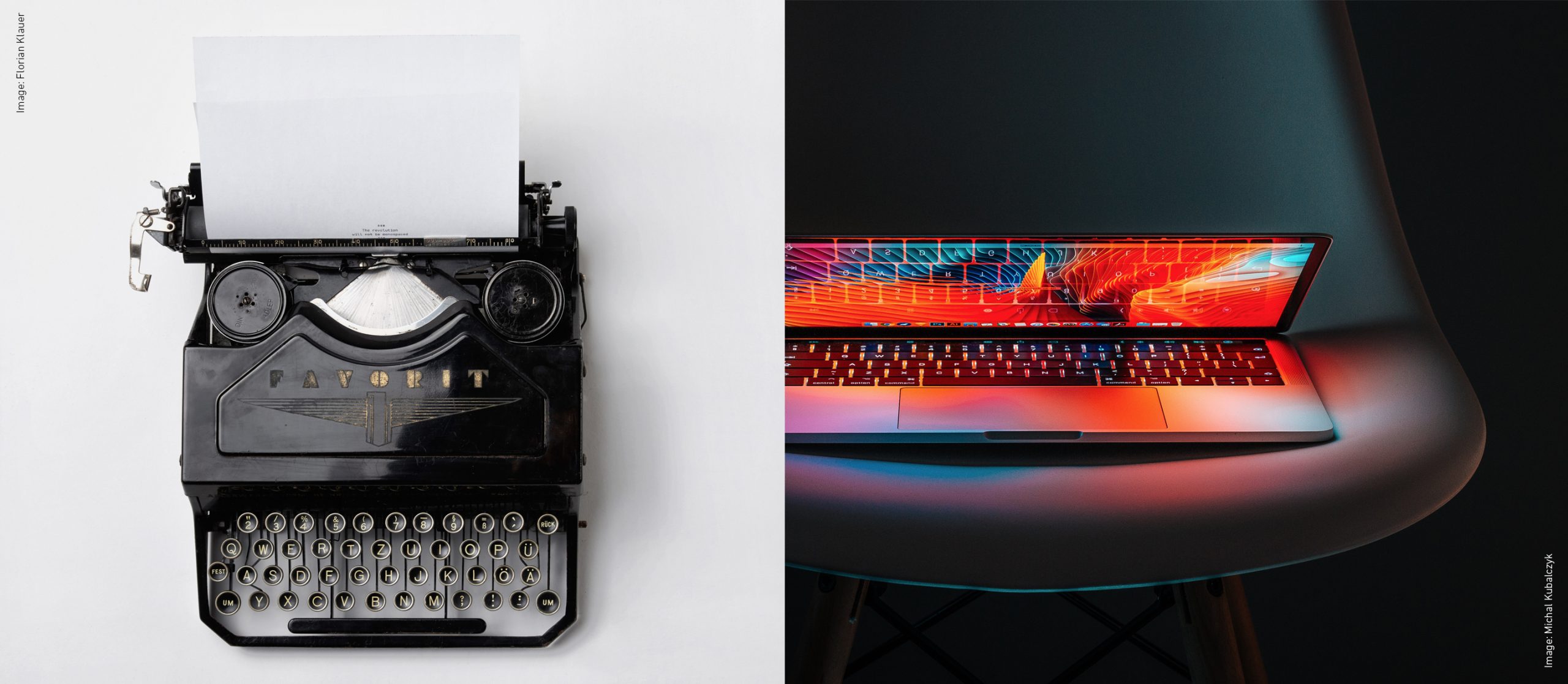
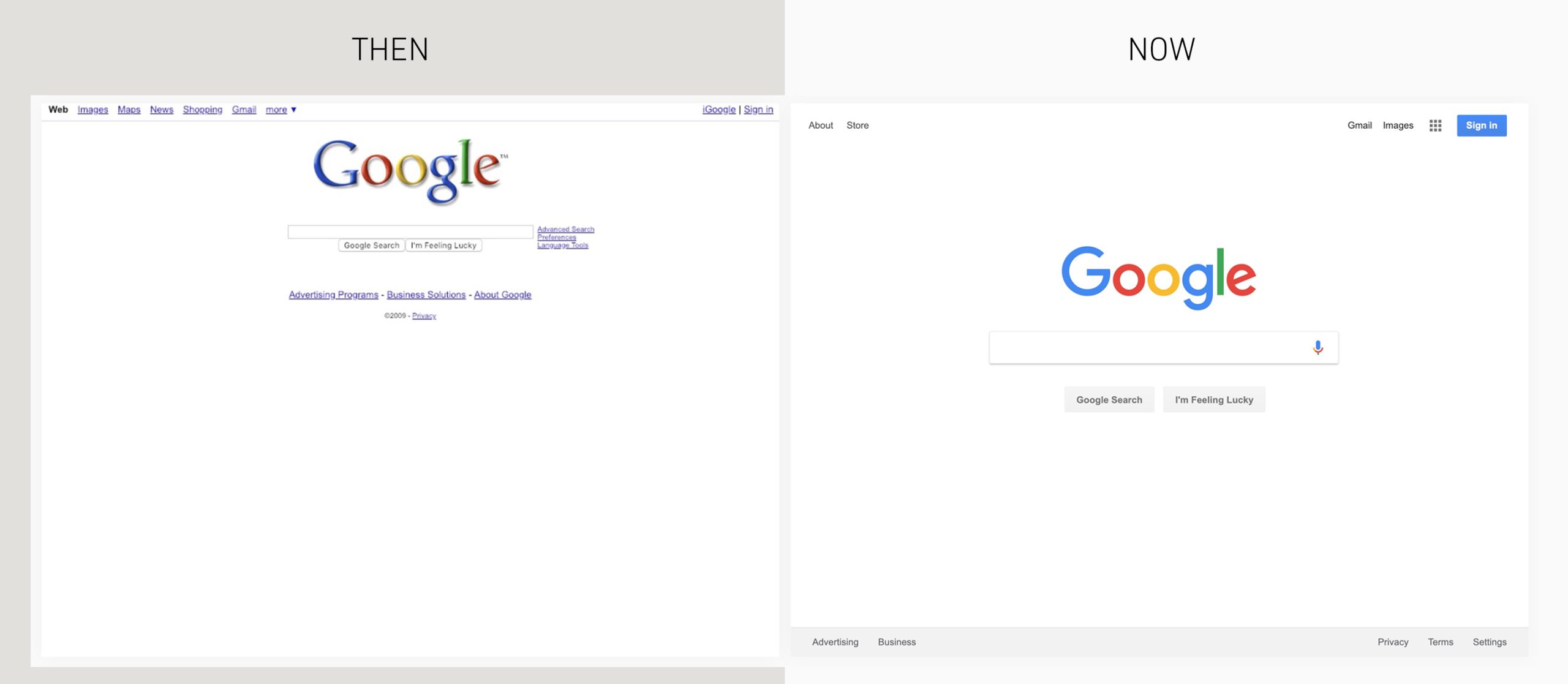
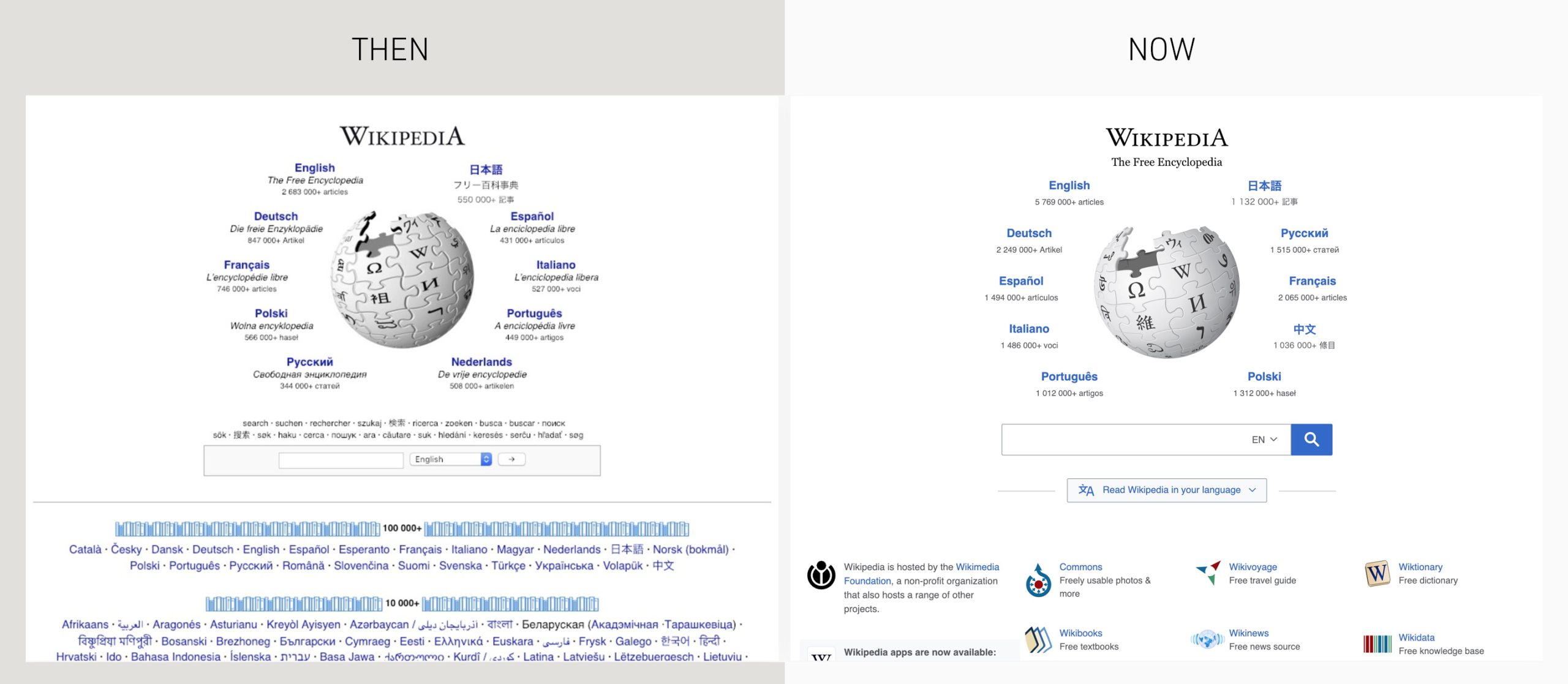
The 10-year challenge, a task in which one posts comparative photo’s (now vs 10-years ago) has taken the online world by storm with the concept flooding social media. The challenge originally featured self-portraits (selfies I believe they’re called these days), but was then utilised for common causes such as global warming (the size of the polar ice cap) and plastic in the ocean. Here is one application of the concept I found interesting and nostalgic in equal measure: The 10-year challenge for the big websites, which highlights the evolution of web design (and therefore user experience and user interface). It illustrates how sites and companies can change based on the needs of the user.
It would seem, as I’m sure my fellow designers suspected, less is indeed more. Space is undoubtedly (as we knew) good for readability. It can be a fierce battle between designer and client when it comes to how much content is included in a piece of communication, even more so when it comes to creating a web page. One assumption (often that of the client) is that there is unlimited space, so more can be included. The reality is the opposite: the net is infinite, there are countless websites available, countless sites that are similar to the one you are currently creating – and users have a fairly low attention span. You must fulfil their needs, and quickly. Overpopulate your site, and you’ll lose them. Yahoo has to be one of the worst sites I’ve seen (from a designers perspective) when it comes to overpopulation. Even now, it’s barely better than it was 10 years ago (in my humble opinion).

Also, and potentially more importantly, of note are those sites (such as Google, Wikipedia, Craigslist and Facebook login) that haven’t changed their core functionality. Their users’ needs have remained the same, and the sites have remained single-minded. Not adding for the sake of adding and not complicating the experience for no reason. They have only undergone slight modernisation of fonts and style (alongside the aforementioned ‘more space’ update). Proving further that, as well as ‘less is more’, ‘form’ indeed ‘follows function’.
Overall, all these examples demonstrate the importance of understanding the users’ needs: What are they visiting sites to do? What content are they engaging with? What do they do once they’ve visited a site and what’s their onward journey? This should be the primary driver when it comes to design, layout and functionality. This understanding of the audience should result in a site that moulds to meet their needs.
Examples in point:
Microsoft – from technical Software needs to tools for lifestyle
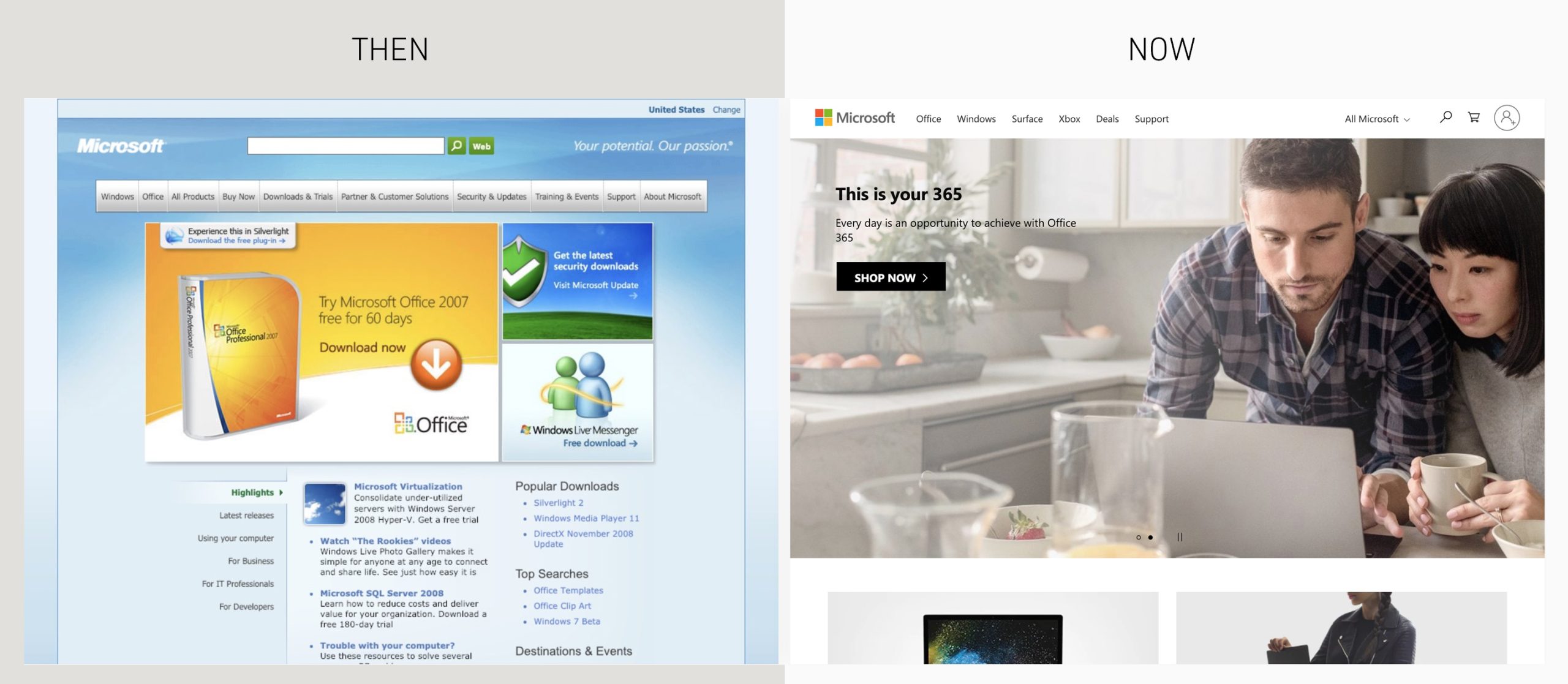
https://www.microsoft.com/en-gb/
Apple – from Software and Apps to Hardware

Yelp – from reviews to finding a restaurant
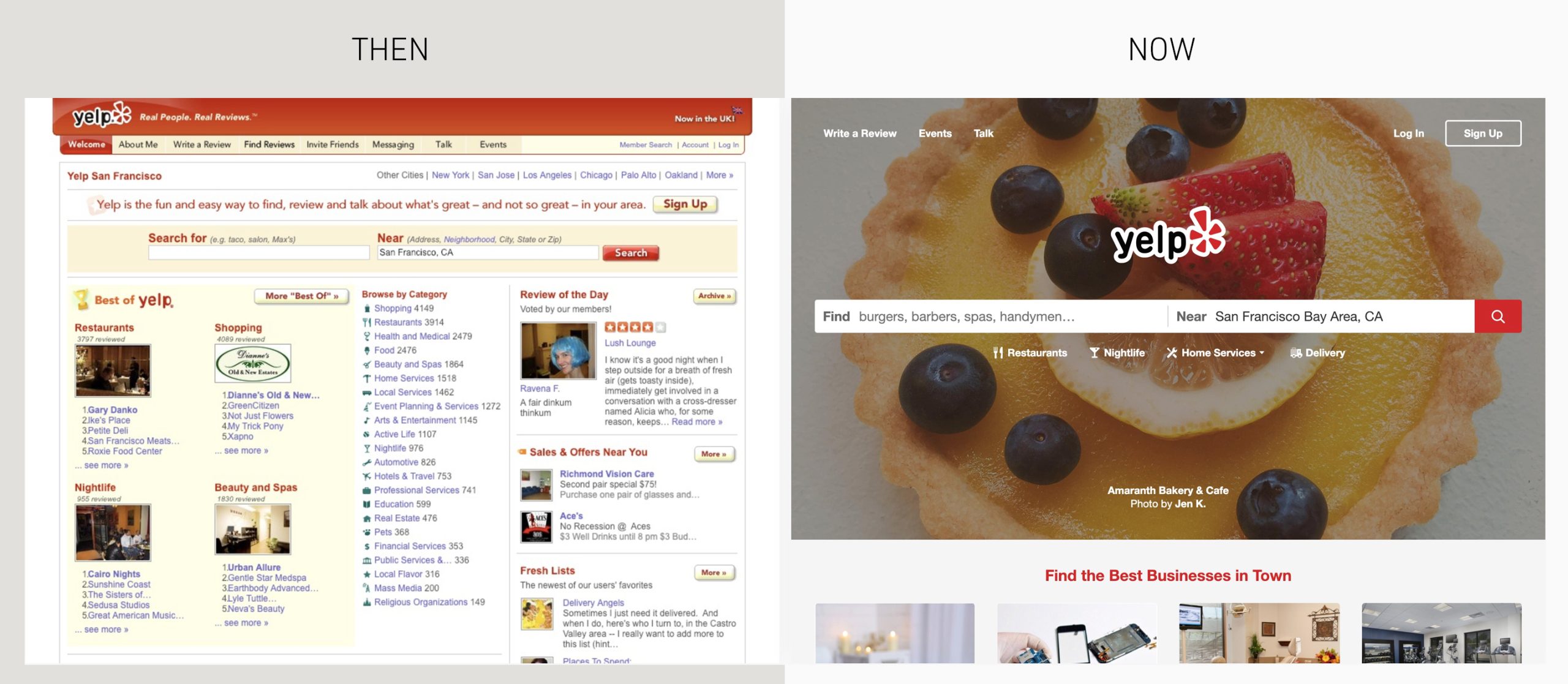
The ‘takeaway’ from this for me (so to speak), is that knowing your audience, knowing what they need and why they engage with your brand
is more critical today than ever. In such a crowded space as the good old fashioned electronic interweb, presence must be clear and your site must perform the job the user needs it to. It must do it quickly, efficiently and with plenty of white space.
See more comparisons here:
https://www.arun.is/blog/10-year-challenge/
Author: Paul Hunt
This content was provided by Page & Page Health
Company Details

Latest Content from Page & Page Health
Rediscovering the human touch in healthcare
The landscape of our healthcare system is ever evolving. But it is under threat from the diminishing time allowances our healthcare professionals have to spend with each patient. With little...
Remote Patient Monitoring
The COVID-19 pandemic has brought into sharp focus the need to harness and leverage digital tools and technology for remote patient monitoring (RPM). With the onset of lockdown, and a...
The power of communication: Engaging diverse groups in healthcare
Humans are diverse and communications to engage us need to be inclusive. It’s no longer about talking to a group, a cohort or an imagined section of society - especially...
How a design mindset can lead to better medical outcomes
By adopting a design philosophy, healthcare companies can develop communications that allow healthcare professionals (HCPs) to better meet the needs of their patients. Imaginatively designed content combined with patient insights...
How to design better medical outcomes: Combining patient insights and empathetic design
By adopting a design-led, solutions-based approach to communications, companies can help healthcare professionals (HCPs) to better meet the needs of their patients through their communications. While now may not feel...
Is communication killing the COVID-19 vaccine’s chance at success?
Against the challenging backdrop of of misinformation, communications specialists are working to educate the public, change the minds of millions and fight to return to some sense of normality in...
Healthcare agency Page & Page and Partners welcomes wave of new talent
Page & Page and Partners has welcomed six new joiners across its Creative and Client Services teams.
Good design saves lives
Good design and creative thinking are essential if we are to improve on existing problems in new ways, which is why design and creativity within healthcare is vital. Health is...
Creative med affairs and bridging the healthcare gap
Within the healthcare industry, any patient-facing activity has traditionally been the domain of marketing teams – be that brand marketing or marketing individual products. Recently, however, a trend has emerged...
Senior team at Page & Page become Partners
Page & Page and Partners are announcing the appointment of their senior management team to partners in the agency. The new partners will be actively involved in shaping the future...