




The importance of appropriate language when raising awareness of a disease
July 2, 2025 | Language, corporate communications, disease awareness campaigns, pharma-patient relationship, public awareness
Using the right language in disease awareness campaigns can help help save lives. Here we share top tips on how to use language that is accessible, inclusive and engaging.

The use of correct and easy-to-understand language is important while raising awareness of a disease. It helps people understand their symptoms, encourages them to get checked and empowers them to talk more openly about it. Using appropriate language that is accessible, inclusive and engaging while raising awareness of a disease can help save lives.
At SAY we have been looking at how using the right language can make a disease awareness campaign more effective.
The art of simplicity
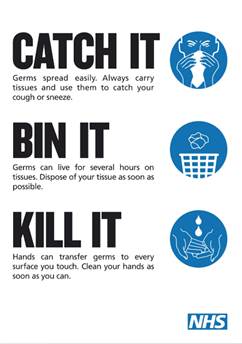 Less is more might be a cliche but it’s true when it comes to healthcare communication. Plain language makes it easier for everyone, regardless of their background, to understand the information provided.
Using simple language helps connect with audiences, shows empathy, provides clarity, and empowers people of all abilities to be health-literate.
This hygiene awareness campaign poster released by the NHS during the Covid-19 pandemic is a good example of simple, yet effective language used for communicating with a large and diverse audience. It provides clear instructions aided by simple graphics making it a great resource for everyone.
The importance of inclusivity
It is particularly important for medical and healthcare communications to be accessible and understood by all. Use of inclusive language will help to appeal to a wide range of audiences regardless of age, level of education, socioeconomic background, learning and other disabilities and understanding of medical terms.
Using ‘people’ instead of gendered words like ‘men’ or ‘women’, ‘partner’ or ‘supported person’ instead of ‘husband’ or’ wife’, or person-first language instead of identity-first language (e.g., saying “a person with a disability” rather than “a disabled person”) are some ways to make language more inclusive. A good way to ensure that your messaging is inclusive and appealing is by testing with a diverse audience.
Normalising taboo topics
Health conditions and certain bodily functions like bowel movements and menstruation can be uncomfortable for people to talk about openly. They are often considered ‘taboo’ topics.
 A study by Crohn’s & Colitis UK showed that nearly 40% would rather say ‘I had an accident’ in social situations than use words like ‘bowel or faecal incontinence’. Only 49% people felt comfortable telling a friend if they had diarrhoea and very few (16%) felt comfortable telling their employer of their bowel-related symptoms.
Changing how these topics are talked about in media and healthcare communication can get rid of the stigma attached to them.
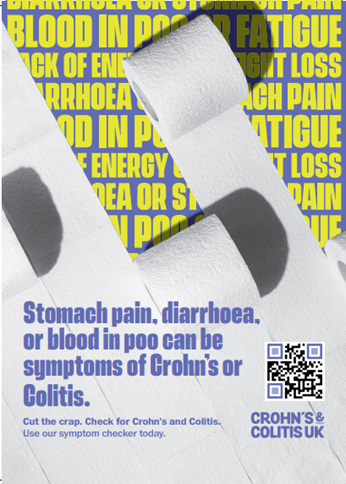
A good example is the ‘Cut The Crap’ campaign by Crohn’s and Colitis UK to urge people to get their symptoms checked. It talks about symptoms like ‘diarrhoea’ and ‘blood in poo’ without shying away from the words people might find uncomfortable.
By normalising these topics and words through language, people are empowered to share their stories, feel seen and heard by others, and feel connected to a community of people who are going through the same thing.
The role of AI in creating messaging for a disease awareness campaign
AI is integrating itself into most fields including healthcare marketing and communication. However, there are pros and cons to using AI in creating messages for disease awareness campaigns:
Pros
- Speed and consistency in messaging
- Accuracy of statistics and figures (once checked by a human of course!)
- Standardisation of language and tone
- Easy to translate the message into multiple languages with accuracy
- Easy to check for inclusivity
Cons
- Lack of contextual understanding
- Regulation and compliance risk
- Lack of human touch and empathy in language
AI can be used to help simplify language and make it more accessible to all types of audiences. But a little human touch can make all the difference.
The lack of contextual understanding and empathy highlights the need for careful oversight by a human. Combining AI’s capabilities with your own expertise, experience and tone of voice can make your messaging informative and people centred.
Here are some of SAY’s top tips for creating a health awareness campaign that will capture your audience’s attention and convey your message effectively.
SAY’s tips for effective disease awareness campaign messaging
- Less is more – Don’t use too many unnecessary words
- Simpler the better – Don’t use flowery or hard to understand language including slang that can make people feel alienated
- Clear and concise – Use fewer words and make sure your message is crystal clear
- Low or no effort – Make it as easy as possible for people of all abilities to understand your message by simplifying complex topics and avoiding jargon
- Engage your audience – You can make your message engaging through relatable stories, humour or catchy phrases
- Check your tone – Make sure the language you use shows empathy and is in line with your message
- Customise – Tailor your messages to reflect your audiences’ age, gender, cultural and ethnic backgrounds
- Call to action – Add a call to action so your audience knows exactly what they need to do next, whether is checking their symptoms or seeing a doctor
This content was provided by Say Communications