



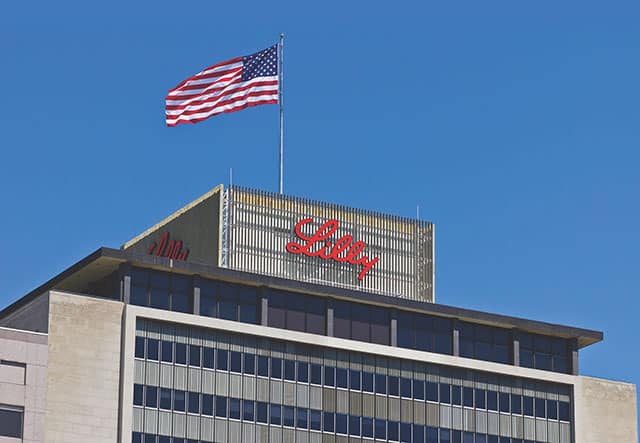
Eli Lilly will be licensing Alchemab Therapeutics’ preclinical programme for amyotrophic lateral sclerosis (ALS) and other neurodegenerative diseases in a deal worth up to $415m.
The agreement, announced by Alchemab, comes four months after the companies partnered to discover, develop and commercialise up to five new therapeutic candidates for ALS.
Under the terms of the latest pact, Alchemab will take ATLX-1282 through early phase 1 clinical trials, after which point Lilly will lead all further development and commercialisation.
The transaction includes an undisclosed upfront payment, potential discovery, development and commercialisation payments, as well as royalties.
Alchemab’s chief executive officer, Jane Osbourn, said: “With Lilly’s deep expertise in neurological conditions, [it is] ideally placed to speedily advance ATLX-1282 through the clinic, and maximise the potential to help patients.
“We believe this innovative programme has enormous promise and look forward to working with Lilly to bring this to fruition.”
An estimated 30,000 people in the US are affected by ALS, a rare and progressive neurodegenerative disease for which there is currently no known cure.
The disorder results in the loss of motor neurons that control voluntary muscles, leading to difficulties in speaking, swallowing, walking and breathing, with only about 10% of patients surviving longer than ten years.
ATLX-1282 is the first programme to emerge from Alchemab’s antibody discovery platform, which analyses patient samples from those with unusually slow rates of disease progression to identify antibodies associated with resilience.
Using machine learning and artificial intelligence, and leveraging Nvidia’s supercomputer in Cambridge, UK, the platform has enabled Alchemab to identify an antibody in people with mutations that normally lead to frontotemporal dementia, but who remain well into old age.
The biopharma has used the antibody sequence to identify the target and demonstrate its importance in neuroprotection.
“Our revolutionary computational and wet lab-based workflow has enabled us to sift through millions of antibodies to identify this target,” said Osbourn. “We think this is a powerful story demonstrating both the discovery of a novel antibody to treat [neurodegenerative] diseases and the development of a unique platform which has great potential to provide innovative treatments across many disease settings.”