

Going private: what our year taught me about the patients pharma hasn’t yet spotted
October 26, 2026 |
A thought piece on the rise of private healthcare, and why brands should help new kinds of patients and HCPs
More and more people in the UK are paying for their own healthcare, either directly or through private medical insurance (PMI), and the shift is far greater in some therapy areas than in others. Most pharma communications haven’t caught up; they’re still built around an NHS pathway that a growing number of patients leave partway through, and around NHS clinicians whose working lives look quite different from those of their private-sector colleagues.
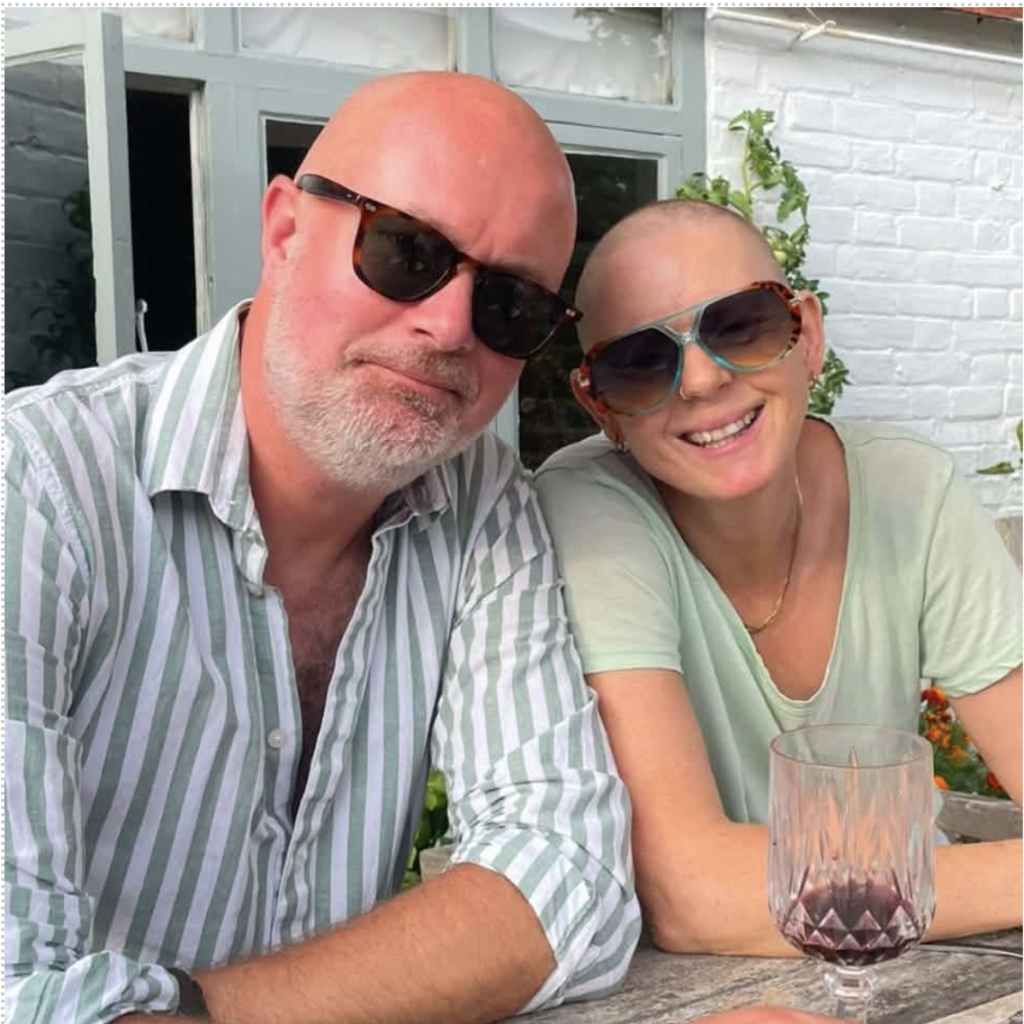
I’ve seen this from the inside this year, not as the head of a health communications agency but as a husband. This piece is about what that taught me, and what I think it means for the brands we work with.
A year nobody would want
Earlier this year my wife was diagnosed with breast cancer. I won’t dwell on the emotional hideousness of it, other than to say it’s been a year nobody would ever want, and that we’ve been lucky to have such amazing family, friends and colleagues.
Like most families, we started in the NHS and assumed that’s where we’d stay. The care, when we reached it, was kind and expert; the problem was reaching it. Diagnosis took far longer than it should have done, and once we had one, getting a date for a mastectomy felt like waiting for a train with no timetable. When you’re living with a diagnosis like that, every week of not knowing is a long one.
So we turned to our insurance, and things moved with a speed that was striking. What surprised me more was how unprepared we were for the switch itself. I’ve spent much of my career in health communications, yet I still found myself asking the most basic questions. Who do we call first? What does the insurer need from us? What happens to the referrals and scans already in the NHS system? Which consultant, and how do we judge one against another? Nobody had written the guide we needed because, it turns out, the system doesn’t really think of people like us as a distinct audience.
Why we had insurance at all
We didn’t have PMI by accident. A few years ago I lost two of my very best friends to cancer, and it changed how I thought about time. You can’t buy certainty, but you can try to buy back some of the weeks that waiting takes away, and that’s what our policy was for, although I never honestly expected to use it for my own family.
I suspect a lot of people take out cover for reasons like ours: not because they’ve lost faith in the NHS, but because someone close to them has been through something that made the waiting feel unbearable. That’s worth remembering whenever we talk about private patients as a market. They aren’t a separate, privileged group so much as ordinary families making a hard call at a hard time.
A quiet shift in how Britain pays for care
Once we were through the door, we noticed how many others were on the same path. The waiting rooms weren’t full of people dripping with diamonds, dropped at the door by their chauffeur; they were full of boringly middle-class people like us. Our private market research at 11 London bears that out: well over a million more people are covered by PMI than just two years ago, and private hospital admissions have now grown for five years running1. Insurance claims have risen substantially too, which Broadstone links directly to declining NHS accessibility2, and employers are following suit, with workplace cover at a record high and a growing share of businesses planning to offer it.
The shift isn’t even, though, and that’s what matters for brands. Chemotherapy has overtaken cataract surgery to become the UK’s most common private procedure3. Musculoskeletal care takes the largest single share of what insurers pay out, while mental health is the fastest-growing claim category. Outside insurance, self-pay now dominates whole therapy areas: the great majority of people on GLP-1 weight-loss medicines pay for them privately, only around a quarter of IVF cycles in England are NHS-funded, and the number of people waiting for an ADHD assessment runs into the hundreds of thousands4.
In breast cancer, private access can sometimes be the only access. Patients campaigned for two years, some of them crowdfunding towards a course costing more than £100,000, before NICE backed a targeted treatment for HER2-low disease5. Another newer breast cancer medicine was turned down by NICE and isn’t routinely funded today6. For patients in that position, the private sector isn’t a shortcut; it’s the route to the medicine.
People end up in private for different reasons, and via different routes
The private system isn’t one pathway but several, and patients arrive at different points with very different levels of information. Our research identifies four main routes in, based on the clearest public study of how the switch actually happens7. Most people go through their GP, who recommends a consultant but rarely explains what separates one from another. Some go it alone after hearing an NHS wait time, relying on friends and family because impartial comparison is so hard to find. Others switch mid-treatment, when an NHS clinician mentions a private option, which is the most time-pressured decision of all. And some call their insurer, where it’s often a phone operative rather than a clinician who recommends the provider. We started on our own and then went through our insurer, and we were lucky along the way: a neighbour who works at one of the hospitals helped us find our way through the system.
It’s little wonder that more than a quarter of people who’d consider private care say they wouldn’t know where to start, and only around one in four feel very confident organising it8. From the research and our own year, the gaps are easy to name. Before the switch, people need to know a private route exists and whether their policy covers diagnosis, treatment or both. On the first call to the insurer, they need to know what to ask and how to question a recommendation from someone who isn’t a clinician. Moving across, they need to know what happens to the results already in the NHS system. Then there’s choosing a consultant: they all look incredibly capable, so where do you start? And during and after treatment, they need support with medicines they increasingly manage themselves, from years of endocrine therapy after breast cancer surgery to self-injection in fertility.
Each of those is a point where a well-placed piece of information, from a source people trust, would save a family a great deal of anxious searching.
The WhatsApp number
The thing that struck us most, though, was the people. In the NHS we had a shared phone number for a team of shared nurses, all of them stretched and all of them doing their best. When we went private, we were given their personal WhatsApp numbers.
That small detail says a great deal. With more time and money in the system, the specialist nurse became our main point of contact, explaining, reassuring, chasing and translating between us and everyone else. The wider market is moving the same way. Virtual survivorship clinics are being built around cancer nurses, dietitians and psychologists, specialist fertility pharmacies offer nurse-led injection support at home, and in breast cancer, newer injectable and oral treatments are bringing care closer to home with nurses at the heart of it9. Pharmacists are changing too: around one in three is now qualified to prescribe independently10, which puts them in a very different position from the dispensing role most brand plans still assume.
Yet most pharma materials are still written for the consultant, with nurses and pharmacists treated as secondary audiences. In private care, they’re often the people patients actually talk to.
New medicines, different motives
Private consultants are differently motivated too. HCA Healthcare UK, with Sarah Cannon Research Institute, now runs the first UK trials unit outside the NHS able to offer new anti-cancer drugs in clinical trials, and Roche sponsors more of its trials than anyone else11. For an oncologist, access to newer medicines is part of the appeal of private practice, and it changes the conversation a brand can have. It becomes less about whether to use a medicine and more about how to use it well, and how to explain it to a patient whose insurer is paying, or who’s paying themselves.
From my own conversations with the nurses while my wife was hooked up to her chemo infusions, I got the sense that some of their doctors who spanned the NHS and private sectors were leading something of a double life: stretched and short of time in one, with room to talk and newer medicines to offer in the other. A brand that only ever meets them in their NHS role is seeing half the picture.
The gatekeepers are multiplying as well. Insurers, employers, digital clinics and pharmacy chains are all building pathways of their own, from Bupa and Spire’s new cancer and musculoskeletal centres to Vitality’s partnership with Boots on weight-loss treatment12. Each has its own motives and its own information needs, and very few of them sit on a brand’s targeting list today.
What this means for brands
None of this replaces the NHS, and I’d never argue it should. But for brands in therapy areas where a growing share of patients will be paying, directly or through insurance, the private patient is now a distinct audience with a distinct journey. In practice, I think that means:
- Mapping the private journey separately, because each route in has its own decision-maker and its own moment of uncertainty.
- Building materials for the switch, since a clear, compliant guide to moving from NHS to private care and working with an insurer would be valued far more than another disease-awareness leaflet.
- Writing for the nurse and the pharmacist, with materials designed for the conversations they actually have, rather than cut-down versions of the consultant’s.
- Helping private HCPs explain innovation, because new medicines often reach private practice first and the explanation needs to be as good as the science.
- Treating insurers and employers as audiences in their own right, not as back-office payers.
At 11 London we’ve started scoring therapy areas on exactly this: private growth, patient demand, the NHS access gap and the communications need13. Obesity, fertility and ADHD top our list, with men’s and women’s health close behind, while oncology leads on the sheer volume of private treatment. The common thread is people making big decisions with too little help.
Conclusion: the guide we never had
I didn’t expect a year like this one to change how I see my own industry, but it has. We were lucky: we had cover, I had a career’s worth of knowing which questions to ask, and we had nurses who answered their phones. Plenty of families going through their own health crises this year will have none of those advantages.
Brands can’t fix waiting lists, but they can make sure that whichever door a patient comes through, there’s something on the other side that helps. If we can make the next family’s switch a little clearer than ours was, that’s work worth doing.
This content was provided by 11 London
Company Details
Latest Content from 11 London
Going private: what our year taught me about the patients pharma hasn’t yet spotted
A thought piece on the rise of private healthcare, and why brands should help new kinds of patients and HCPs
Your AI pilot works. That’s the problem.
What breaks when you scale it won’t be the model. It’ll be your data.
“We’ve been told we can’t touch AI”
It’s not been a great few weeks for anyone trying to make the calm, sensible case for AI tools. Researchers have been quitting the big labs, including Anthropic, and going…
The Power of Plurality
A thought piece on plurality of voice, and rewiring the advertising agency of the modern age
Stories of sickness: applying illness narratives to health advertising
By Dr Stephanie Goley Introduction As advertisers, we know that health and pharmaceutical campaigns hold enormous influence over how the public perceives illness, wellness, and treatment. But too often, our…
Advertising For Women’s Health: Breaking Taboos and Driving Change
Our strategist Stephanie Goley, MSc, PhD takes a fascinating look at how advertising is breaking down stigmas around areas of women’s health such as menstruation and menopause – and helping…
Rain Free Days: A Migraine App Shaped by Real Experiences
Rain Free Days® is a free migraine support app created by Teva, 11 London, and the migraine community. It helps users track symptoms, spot patterns, and access personalised resources like…
11 London and B Corp
Three years ago, 11 London became the first UK health agency to gain B-Corp accreditation. CEO and Co-Founder, Matt Hunt reports back on life in the B-List…
King’s College London and 11 London collaborate on health psychology
We’re delighted to announce that we are working in partnership with the Health Psychology department at King’s College London. Professor Rona Moss-Morris is working with the agency on a shared…
How we’re making AI a part of life at 11 London
This article talks about how AI is being used more in advertising, showing how it can change the way things are done from planning out strategies to coming up with…