




Clinical trial considerations: Why diversity matters…
February 15, 2024 | Diversity, Inclusion, clinical trials
Diversity in clinical trials is crucial for understanding diseases and developing new treatments. Here’s why diversity matters…
Clinical trials are crucial for understanding diseases and developing new treatments. For trials to truly benefit everyone, diversity among participants is key. But why does diversity matter?
Accurate results – Everyone’s genes, environment and lifestyles are different. Which is why it’s important that participants from different locations, and with differing ways of living are included; it helps in understanding how different populations may respond to treatment.
Health equity – Achieving health equity involves addressing social, economic and environmental factors that impact health outcomes. The principle behind health equity is that everyone should have the same access to healthcare, regardless of their background, race, ethnicity or circumstances, giving them a fair opportunity to be as healthy as possible.
Builds trust – Having a diverse representation of people participating in clinical trials helps to boost trust between healthcare providers, researchers and communities.
Hopefully we can agree that diversity in clinical trials is vitally important! So how can we ensure individuals feel seen, heard and respected? Here are a few things we always keep in mind when developing clinical trial support materials:
- Patient engagement – It’s important to fully understand the patient population we are creating for. By meeting with real people, there is potential to learn more about barriers to participation and what we can do to overcome them. For patients from diverse communities, we also consider different perceptions, the use of language and how information is received and acted upon. In our experience, the best way to do this is to engage with patients and ask for their feedback at every step of the process.
- Removing barriers – Some people face significant barriers that prevent them from being able to participate in a trial. These could be not having access to a local treatment centre or no way to get to a treatment centre if there is one. Financial burdens may also prevent someone from being able to take time out of work to take part in a trial or having the money to get to and from study visits. Digitalising trials can help to overcome some of these barriers by allowing patients to receive treatment, tests and assessments at home. Want to know more about how we can support you in navigating new digital strategies for clinical trials? We wrote a blog on this very topic!
- Create materials that represent a wide range of people – We ensure that variations in race, culture, age, gender, ethnicity, sexuality, and ability within any given target audience are always represented. And we do this via visual style or imagery, the words we use and how we localise the content, as well as the format of materials:
- Imagery – It can be difficult to achieve representative diversity in the imagery we use when there is such a range of body types and skin tones across the world. However, difficult doesn’t mean impossible. We recommend using illustrations as stylistically, they are better able to convey diversity.
- Localisation – In many cases, there may not be a one-size-fits-all approach to achieving diverse representation. This is why we never consider development of a single material to be sufficient. Instead, support materials should always be localised for all countries the study is planned for.
This doesn’t just mean translating the content though. It’s essential to also account for cultural adaptations that may be needed. Such as, are there technical limitations in some of your target countries? Do regional differences mean that some content may not be relatable across the board?
For example, here is how we created alternative food-related content for Latin America versus a more typical Western diet:
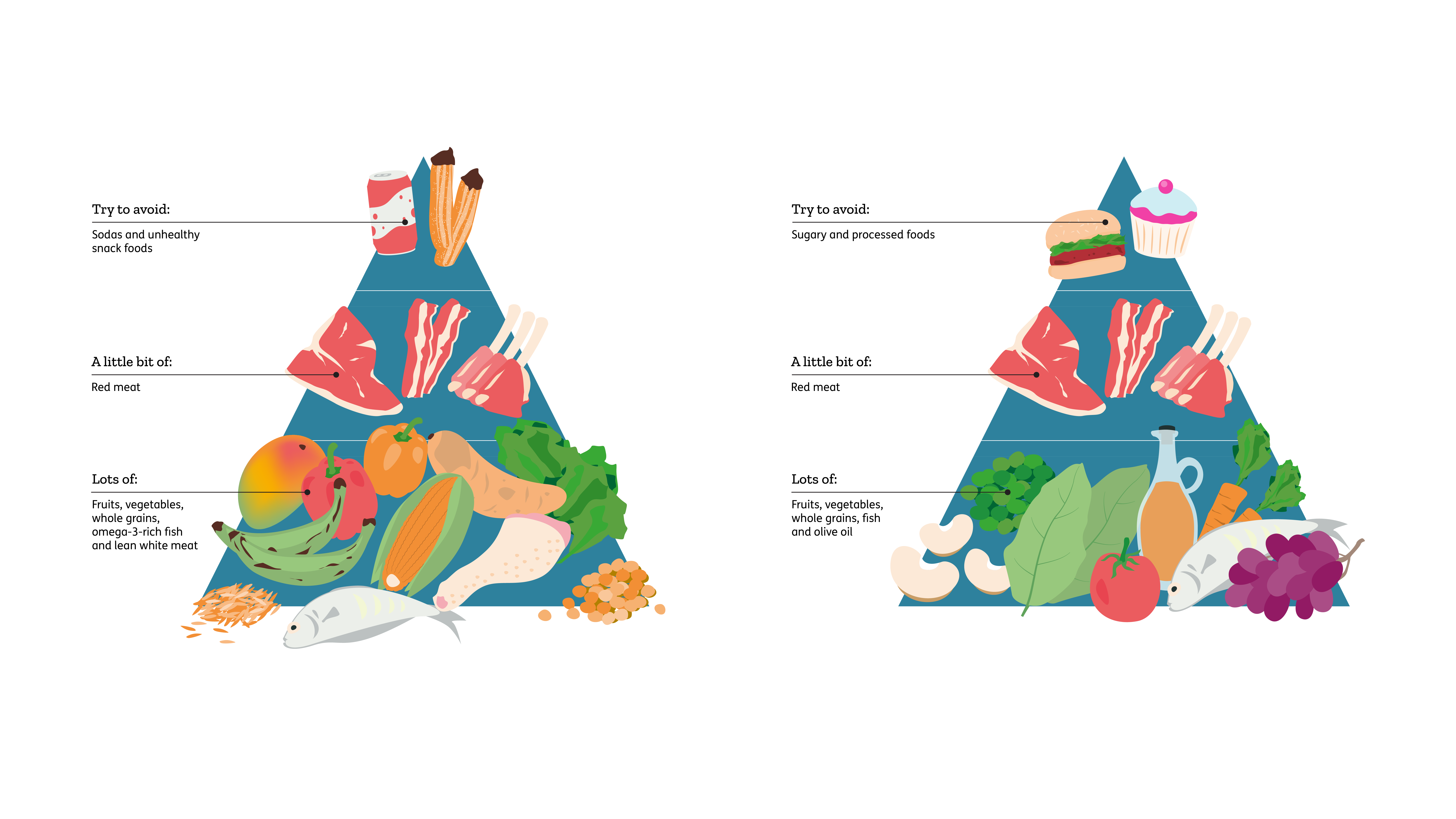
Diversity in clinical trials matters. Making sure participants feel represented matters. And representing diversity in clinical trial materials definitely matters. If you would like help in making sure every individual involved in your trial feels seen and appreciated, let’s talk.
This content was provided by Cuttsy + Cuttsy
Company Details

Latest Content from Cuttsy + Cuttsy
Cuttsy+Cuttsy achieves Platinum accreditation from Investors in People
Cuttsy+Cuttsy is proud to have achieved a Platinum accreditation from Investors in People, placing them among the top 2% of organisations assessed globally.
Cuttsy+Cuttsy awarded Gold EcoVadis sustainability rating
Cuttsy+Cuttsy proudly announces their Gold Medal achievement from EcoVadis for 2024, placing them among the top 5% of companies assessed and within the 97th percentile, a testament to their unwavering...
Age is not just a number when it comes to clinical trials
In this blog we look at the critical underrepresentation of older adults in clinical trials, emphasising the need for inclusive trial designs and targeted strategies to ensure safe and effective...
How to boost clinical trial access and make patients health-empowered
Clinical research is becoming more patient-centric, but there's still more that needs to be done to make clinical trials available to everyone. This could include wider participation.
Closing the loop: Why clinical trial results matter to participants
Discover why sharing clinical trial results with participants is crucial for respect, informed health decisions, and fostering strong researcher-participant partnerships.
Unveiling the truth: A journey into women’s representation in clinical trials
We explore the historical exclusion of women from clinical trials, its consequences on medical research and treatment efficacy and the ongoing efforts to ensure their representation.
Clarity in clinical trials
Discover how transparent, empathetic communication and health literacy principles can empower patients and enhance engagement in clinical trials, transforming participants into active partners in their healthcare journey.
Caring for patients’ mental health in clinical trials
We look at why ensuring continuous mental health support for patients in clinical trials is essential to enhance their overall well-being and trial engagement.
Driving equitable healthcare: The role of DE&I in clinical trials
Diversity, equity and inclusion (DE&I) is becoming a bigger topic of conversation and meaningful action within clinical trials. And for good reason, too. Find out why we embrace this and...
Empowering patients through more accessible clinical trial information
Senior Medical Writer, Scott Palmer explores the challenges and solutions in enhancing patient engagement in clinical trials, from the pivotal role of healthcare professionals, to the importance of user-friendly trial...