




Cuttsy+Cuttsy campaign takes health literacy to the North Pole
January 16, 2023 | Christmas, campaign, health literacy
Our 2022 Christmas campaign saw Santa’s agency elves creating tailored materials for patients. But were the examples guided by the principles of health literacy? Were they naughty or nice?
At Cuttsy+Cuttsy, we pride ourselves in making the complex, simple. By applying the key principles of health literacy and data visualisation we can take detailed medical information and transform it into something which people can understand, but most importantly act on. This helps give people the knowledge and confidence needed to manage their own health and wellbeing.
Breaking down barriers that limit access to information
Among adults in England, 7.1 million read and write at or below the level of a nine-year-old and 45% do not understand written health information. Therefore, it’s so important to us, as healthcare communicators, to ensure the information we produce is accessible to as many people as possible. It’s our belief that an informed patient is one who has better health outcomes, and an informed healthcare professional is one who can deliver better care.
Health literacy all year round (and at Christmas)
Incorporating health literacy into all that we do has been one of our guiding principles over the past decade, and throughout December 2022, health literacy and accessibility take centre stage in our festive campaign. Admittedly, these topics aren’t always the most glamorous, but they definitely deserve attention.
We took the universal story of Santa’s workshop as an analogy of a creative agency, where the elves are busy creating materials for patients. In a series of questions delivered via a social media quiz, we asked users to apply their own knowledge of health literacy to decide whether the elves had been ‘Naughty’ or ‘Nice’.
Health literacy in practice
Improving health literacy is a big part of what we do, and the questions highlight just some of the considerations that we run through daily to ensure all of our materials are as patient friendly as they can be. Words, visualisation and icons all have important roles to play, but through our campaign we demonstrate that it isn’t always about the beauty of a design, but of asking: ‘how can we make this more understandable for our audience?”.
In this article we share the top three health literacy principles we gave to Santa’s elves when developing any patient-facing materials.
Beauty may be in the eye of the beholder…
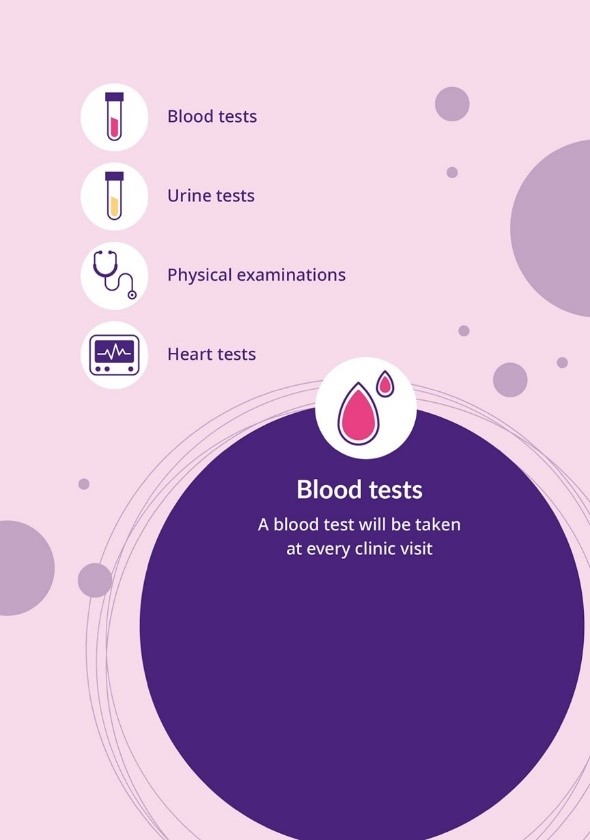
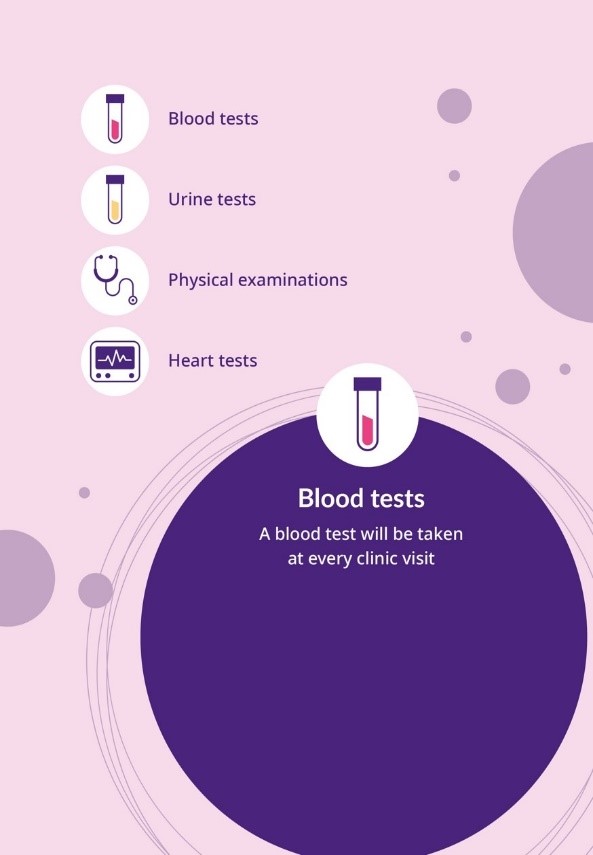
But when it comes to visualisation in healthcare materials, simplicity and consistency leads to greater levels of clarity. Icons are an effective way of presenting symptoms, test types, test results and even actions for people to take, in an easy-to-understand and accessible way. For maximum impact, icons should always follow a simple style guide and materials should adopt the same style throughout. The consistent brand style makes icons easy to recognise and their repetition reinforces the messages you are trying to deliver.
The following examples show that creating a multitude of interesting logos, has aesthetic interest but adds unnecessary complexity to medical guidance and information.
Naughty
Nice
Make every word count
Bursting with complicated language, random abbreviations, medical jargon and complex statistics, it is no wonder many people find health information difficult to understand. This struggle becomes even more difficult when you are suffering from an illness or being treated for a chronic condition. Therefore, choosing each word you use, really matters.
A health condition is just one aspect of somebody’s life; it isn’t their whole identity, and it doesn’t define who they are. By seeing the other person’s perspective or by putting yourself in someone else’s shoes, you can try to empathise with how they may be feeling. Using person-first language is just one way to acknowledge this and is a kinder, more empathetic approach.
When developing patient materials, it is a good idea to invite the intended audience to provide input and feedback on the terminology used.
Naughty
Nice
It isn’t what you do, but the way that you do it
Defined as the communication of health information in ways that others can understand and act on, ‘health literacy’ is a crucial step in helping people make informed choices about their own health. It ensures that they understand the information they have been given but most importantly that they can act upon it. Often this can take the form of highlighting when they need to seek medical help or support.
Emotional awareness is also an important consideration in design; it’s essential to highlight critical information without overwhelming or frightening people. Using a bright red to emphasise a call out box may alarm a person already in an emotionally vulnerable state. Being empathetic through design can make important information clear, but not scary.
Naughty

Nice

To test your health literacy knowledge on all the questions in our Naughty or Nice quiz, visit: https://www.cuttsyandcuttsy.com/latest/naughty-or-nice
If you’d like to know more about what we do or have something to share, let’s talk: https://www.cuttsyandcuttsy.com/lets-talk
This content was provided by Cuttsy + Cuttsy
Company Details

Latest Content from Cuttsy + Cuttsy
Why patient engagement must come first in rare disease trials
Explore why patient engagement is the cornerstone of successful rare disease trials, emphasising the importance of designing studies around the realities of patients' lives to build trust and improve outcomes.
New Cuttsy+Cuttsy research shows why site support matters more than ever
Cuttsy+Cuttsy's upcoming report, 'The site factor: Where protocol meets practice in clinical trials', delves into the critical role of site staff in clinical research, offering insights into their daily challenges,...
Cuttsy+Cuttsy becomes employee owned
Cuttsy+Cuttsy announces its transition to employee ownership, celebrating 15 years of prioritising clients, patients, and its team while continuing under the leadership of founders Caroline Benson and Mathew Cutts.
Clinical research in 2026: The trends shaping tomorrow
Discover the key trends shaping clinical research in 2026, from patient-centric approaches to empowering site staff and fostering stronger human connections.
From overwhelming to actionable: Bringing lifestyle guidance to life
Discover how clear communication and health literacy principles can transform complex patient materials into simple, engaging, and empowering health information.
Behind the scenes: why we created ‘The participation equation’
Go behind the scenes of The participation equation – our call to put people, not just data, at the heart of clinical research.
Cuttsy+Cuttsy launches R:SQD – a new way to predict and improve trial success
Cuttsy+Cuttsy has launched R:SQD, an innovative recruitment and retention success scoring tool that helps clinical trial sponsors predict, measure, and improve participant engagement and trial outcomes.
New report, The participation equation, uncovers key drivers of patient engagement in clinical trials
Cuttsy+Cuttsy’s new report, The participation equation, uncovers what drives patient engagement and retention in modern clinical trials through insights from over 700 participants and industry experts.
Why patients drop out of weight management trials and what you can do about it
Discover the key barriers to retention in obesity and weight-management trials and explore actionable, patient-centered strategies to improve engagement, outcomes, and data reliability.
Cuttsy+Cuttsy welcomes new team members
Cuttsy+Cuttsy is excited to announce the addition of three talented professionals to the team: Flo, an enthusiastic Account Executive; Vicki, a creative Graphic Designer; and Jo, a detail-driven Artworker