



From text to context: Helping patients see side effects clearly
March 30, 2026 | health information, health literacy, healthcare communications
Discover how thoughtful design, clear language, and structured visuals can transform overwhelming side effect information into accessible, actionable insights for patients in our latest Health Literacy series.
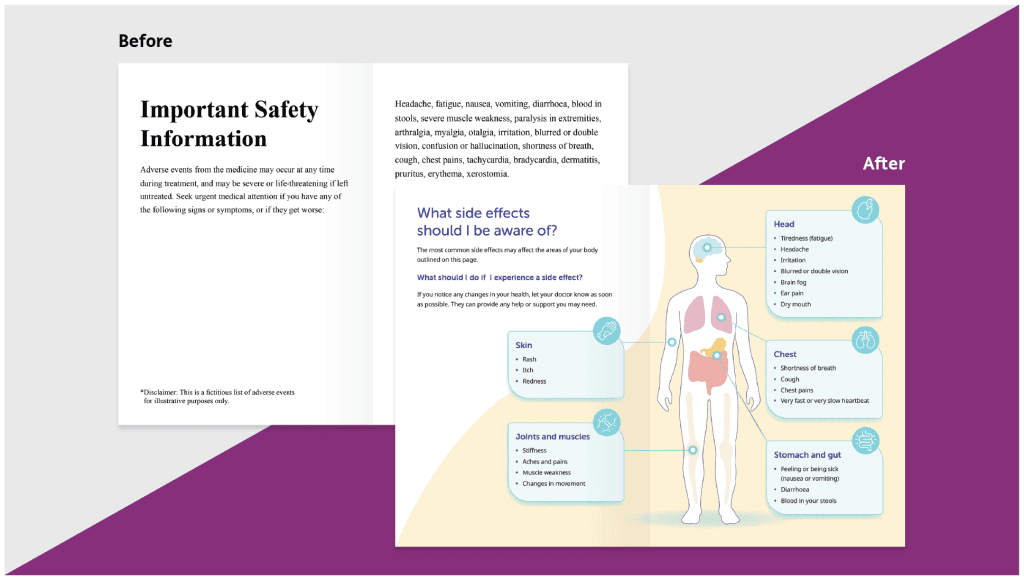
Our Health Literacy series continues, and this time we’re sharing another example of how thoughtful design, structure and language are essential to inform, educate and empower patients — this time in identifying side effects.
If you have read a patient insert for a medicine, or an informed consent form, you will know that side effects lists are often long, confusing, and intimidating. This can make keeping track of what to look out for, and what to do about it, completely overwhelming.
But it doesn’t have to be. For example, our ‘before’ and ‘after’ examples below include the same information, presented in very different ways. And it’s often this that makes the greatest difference to patients: how clearly and accessibly information is communicated.
Before:
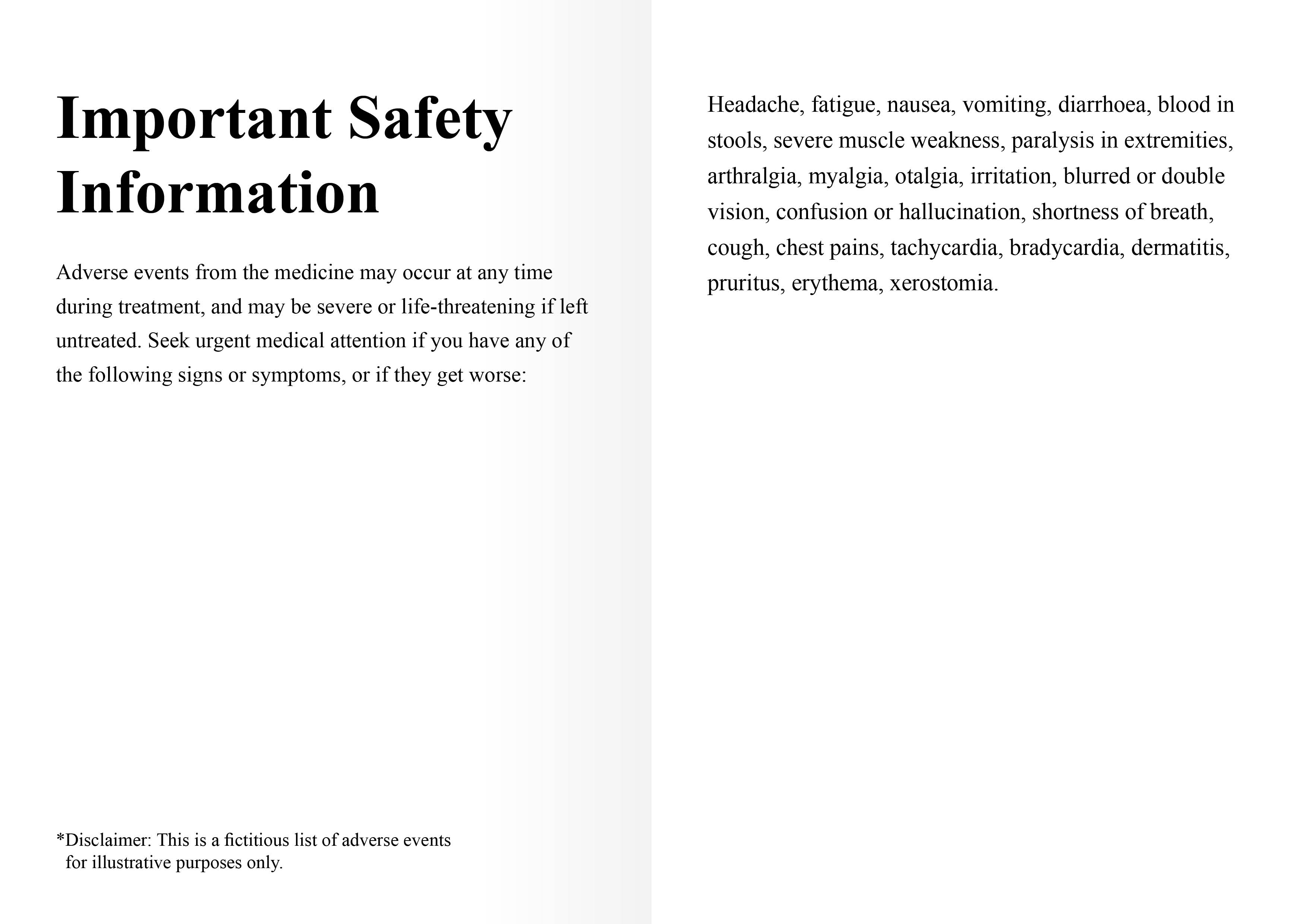
Safety information for patients included a dense, unformatted list of all potential side effects. The descriptions relied heavily on technical terminology, with no context, categories, or cues, making it difficult for readers to take away anything actionable.
After:
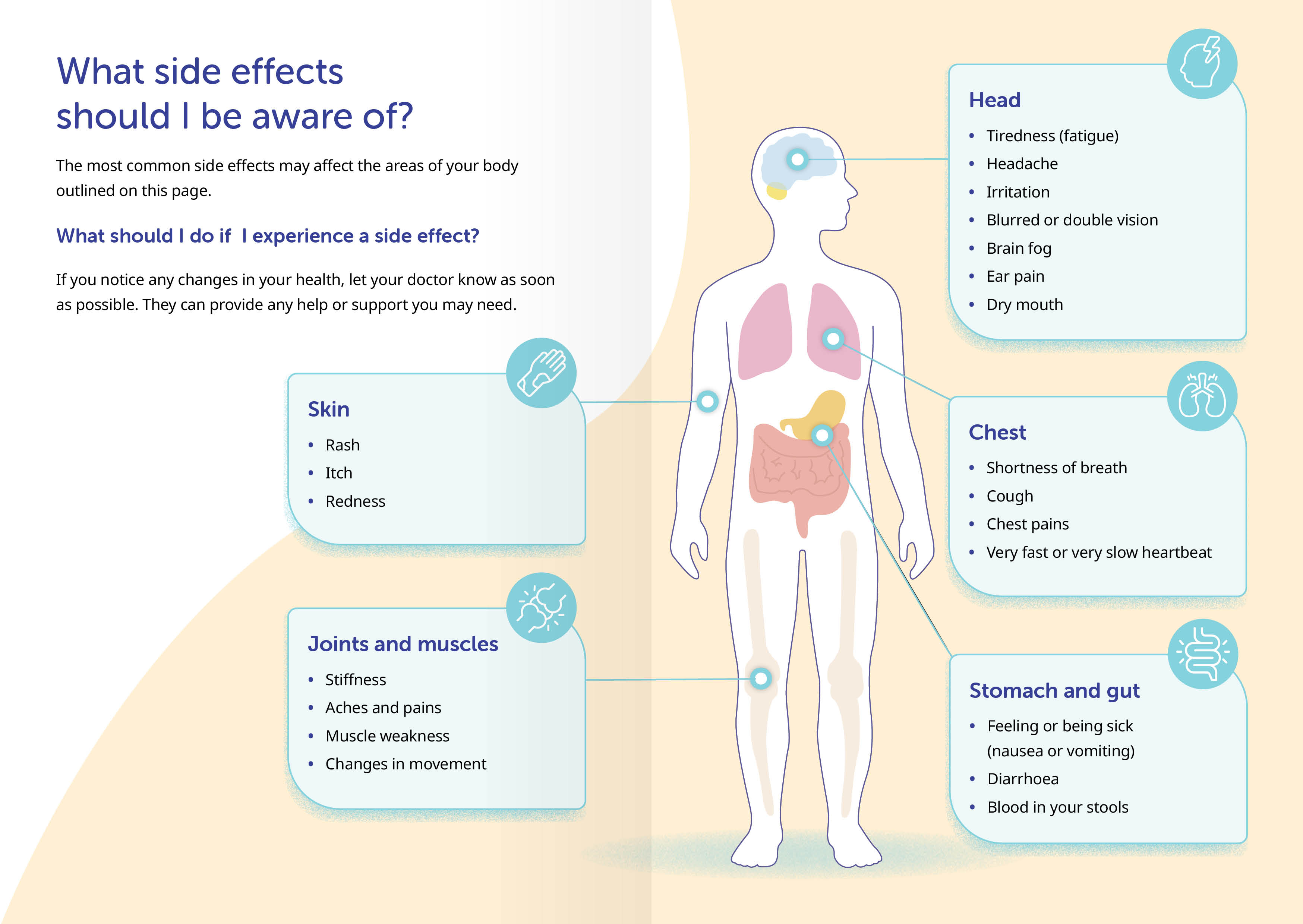
First, we translated all of the technical terms into lay language — “dry mouth” is just easier to process than “xerostomia”.
Next, we grouped everything by body system, so there’s no need to jump around the list for all related side effects.
Finally, we visualised each category on a silhouette, so readers know, at a glance, which body areas might be affected, and which specific changes to look out for.
By combining clear language and intuitive visuals, we’ve made potentially daunting side effect information easier to understand, recognise, and act on.
This content was provided by Cuttsy + Cuttsy
Company Details

Latest Content from Cuttsy + Cuttsy
Cuttsy+Cuttsy launches R:SQD – a new way to predict and improve trial success
Cuttsy+Cuttsy has launched R:SQD, an innovative recruitment and retention success scoring tool that helps clinical trial sponsors predict, measure, and improve participant engagement and trial outcomes.
New report, The participation equation, uncovers key drivers of patient engagement in clinical trials
Cuttsy+Cuttsy’s new report, The participation equation, uncovers what drives patient engagement and retention in modern clinical trials through insights from over 700 participants and industry experts.
Why patients drop out of weight management trials and what you can do about it
Discover the key barriers to retention in obesity and weight-management trials and explore actionable, patient-centered strategies to improve engagement, outcomes, and data reliability.
Cuttsy+Cuttsy welcomes new team members
Cuttsy+Cuttsy is excited to announce the addition of three talented professionals to the team: Flo, an enthusiastic Account Executive; Vicki, a creative Graphic Designer; and Jo, a detail-driven Artworker
Designing with patients in mind: How to build more inclusive clinical trials
Discover how patient-centred design transforms inclusive clinical trials. Learn to overcome trial recruitment challenges by listening to patients and creating studies that fit real lives.
Why fresh patient voices are critical to improve clinical trials outcomes
Discover why diverse patient voices, especially first-time participants, are key to improving clinical trials. Boost recruitment, retention, and patient-centric research.
Using patient personas to add a personal touch to clinical trial recruitment and retention
Discover how patient personas can revolutionise clinical trial recruitment and retention. Personalise outreach, build trust, and improve patient engagement.
A month of insights: Key takeaways from May’s conferences
Explore key insights from some of May’s top healthcare conferences, covering patient engagement, health equity, co-creation, and tech innovation shaping clinical trials.
Cuttsy+Cuttsy and ISPEP highlight key patient insights in new clinical trials report
Explore how Cuttsy+Cuttsy and ISPEP are spotlighting patient engagement in clinical trials through a new global report.
Motivations that matter: Understanding clinical trial participation to create better research
Understanding why people join clinical trials is essential to improving recruitment and designing better research. Explores the diverse motivations driving participation — from altruism and hope for better health to...