



Insights from the charity sector – from patient engagement to people-driven design
October 8, 2018 | Patient-centric, Patient-centricity, charity, patient engagement, patient focus
Marianne Guldbrandsen, Strategy Director at Cuttsy+Cuttsy and former Head of Innovation and Strategic Partnerships at Macmillan, discusses how people-driven research leads to truly patient-centred products and services, and what the pharmaceutical industry can learn about this from the charity sector.
The charity sector has a reputation for being good at bringing their key stakeholder to the core of everything they do. With the term ‘patient-centric’ being heard more and more in the pharma industry, there are things we can learn from the charity sector about the breadth and depth of how to involve and support patients and their families.
When talking about being patient-centric, the devil is in the detail. We can all agree that engaging patients is important — after all it is their health, care and treatment we are trying to continuously improve. But if engagement is merely a matter of involving them in clinical trials, advisory boards, focus groups or online forums, then we are missing out on great potential for even better insight, innovation and impact.
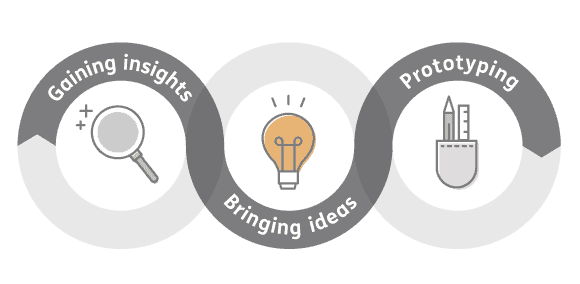
Being truly patient-centric means being people-driven, a subtle but important difference where we put effort into understanding not just the part of the person that can be described as a patient, but all of them. It is in understanding that people are more than patients that we can really make a difference. They have lives to live, daily activities, work, family, commuting etc. It means that we don’t just bring them into our processes, but we spend time to understand the context in which medicines and treatments are experienced over time. We involve them not just by gaining insights in the early stages, but in letting them participate throughout the development process. Depending on what we are creating it might even be appropriate let them participate in a way that could be described as co-creation. Co-creation means gaining insights and bringing ideas to fruition through prototyping with the end-user involved throughout the process.
As an example of how a people-driven approach is being used in the charity sector, Macmillan Cancer Support created a service for younger people affected by cancer using deep customer insights, co-design and iterative prototyping. The starting point was doing customer insight work by spending a few hours with 20 people in their 20–40s that had recently been through cancer treatment. This was done in their home or with a researcher following them on their daily activities, so it was not just a normal interview, but an attempt to understand their lives in more detail than they could describe themselves in words. This gave great insight into what was important to these people and what their needs were after cancer. In analysing the vast amount of data, one finding was that they were struggling with their ‘new normal’, i.e. what a normal life feels like with the side effects of their disease or treatment. After a series of co-creational workshops to come up with ideas, people affected by cancer were also deeply involved throughout prototyping and testing of ‘pick me up’ offerings. In the early stages 20–30 people from the target audience were involved, but as the ideas evolved and the solution got more and more defined, 300 people took part in early testing of the service. It also meant continuous evaluation, i.e. was the solution having the impact it set out to have.
It is not only in the development of new services that Macmillan involve people affected by cancer, but across a spectrum of advisory boards, developing policy position, information resources and local services. It is in the knowledge of when and how to engage with our end customers that we can evolve the field of patient-centricity and people-driven solutions. From patients as experts to deep user insights, focus groups and early testing groups, a range of methods can help us and the people we serve.
There is no reason why pharma cannot do the same. Patients can be engaged in compliant and appropriate ways, and the benefits of listening to what they have to tell us are vast. This is how products and services will be created that better serve their needs. It is time for pharma to work with patients, and not just for them.
Marianne Guldbrandsen is Strategy Director at Cuttsy+Cuttsy, a healthcare strategy and comms agency, where people matter. Previously she spent five years building and heading up Macmillan Cancer Support’s Innovation & Strategic Partnership team. Coming from a design background, she set up a multidisciplinary team that has embedded design thinking across the organisation.
This content was provided by Cuttsy + Cuttsy
Company Details

Latest Content from Cuttsy + Cuttsy
Why patient engagement must come first in rare disease trials
Explore why patient engagement is the cornerstone of successful rare disease trials, emphasising the importance of designing studies around the realities of patients' lives to build trust and improve outcomes.
New Cuttsy+Cuttsy research shows why site support matters more than ever
Cuttsy+Cuttsy's upcoming report, 'The site factor: Where protocol meets practice in clinical trials', delves into the critical role of site staff in clinical research, offering insights into their daily challenges,...
Cuttsy+Cuttsy becomes employee owned
Cuttsy+Cuttsy announces its transition to employee ownership, celebrating 15 years of prioritising clients, patients, and its team while continuing under the leadership of founders Caroline Benson and Mathew Cutts.
Clinical research in 2026: The trends shaping tomorrow
Discover the key trends shaping clinical research in 2026, from patient-centric approaches to empowering site staff and fostering stronger human connections.
From overwhelming to actionable: Bringing lifestyle guidance to life
Discover how clear communication and health literacy principles can transform complex patient materials into simple, engaging, and empowering health information.
Behind the scenes: why we created ‘The participation equation’
Go behind the scenes of The participation equation – our call to put people, not just data, at the heart of clinical research.
Cuttsy+Cuttsy launches R:SQD – a new way to predict and improve trial success
Cuttsy+Cuttsy has launched R:SQD, an innovative recruitment and retention success scoring tool that helps clinical trial sponsors predict, measure, and improve participant engagement and trial outcomes.
New report, The participation equation, uncovers key drivers of patient engagement in clinical trials
Cuttsy+Cuttsy’s new report, The participation equation, uncovers what drives patient engagement and retention in modern clinical trials through insights from over 700 participants and industry experts.
Why patients drop out of weight management trials and what you can do about it
Discover the key barriers to retention in obesity and weight-management trials and explore actionable, patient-centered strategies to improve engagement, outcomes, and data reliability.
Cuttsy+Cuttsy welcomes new team members
Cuttsy+Cuttsy is excited to announce the addition of three talented professionals to the team: Flo, an enthusiastic Account Executive; Vicki, a creative Graphic Designer; and Jo, a detail-driven Artworker