



The digital prescription – enhancing the patient experience with technology
July 18, 2024 |
We explore how digital health innovations are revolutionising patient care by enhancing accessibility, personalisation, and engagement, promising a more connected and empowered patient experience.
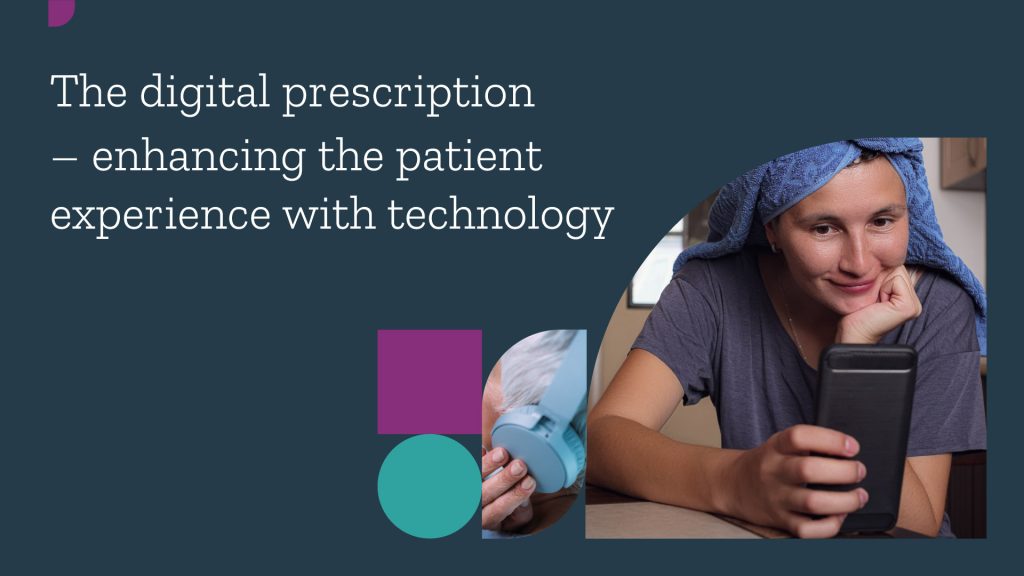
In the landscape of healthcare, technology has the potential to do a lot of good. We’re not talking about flashy gadgets and gizmos but the kinds of tools that are genuinely meaningful to patients. Getting them engaged right throughout the healthcare journey. And there’s all sorts of ways to do this, from virtual consultations to wearable devices, educational portals to adherence apps. There are so many opportunities for us to educate and empower. Because when we put patients at the heart of digital innovation, we make healthcare more accessible and personalised. Like never before.
But of course, with opportunities, come challenges.
Let’s take a look, together.
Connecting with care, anywhere
From our day to day work with patients, we know how tiring and time consuming it can be to live with a chronic condition. The travelling to and from the clinic or hospital, the planning, the prepping, all the practical stuff.
But with telemedicine and virtual consultations, patients can chat with their doctor from the comfort of their own living room. Get expert advice without stepping foot outside the door. By breaking down barriers like distance and travel headaches, we can get patients connected with their healthcare team, whenever they need support. And isn’t breaking down barriers what good healthcare is all about?1
What’s also great is how we can shift and shape these technologies to fit each patient’s individual needs.
Think about someone struggling with adherence, with handy app medication reminders, they can get swiftly back on track. What’s more, with digital platforms, we can offer tailored and bite-sized educational resources on the topics that matter most to our patients. And as many of these platforms can be web-based, mobile, or interactive, patients can access information, anytime, anywhere, on the device of their choice. So when we move beyond traditional face-to-face interactions or printed materials, and take a thoughtful, modern approach, we can get patients well-informed and empowered to take charge of their health. In the way that suits them.2
What’s standing in our way?
Of course, going digital may make some patients nervous. It’s only natural. Privacy or safety concerns may come into play, they may wonder about their health information or data being compromised or put at risk. But by talking openly about the strong security measures, rules, and regulations we all follow and put in place, we can help reassure. 3
We also can’t forget those who might not be comfortable with technology or who have limited access to it. Those in vulnerable situations, low-income households, older adults, and those living in rural areas. So it’s important to still lean on the traditional types of communication we all know so well, when it’s the right for the patient. Because for this to work, we need to make sure everyone can join in, bridging the gap so nobody gets left behind.3
So, is that it? Well, not quite.
As we all know too well, healthcare systems aren’t always fully set up to offer comprehensive support and seamless integration for new services. And this can make some healthcare professionals hesitant or wary to jump on board. Not to mention, as with anything new or different, there’ll always be resistance to change.4,5
So how can we get the healthcare community to not only accept but also champion digital health? If we make it simple and show how these strategies can improve efficiency right throughout the healthcare system, supporting practices, day in, day out, we can show how we’re all working towards a common goal.
Strategies for patient engagement and retention
What are some simple wins?
- Devices – Many of us already rely on and trust wearable devices to track aspects of our health. And it’s only set to get more popular. How’s your step count looking today? By integrating wearables, we get a simple way to engage patients throughout their healthcare journey. Especially with ‘bring your own device’ strategies, making it all the more user-friendly as patients can use what they’re used to. 6
- Gamification – In clinical trials, adding a touch of gamification offers a fun and motivating twist to complete assigned tasks, making the experience less of a chore. It also offers a sense of community and support among patients, which we know is absolutely crucial for retention. 7
- Personalised health portals – When patients have easy access to their medical records, test results, and other health information, taking an active role in managing health feels doable. These user-friendly portals also allow secure messaging, strengthening communication between patients and healthcare providers. 8
- Educational platforms – Knowledge is power. If we give patients the resources to understand their condition, treatment plan, and what to expect, they’re more likely to take ownership of their health. And they’re also likelier to stick to treatment plans set out by their healthcare team. A win, win. 9

Finding the right approach
To understand the digital solution needed, talking to the people we’re trying to help is the best way to make sure we get it right.
And this is where feedback systems come in, helping us understand the ins and outs of the patient experience, across different stages of care. So we can pinpoint areas for improvement and tailor services to better meet needs, in the right way, at the right time. Because when we invite patients in to share their perspectives and ideas, we make them feel valued and at the centre of their care. 10
Digital tools and technology most definitely give us a lot of exciting ways to support patients throughout their clinical trial and treatment journey. But as with everything we do, we’ve got to do it responsibly.
It’s about asking ourselves the right questions all the way throughout the process. Are we easing patient burden here or adding to it? Are we prioritising inclusivity? Are we reassuring people about privacy and security? Are we promoting collaboration?
Only then we can make the most of technology. Only then can we build a healthcare system that’s easier to access, smoother to navigate, and most importantly, always puts patients first.
References
- Haleem A, et al. Sensors International. 2021; 2: 100117.
- Digitalya. How to build a patient education platform. Available here. Accessed April 2024.
- Ambula. The future of patient engagement: trends, challenges and opportunities. Available here. Accessed April 2024.
- Lundereng ED, et al. J Med Internet Res. 2023; 25: e43429.
- Kruse CS, et al. J Telemed Telecare. 2018; 24(1): 4-12.
- MedicalGPS. Improving patient engagement and retention through technology. Available here. Accessed April 2024.
- ObvioHealth. Patient engagement strategies for clinical trials. Available here. Accessed April 2024.
- Healthcare. Digital. Healthcare technology thought leadership by Nelson Advisors. Available here. Accessed April 2024.
- AHRQ. Patient education and engagement. Available here. Accessed April 2024.
- Zonka. How to set up an effective patient feedback system. Available here. Accessed April 2024.
This content was provided by Cuttsy + Cuttsy
Company Details

Latest Content from Cuttsy + Cuttsy
Content for all – how to connect with neurodiverse audiences
Discover essential strategies for crafting inclusive and accessible written content tailored for neurodivergent readers.
Cuttsy+Cuttsy launches ccura: AI powered, always human
Cuttsy+Cuttsy introduces ccura, an AI-powered healthcare communications platform that blends technology with human expertise to enhance collaboration, streamline workflows, and deliver patient-focused, high-quality solutions with security and compliance at its...
Two Sides of the Same Coin: Patient Engagement vs Patient Involvement
Unpack the difference between patient engagement and patient involvement.
Cuttsy+Cuttsy achieves Platinum accreditation from Investors in People
Cuttsy+Cuttsy is proud to have achieved a Platinum accreditation from Investors in People, placing them among the top 2% of organisations assessed globally.
Cuttsy+Cuttsy awarded Gold EcoVadis sustainability rating
Cuttsy+Cuttsy proudly announces their Gold Medal achievement from EcoVadis for 2024, placing them among the top 5% of companies assessed and within the 97th percentile, a testament to their unwavering...
Age is not just a number when it comes to clinical trials
In this blog we look at the critical underrepresentation of older adults in clinical trials, emphasising the need for inclusive trial designs and targeted strategies to ensure safe and effective...
How to boost clinical trial access and make patients health-empowered
Clinical research is becoming more patient-centric, but there's still more that needs to be done to make clinical trials available to everyone. This could include wider participation.
Closing the loop: Why clinical trial results matter to participants
Discover why sharing clinical trial results with participants is crucial for respect, informed health decisions, and fostering strong researcher-participant partnerships.
Unveiling the truth: A journey into women’s representation in clinical trials
We explore the historical exclusion of women from clinical trials, its consequences on medical research and treatment efficacy and the ongoing efforts to ensure their representation.
Clarity in clinical trials
Discover how transparent, empathetic communication and health literacy principles can empower patients and enhance engagement in clinical trials, transforming participants into active partners in their healthcare journey.