




Where it all began: why we wrote ‘The Site Factor’
April 8, 2026 | Clinical Sites, Participant engagement, Site Teams, clinical trials
Discover the story behind ‘The Site Factor’ and how understanding site teams’ experiences can transform clinical trials for participants and researchers alike.
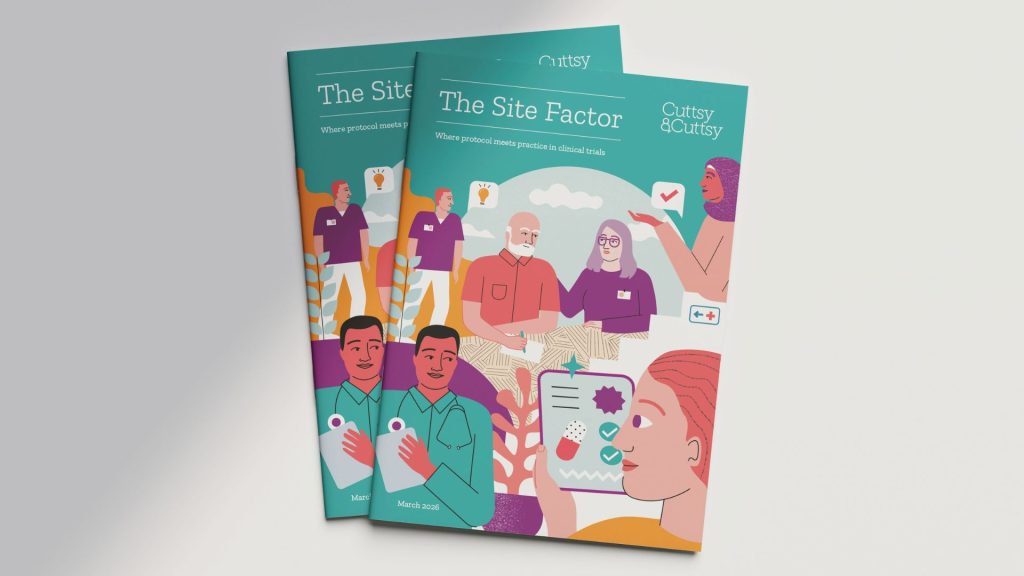
When we published ‘The Participation Equation’ last year, we set out to better understand how participants experience clinical studies and what shapes their engagement. What quickly became clear was the central role of the study team. Across different trials and settings, participant experience was moulded by the quality of that relationship.
As studies become more digital and decentralised, participants continue to tell us that human connection really matters to them.
That insight led us to a natural next question: if site teams play such a defining role in participant experience, how well do we understand their experience?
Why this research, and why now?
In 2025, we saw sponsors looking for ways to support sites with the increasing strain they are under. Recruitment is tougher, protocols are more demanding, and expectations continue to rise. Sponsors recognise that they must get site support right, but they are often unsure about how or where to start, or what could make the biggest difference in practice.
This was the catalyst for ‘The Site Factor’.
Before adding to the conversation, we wanted to better understand the reality on the ground. How are protocols translated into daily work? Where do challenges show up in interactions with participants? And what support do site teams need to deliver a trial experience that feels good for everyone involved?
We spoke with more than 100 site team members across nine countries, listening closely to where things feel hard, where systems don’t quite join up, and where there’s genuine opportunity to do better. We heard about the importance of alignment and its impact on participant experience, as well as the sponsor cost burden when those things are missing.
Bringing these perspectives together is an important step. It gives us a clear picture of the current landscape and a solid foundation to build on.
A springboard
This report sits alongside ‘The Participation Equation’, adding an important second perspective.
By putting ourselves in the shoes of site staff, we are sparking conversations and practical action towards the shared goal of making trials work better for everyone involved. Not through quick fixes, but through thoughtful, practical real-world solutions.
This is the work we care deeply about — turning insight into action, and data into meaningful change. Because when we listen to what truly matters — to participants and site teams alike — we can design research that works in practice, not just on paper.
This content was provided by Cuttsy + Cuttsy
Company Details

Latest Content from Cuttsy + Cuttsy
Permission to pause: making treatment breaks part of the cancer care conversation
Exploring how empathetic, patient-centred communication can make planned treatment breaks easier to discuss as part of cancer care.
A seat at the table: what the EU HTA reforms really ask of patient involvement
The EU HTA reforms give patients a formal role in assessing new medicines, but meaningful involvement requires more than simply offering them a seat at the table.
Why faster trials make participant understanding more important than ever
As clinical trials accelerate, clear, accessible consent is essential to help participants understand, engage with and remain in a study.
Older trial participants reject bad design, not technology
Older trial participants aren’t rejecting digital technology — they’re rejecting poorly designed, inaccessible experiences that make participation harder.
5 key takeaways from the Patient Centricity and Engagement Conference
Key takeaways from the Patient Centricity and Engagement conference, exploring how trust, inclusion and meaningful partnership can help turn patient engagement from intention into action.
It’s time to stop calling adverse events ‘manageable’
A single word—manageable—can minimise the real burden of treatment side effects, and it’s time clinical trial communication reflected patients’ lived experience more clearly.
The value: why localisation pays off across global trials
Strong localisation reduces trial friction, supports site teams, improves participant understanding and helps global studies run more smoothly, fairly and efficiently.
The solution: Good localisation doesn’t feel translated
Learn what good localisation looks like in clinical trials and why participant-facing materials should feel naturally relevant, culturally appropriate and easy to understand across every market.
Healthcare information is becoming easier to access. Trust isn’t.
Sharing key insights from NEXT Pharma Summit on why trust, clarity and human-centred communication matter more than ever in healthcare.
It was never reluctance: What ASCO 2026 revealed about clinical trial recruitment
ASCO 2026 highlighted that low clinical trial recruitment is driven less by patient reluctance and more by gaps in awareness, communication, accessibility and patient education.