




Empowering Nurses Through Education
May 17, 2024 | CME, Education, Nursing, medical education
Nurse education is powerful and makes an impact.
More than 27 million nurses worldwide play a critical role in patient care. They make up 60% of the healthcare workforce, performing a wide range of roles, from leadership to direct patient care, coordinating care in hospitals and physician offices, outpatient care centers, assisted living facilities, home health, and much more.
Continuing nurse education is essential to keep nurses current with the latest developments in their field to improve their skills, knowledge, and performance. This helps improve patient outcomes, efficiencies, and patient well-being. Often, nurses participate in the same education programs as their physician colleagues as part of interprofessional development.
This team-based approach can drive more effective collaboration between the members of the care team. This helps nurses feel empowered as they advocate for their patients and as they help develop personalized treatment plans that align with the patient’s needs and goals, and improve overall patient outcomes.
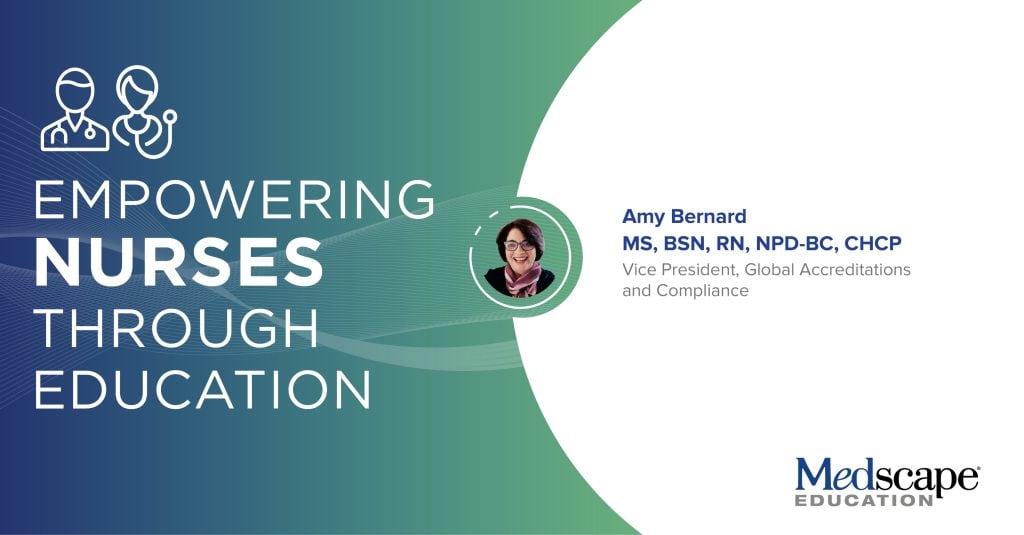
Amy Bernard, MS, BSN, RN, NPD-BC, CHCP, is a Registered Nurse and Vice President of Global Accreditations and Compliance at Medscape Education, and is intimately familiar with both the day-to-day role of nurses as well as how nursing continuing professional development (NCPD) shapes the role of the nurse and promotes best practices.
“Nurses are in a unique position,” Bernard explains. “They typically have the most contact with patients. They not only provide patient care, but serve as advocates for them, ensuring their needs are respected while working with their physicians and other members of the healthcare team.”
By participating in interprofessional continuing education, nurses learn cutting-edge information and how to best monitor and communicate changes in a patient’s condition and responses to treatment. Just small changes in those conversations can lead to great improvements in care.
Additionally, in a world where more healthcare professionals are experiencing burnout than ever before, learning together in team-based education helps foster a culture of collaboration and mutual respect that leads to improved outcomes and job satisfaction. Bringing people together toward a common goal and understanding increases satisfaction, retention, and reduces burnout.
Medscape provides comprehensive interprofessional continuing education tailored for healthcare professionals, including specialized courses specifically designed for nurses. With a membership of over 13 million HCPs, including 4.6 million valued nurses and nurse practitioners worldwide, Medscape is dedicated to supporting the ongoing education and professional development of its members.
“As patient needs become increasingly complex, ongoing interprofessional and nursing continuing education are essential. By participating in continuing education, nurses continue to expand their knowledge, which promotes the delivery of high-quality health care,” Bernard said.
For more information on interprofessional or nursing continuing education at Medscape, please contact your Medscape representative.
This content was provided by Medscape Education
Company Details

Latest Content from Medscape Education
#ShortenTheJourney
For the millions of people living with a rare disease, the path to a diagnosis (if ever received) is often a long and frustrating odyssey. This delay is frequently driven…
Why We Must Stop Normalizing the “Pregnancy Itch”
In the world of rare diseases, success is often measured by the speed of diagnosis. However, for women facing rare liver conditions like Intrahepatic Cholestasis of Pregnancy (ICP), the medical…
The Greatest Form of Caring: Medscape’s Commitment to Advancing Cardiovascular Health
A February Focus on the Heart While February is known as the month of love, it is also National Heart Month, a time for highlighting the importance of cardiovascular health….
AI, Agility, and Connected Impact at Alliance 2026
Join the Medscape team in Atlanta, February 16–19, 2026, as Alliance celebrates 50 years of excellence in continuing education for health professionals. We’re bringing our 3 decades of experience in…
Why Sleep Health is the Missing Link in Women’s Wellness
While obstructive sleep apnea (OSA) affects approximately 32% of US adults—nearly 80 million people—it remains an “epidemic hiding in plain sight”. Perhaps most staggering is that 90% of women with…
The Heart and Mouth Connection Every Woman Needs to Know
For decades, modern medicine has treated the mouth and the body as separate entities. But for Dr. Nieca Goldberg, a renowned cardiologist, and Dr. Maria Ryan, Chief Clinical Officer at…
Uncovering Inequities in Alzheimer’s Disease Screening and Care
On December 5, MAPS hosted an educational webinar exploring recent research in Alzheimer’s disease (AD) screening, testing, and treatment. Experts from Komodo Health and Medscape shared findings from their…
Where Are We Today With Artificial Intelligence (AI) in Rare Disease Diagnosis and Care?
Discover how AI-powered tools are transforming rare disease diagnosis, patient care, and clinical decision-making.
Does Rare Disease Education Work?
For a child with a rare disease, a doctor’s continuing education can end a years-long diagnostic odyssey and unlock access to vital care.
From Genetic Puzzles to Precision Therapeutics
How was a new rare disease discovered through Singapore’s Undiagnosed Disease Program? And how will technology allow us to change how we discover rare diseases in the future? Read more…