




From Booth to Bavaria: A Recap of Impact at ESC 2026
September 7, 2026 | CME, Cardiology Education, IME, Patient Impact, cardiology
We have officially wrapped up another year at ESC. For Medscape Education, 4 days on the ground confirmed what 3 decades of cardiovascular education have already shown: when independent, evidence-based education meets clinicians where they are, we are able to change clinical behavior and practice.
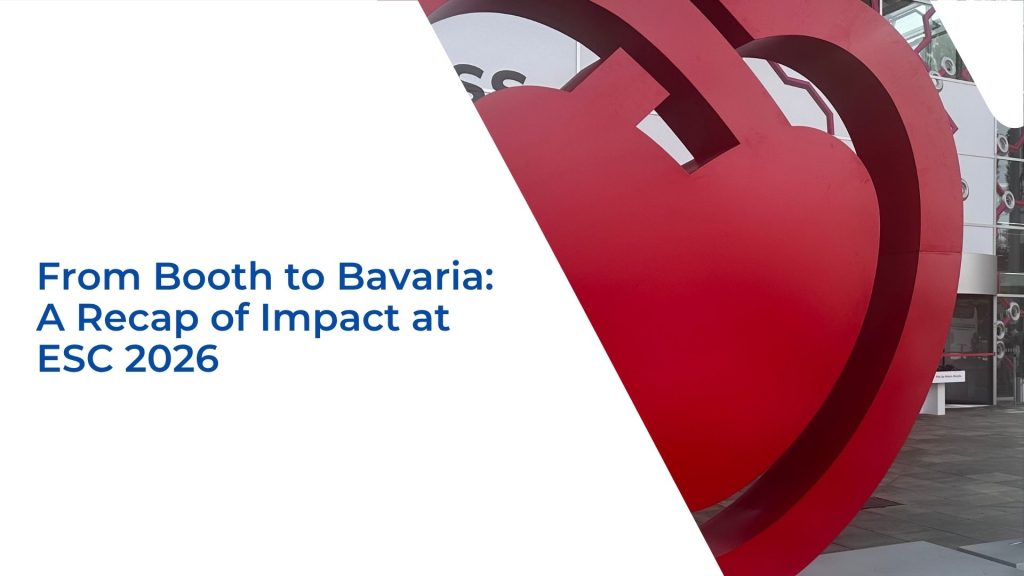
Across the 4 independently developed symposia, we welcomed 1,300+ cardiologists and cardiovascular specialists.
Add to that a steady stream of visitors to the booth, some who were experiencing Medscape AI for the first time, including one of our members from Sri Lanka who noted, “The new AI tool looks great. It gives a lot of versatility to users so they can work through their clinical problems on Medscape and get a better, wider opinion. I think this new AI tool might be a game-changer.”
Beyond the booth, we hosted an invite-only evening at the Hofbräuhaus where Carolyn Lam, MBBS, PhD and Manesh Patel, MD led a fireside chat on AI’s role in cardiovascular care, ESC 2026 becomes another key event and part of a much longer story about closing gaps in cardiology education.
Why does it matter?
This congress didn’t happen in isolation. It builds on a foundation of 695,882 cardiology HCPs reached globally and 387,772 cardiologist learners engaged year-round, work that translates into measurable outcomes: 93% of learners report our activities improve patient care, and advanced-outcomes programming shows a 46% improvement in knowledge and competence.
ESC 2026 was a chance to put that evidence into practice, in person, with the clinicians shaping the future of cardiovascular care.
Source: Medscape Internal Data 2026
For more information on Medscape’s cardiology education, please reach out to your Medscape Education representative.
This content was provided by Medscape Education
Company Details
Latest Content from Medscape Education
Data, Evidence, Education: Tackling the Global Multi‑Trillion‑Dollar Rare Disease Burden
Rare diseases are individually uncommon, yet together they affect an estimated 300 million+ people worldwide and touch the lives of over one billion when families and caregivers are included. For…
#ShortenTheJourney
For the millions of people living with a rare disease, the path to a diagnosis (if ever received) is often a long and frustrating odyssey. This delay is frequently driven…
Why We Must Stop Normalizing the “Pregnancy Itch”
In the world of rare diseases, success is often measured by the speed of diagnosis. However, for women facing rare liver conditions like Intrahepatic Cholestasis of Pregnancy (ICP), the medical…
The Greatest Form of Caring: Medscape’s Commitment to Advancing Cardiovascular Health
A February Focus on the Heart While February is known as the month of love, it is also National Heart Month, a time for highlighting the importance of cardiovascular health….
AI, Agility, and Connected Impact at Alliance 2026
Join the Medscape team in Atlanta, February 16–19, 2026, as Alliance celebrates 50 years of excellence in continuing education for health professionals. We’re bringing our 3 decades of experience in…
Why Sleep Health is the Missing Link in Women’s Wellness
While obstructive sleep apnea (OSA) affects approximately 32% of US adults—nearly 80 million people—it remains an “epidemic hiding in plain sight”. Perhaps most staggering is that 90% of women with…
The Heart and Mouth Connection Every Woman Needs to Know
For decades, modern medicine has treated the mouth and the body as separate entities. But for Dr. Nieca Goldberg, a renowned cardiologist, and Dr. Maria Ryan, Chief Clinical Officer at…
Uncovering Inequities in Alzheimer’s Disease Screening and Care
On December 5, MAPS hosted an educational webinar exploring recent research in Alzheimer’s disease (AD) screening, testing, and treatment. Experts from Komodo Health and Medscape shared findings from their…
Where Are We Today With Artificial Intelligence (AI) in Rare Disease Diagnosis and Care?
Discover how AI-powered tools are transforming rare disease diagnosis, patient care, and clinical decision-making.
Does Rare Disease Education Work?
For a child with a rare disease, a doctor’s continuing education can end a years-long diagnostic odyssey and unlock access to vital care.