




From Genetic Puzzles to Precision Therapeutics
December 23, 2025 |
How was a new rare disease discovered through Singapore’s Undiagnosed Disease Program? And how will technology allow us to change how we discover rare diseases in the future? Read more to find out.

A/Prof Saumya Jamuar
Senior Consultant, Genetics service, KK Women’s and Children’s Hospital
Director, SingHealth Duke-NUS Institute of Precision Medicine
Lead Principal Investigator, Singapore Undiagnosed Disease Programme
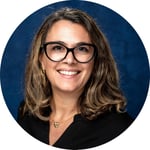
S.Christy Rohani-Montez
Senior Director of Clinical Strategy
Rare Disease Education Lead
Medscape Education
Christy: I’m so excited to be in Singapore speaking with you Saumya, about Singapore’s Undiagnosed Disease Program.
Can you tell me first a little about yourself and how you got into rare diseases?
Saumya: Sure, so I’m a pediatrician and clinical geneticist at KK Women’s and Children’s Hospital. Since I was young, I’ve loved puzzles. To me, a patient with a rare disease is a puzzle with multiple pieces that need to be put together. I saw that as I was training in pediatrics where I would see patients being managed by the cardiologist, the neurologist, the gastroenterologist, and more. They would each be focusing on their specialty, and I found myself taking a step back and asking, “Hey, are these issues all connected in some way?”
That’s where I realized rare diseases play a part, because these rare diseases tend to connect the different organ systems and specialties. That passion for puzzle-solving got me into this field. What propelled it further was the pediatric setting, because the stakes are much higher for children. Once you get an answer and have that “aha” moment where it all makes sense, that brings so much joy into the work and accelerates the desire to continue.
Christy: Tell me about the condition named after you and the program behind it?
Saumya: I established Singapore’s undiagnosed disease program, which we call BRIDGES (Bridging Research Innovations for the Diagnosis of GEnetic Diseases in Singapore), to connect patients with genomic technologies. One of our first major successes came when 2 siblings were referred to my clinic with epilepsy and developmental delays where their speech was more affected than their motor skills. Standard tests were all negative, so we enrolled them in BRIDGES where we performed whole exome sequencing with our collaborators at A*STAR (Singapore’s Agency for Science, Technology and Research), and identified a novel variant in a gene called UGDH.
The product of UGDH is an enzyme that’s critical for building the structural matrix of the brain. You can imagine if the matrix isn’t there, the circuitry is missing. The brain is just a lot of wires, and if the wires aren’t connected properly, that’s when things go haywire. This led to the phenotype we were seeing: epilepsy and developmental delays. We reached out to our global network and found 18 other families with similar features and variants in the same gene. Through lab work with patient cells and cerebral organoids, we proved this was the cause and had discovered a new disease, which was named after me, the Jamuar Syndrome, and is also known as UGDH-related disorder.
Christy: What has the BRIDGES program achieved since then?
Saumya: We have successfully recruited over 850 families over the last decade, and have steadily improved our diagnostic yield from about 30% to 49%, comparable to international benchmarks. Beyond the diagnosis itself, the results have a profound impact. All families receive precise genetic counseling, and in 80% of cases, we can stop the “diagnostic odyssey” of endless tests.
Most importantly, in 27% of our diagnosed cases, there has been a direct impact on each patient’s medical management. For example, one child was hospitalized for her entire first year of life with multiple infections. An exome sequence revealed an immune dysregulation that could be treated with a bone marrow transplant. She finally went home. This was our first real foray into precision therapeutics, where knowing the exact genetic pathway allowed us to provide a targeted, life-changing treatment.
Christy: What are your long-term goals for the future?
Saumya: We are focused on 2 key areas. Firstly, we are expanding access to genomics to underserved regions in Southeast Asia through our Genomics for Kids in ASEAN initiative, generously supported by the Temasek Foundation.
Secondly, we are looking ahead to the next decade, which will be all about therapeutics. Today, only 5% of rare diseases are treatable. To change that, we are developing a therapeutic platform. Instead of a slow, single-gene, single-disease approach, we want to categorize conditions based on their functional outcome—for example, is the protein absent or is it dysfunctional? Then, we can match the problem to a class of solutions (like gene replacement or gene editing) and a delivery system that can target the affected organ. This creates a systematic, 3-dimentional matrix to treat many more patients at a much faster rate and probably at lower costs.
Christy: Your work is incredible, thanks so much for speaking with me today!
For more information, please contact Christy Rohani Montez PHD –
srohani@medscape.net
About Medscape Education
Medscape Education (medscape.org) is the leading destination for continuous professional development, consisting of more than 30 specialty-focused destinations offering thousands of free CME and CE courses for physicians, nurses, and other healthcare professional
This content was provided by Medscape Education
Company Details

Latest Content from Medscape Education
Stronger Together: Medscape Education Celebrates Accomplishments in Rare Disease and Anticipates the World Health Assembly Adoption of the Resolution on Rare Diseases
Medscape Education is proud to be showcasing the power of working together in rare disease education and advocacy by co-hosting a side event at the 78th World Health Assembly in…
Intersection of Leadership and Advocacy: Driving Change Together for Women
We can’t talk about challenges to women’s reproductive health without acknowledging that we’re living in unprecedented times, say two mission-driven women’s healthcare leaders. Stephanie Sober, MD, MSHP, Global Director, Medical…
Shaping the Future of Hematology and Women’s Health
Changes in the healthcare world are likely to limit opportunities for young researchers, especially women.Three leaders in hematology — Belinda Avalos, Sarah O’Brien, and Marty Liggett — share the initiatives…
Are Clinicians Still Feeling the Burn? A Look at HCP Mental Health and Well-Being
One of the most critical topics to address in health care today is the mental health and well-being of physicians and other healthcare professionals. The 2020 COVID-19 pandemic shined a…
Medscape Women’s Health Joins Supporters in Sponsorship of SWHR’s 2025 Gala
Medscape Women’s Health is proud to announce its sponsorship of the Society for Women’s Health Research (SWHR) 2025 Gala, which took place on Wednesday, April 30, 2025, celebrating 35 Years…
Dermatology in Focus: Medscape Sponsors SDNP’s 2025 National Conference
Medscape Education is a proud sponsor of the 2025 SDNP National Conference, taking place from April 30 to May 3 at the Renaissance Esmeralda Resort and Spa in Indian Wells,…
Medscape Education: Proud Friend of COA Sponsor at the Community Oncology Conference
Medscape Education is honored to be a Friend of COA sponsor at the Community Oncology Conference, taking place from April 28-30th in Orlando, FL. This partnership highlights our commitment to…
A Commitment to Elevating Patient Engagement and Integration
Medscape is honored to be the lead sponsor of the upcoming Measuring Patient Engagement Summit, taking place in Boston from April 29 to May 1. This event marks a pivotal…
Medscape Education Global to Join Biotechs at Swiss Biotech Day
The Medscape Education Global team is excited to announce its participation in Swiss Biotech Day, taking place in Basel from May 5-6. This marks our inaugural attendance at this event,…
Gut Check: A Game-Changing Experience at DDW 2025 with Medscape!
The countdown is on! The Medscape team is heading to San Diego for this year’s highly anticipated Digestive Disease Week (DDW) conference—and you won’t want to miss what we’ve got…