




Reaching Young Professionals at HFSA ASM 2024
September 17, 2024 | ASM24, CME, HFSA, Medscape Education, PITLounge, cardiology, heart.org, sponsorship
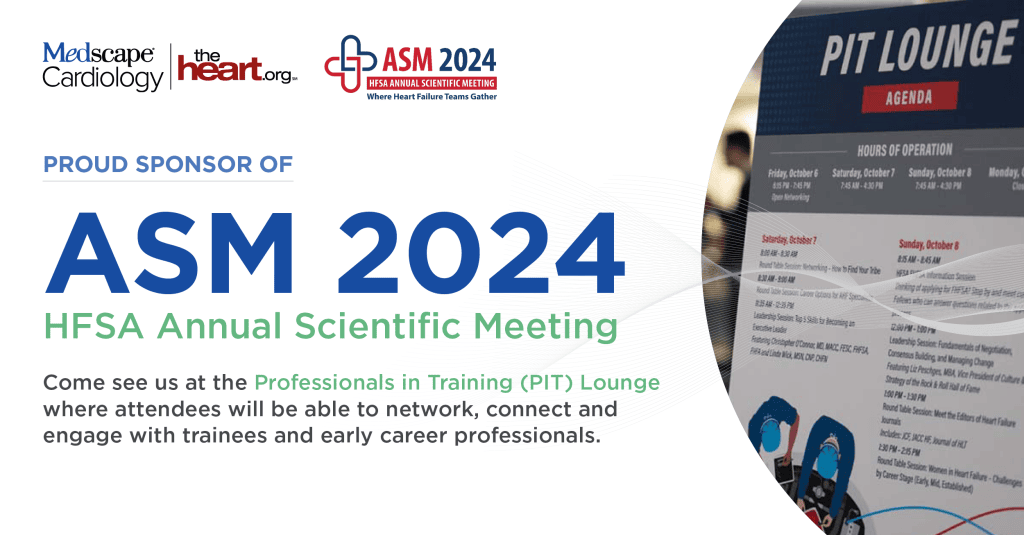
HFSA will kick off at the end of September, and Medscape is proud to support the careers of young clinicians through the sponsorship of the Professionals in Training Lounge.
“Providing resources and support for young cardiologists is important to us. Through our sponsorship at HFSA, we continue our mission to provide clinicians with the best resources and information throughout their professional lives. We can not wait to see the amazing things these young professionals will accomplish,” said Margaret Harris, PhD, Director, Clinical Strategy at Medscape Education.
The Professionals in Training Lounge is an educational area within the HFSA exhibit hall where clinicians can network with fellow attendees, participate in learning sessions on career development and professional growth, and recharge (themselves and their phones).
In addition to our support of young cardiologists, Medscape will be hosting three educational symposia and presenting three posters during the conference. The posters showcase the impact of programs on topics including heart failure, hypertrophic cardiomyopathy, and infiltrative cardiomyopathy.
The posters can be accessed here: Medscape Education’s Impact at HFSA
- Advances in SGLT Inhibition for Acute Decompensated HF: Virtual CME Improves Physicians’ Knowledge and Competence
- Hypertrophic Cardiomyopathy Patient Encounters: Virtual Continuing Education Improves Patient-Clinician Communication and Evidence-Based Practice
- Virtual Simulation-Based Continuing Medical Education Improves Management of Patients With Infiltrative Cardiomyopathy
For more information on Medscape’s support of young clinicians or cardiology education, please contact David Anderson.
This content was provided by Medscape Education
Company Details

Latest Content from Medscape Education
#ShortenTheJourney
For the millions of people living with a rare disease, the path to a diagnosis (if ever received) is often a long and frustrating odyssey. This delay is frequently driven…
Why We Must Stop Normalizing the “Pregnancy Itch”
In the world of rare diseases, success is often measured by the speed of diagnosis. However, for women facing rare liver conditions like Intrahepatic Cholestasis of Pregnancy (ICP), the medical…
The Greatest Form of Caring: Medscape’s Commitment to Advancing Cardiovascular Health
A February Focus on the Heart While February is known as the month of love, it is also National Heart Month, a time for highlighting the importance of cardiovascular health….
AI, Agility, and Connected Impact at Alliance 2026
Join the Medscape team in Atlanta, February 16–19, 2026, as Alliance celebrates 50 years of excellence in continuing education for health professionals. We’re bringing our 3 decades of experience in…
Why Sleep Health is the Missing Link in Women’s Wellness
While obstructive sleep apnea (OSA) affects approximately 32% of US adults—nearly 80 million people—it remains an “epidemic hiding in plain sight”. Perhaps most staggering is that 90% of women with…
The Heart and Mouth Connection Every Woman Needs to Know
For decades, modern medicine has treated the mouth and the body as separate entities. But for Dr. Nieca Goldberg, a renowned cardiologist, and Dr. Maria Ryan, Chief Clinical Officer at…
Uncovering Inequities in Alzheimer’s Disease Screening and Care
On December 5, MAPS hosted an educational webinar exploring recent research in Alzheimer’s disease (AD) screening, testing, and treatment. Experts from Komodo Health and Medscape shared findings from their…
Where Are We Today With Artificial Intelligence (AI) in Rare Disease Diagnosis and Care?
Discover how AI-powered tools are transforming rare disease diagnosis, patient care, and clinical decision-making.
Does Rare Disease Education Work?
For a child with a rare disease, a doctor’s continuing education can end a years-long diagnostic odyssey and unlock access to vital care.
From Genetic Puzzles to Precision Therapeutics
How was a new rare disease discovered through Singapore’s Undiagnosed Disease Program? And how will technology allow us to change how we discover rare diseases in the future? Read more…