
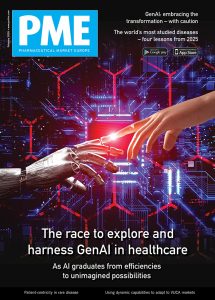



The future of heart health with AI-powered devices and treatment approaches
March 28, 2025 | #MedscapeEducation #AICardiology
Artificial intelligence (AI) is revolutionising the field of cardiology, offering new hope for patients with cardiovascular disorders. AI is no longer futuristic, it’s a real-world tool, transforming patient care and outcomes.

One of the key areas where AI is making a significant impact is in the early detection of cardiovascular diseases (CVD). Traditional methods often fail to diagnose CVD before symptoms appear, leading to delayed treatment and poorer outcomes. AI, however, can analyse vast amounts of data from electrocardiograms (ECGs) and other diagnostic tools to identify early signs of heart disease that might be missed by human eyes, which improves diagnostic accuracy and patient outcomes.1
Personalising cardiology treatment
AI also plays a crucial role in personalising treatment plans. By analysing patient data, AI can help doctors tailor treatments to individual needs, ensuring that each patient receives the most effective therapy. This personalised approach is particularly beneficial in managing complex conditions like heart failure, where treatment needs to be adjusted frequently based on the patient’s response.
AI-powered digital devices
The use of wearable and portable devices is another exciting development in AI cardiology. These devices, such as smartwatches and portable ECG monitors, enable continuous monitoring of heart health, providing real-time data to both patients and healthcare providers. This continuous monitoring can lead to early intervention and better management of chronic conditions, ultimately reducing hospitalisations and improving quality of life.2
Effective AI integration in healthcare
Despite these advancements, there are still significant challenges to overcome when it comes to getting healthcare professionals confident about realising the full potential of these AI-powered technologies and tools. Healthcare professionals already face an exponential rise in medical information which is doubling at least every 73 days.3 Furthermore, the integration of AI into healthcare systems requires robust data privacy measures and regulatory oversight to ensure patient safety and data security.4
Fully and safely realising AI capabilities
AI is poised to transform cardiology by enhancing early disease detection, personalising treatment and improving overall care quality. As technology continues to evolve, the potential for AI to improve outcomes for patients with cardiovascular disorders is immense; however, ongoing education is needed in its widespread adoption to ensure it is being utilised to its full capabilities. The future of cardiology is bright, with AI leading the way towards more efficient, accurate and personalised care.
[1] Attia, Z.I., et al. (2019). ‘An artificial intelligence-enabled ECG algorithm for the identification of patients with atrial fibrillation during sinus rhythm: a retrospective analysis of outcome prediction’, The Lancet, 394(10201), pp. 861–867. doi: 10.1016/S0140-6736(19)31721-07.
[2] Khunte, A., et al. (2023). ‘Detection of left ventricular systolic dysfunction from single-lead electrocardiography adapted for portable and wearable devices’, NPJ Digital Medicine, 6(1), p. 124. doi: 10.1038/s41746-023-00869-w.
[3] Koenig, H.G. (2012) ‘Religion, spirituality, and health: The research and clinical implications’, International Scholarly Research Notices, 2012, pp. 1–33. doi: 10.5402/2012/278730.
[4] Chustecki M. Interact J Med Res. 2024;13:e53616; Davenport T, et al. Future Healthc J. 2019;6:94-98; Khera R, et al. J Am Coll Cardiol. 2024;84:97-114; Khera R, et al. JAMA. 2023;330:2255-2257.
This content was provided by Medscape Education
Company Details

Latest Content from Medscape Education
Getting in-sync with Public Health at SYNC 2024
Medscape Education is bringing its public health efforts to Washington, DC for the SYNC conference on HIV, HCV, STIs, Harm Reduction, and LGBTQ health. During the conference, Lindsey will present...
Medscape Education and KDIGO Nephrology Collaboration Accelerates Improvements to Patient Care
Ahead of the 61st European Renal Association (ERA) Congress, Medscape Education and KDIGO (Kidney Disease: Improving Global Outcomes) announce an educational collaboration through a series of webinars to improve anemia-related...
Medscape Brings Impact and Data to ESPGHAN
The ESPGHAN Congress in Milan was full of impact as Medscape Education Global presented 5 scientific posters examining the outcomes of their education. The posters detailed the impact Medscape Education...
Empowering Nurses Through Education
Nurse education is powerful and makes an impact.
Pioneering Paths: Women Leadership in Rare Disease
Rare diseases are often thought of as affecting one in 100,000 or one in 1,000,000 people, and that is true for some conditions. But there are many rare diseases that...
TRANSFORMING CME IMPACT: MEDSCAPE’S GAME-CHANGING APPROACH
It’s time for the CME industry to evolve. During recent years, access to data, modern technologies, and methodologies have allowed for deeper analysis of data and a better understanding of...
Why Women in Medicine Should Embrace Social Media
Of course social media has its downside. But online platforms are a powerful tool for women in medicine in terms of forming communities, fighting misinformation, amplifying one another, and galvanizing...
Exceptional Impact Presented at ECCMID 2024
The ECCMID conference in Barcelona, Spain marked the start of Medscape’s publication season in Europe. With three posters being presented at the conference, Medscape shared highlights from the powerful impact...
Showing Deep Expertise at ONS
The Medscape Oncology team will be connecting with the oncology nursing community this week in Washington, DC for the ONS Congress 2024. Medscape Oncology has deep expertise in the oncology...
MEDSCAPE’S NEW AGE OF CERTAINTY FOR CME
The CME industry is changing. More than ever, activities need to be prioritized and measured to increase their impact on patient outcomes. Improving patient outcomes is the core objective for...