



The Need for and Impact of Rare Disease Education
February 28, 2023 | Medscape, Rare Disease Day, medical education, rare diseases
Physicians are often told that when they hear hoofbeats, think horses, not zebras — to look for the most common cause of a patient’s symptoms first. While this advice may help them through most of their interactions, there are millions of patients worldwide whose health depends on their clinicians doing the exact opposite — considering zebras, and looking for rare diseases.
While rare diseases are individually rare, they are collectively common, affecting an estimated 263 to 446 million people1 worldwide. For most, the road to diagnosis is a long one, with the mean time to diagnosis stretching to 5-7 years, but sometimes more than 10 years.2-5 Along the way, these patients may be subjected to pain, worsening of symptoms, unnecessary diagnostic tests, and ineffective treatments.
To combat the challenges faced by clinicians, more education is needed, particularly as clinicians move past medical school and residency and into practice. In a survey of almost 1000 clinicians, the prevalence of rare diseases was underestimated by 50 to 500 times as compared with current European or US prevalence definitions; and almost two-thirds of clinicians said they never or rarely see patients with rare diseases.
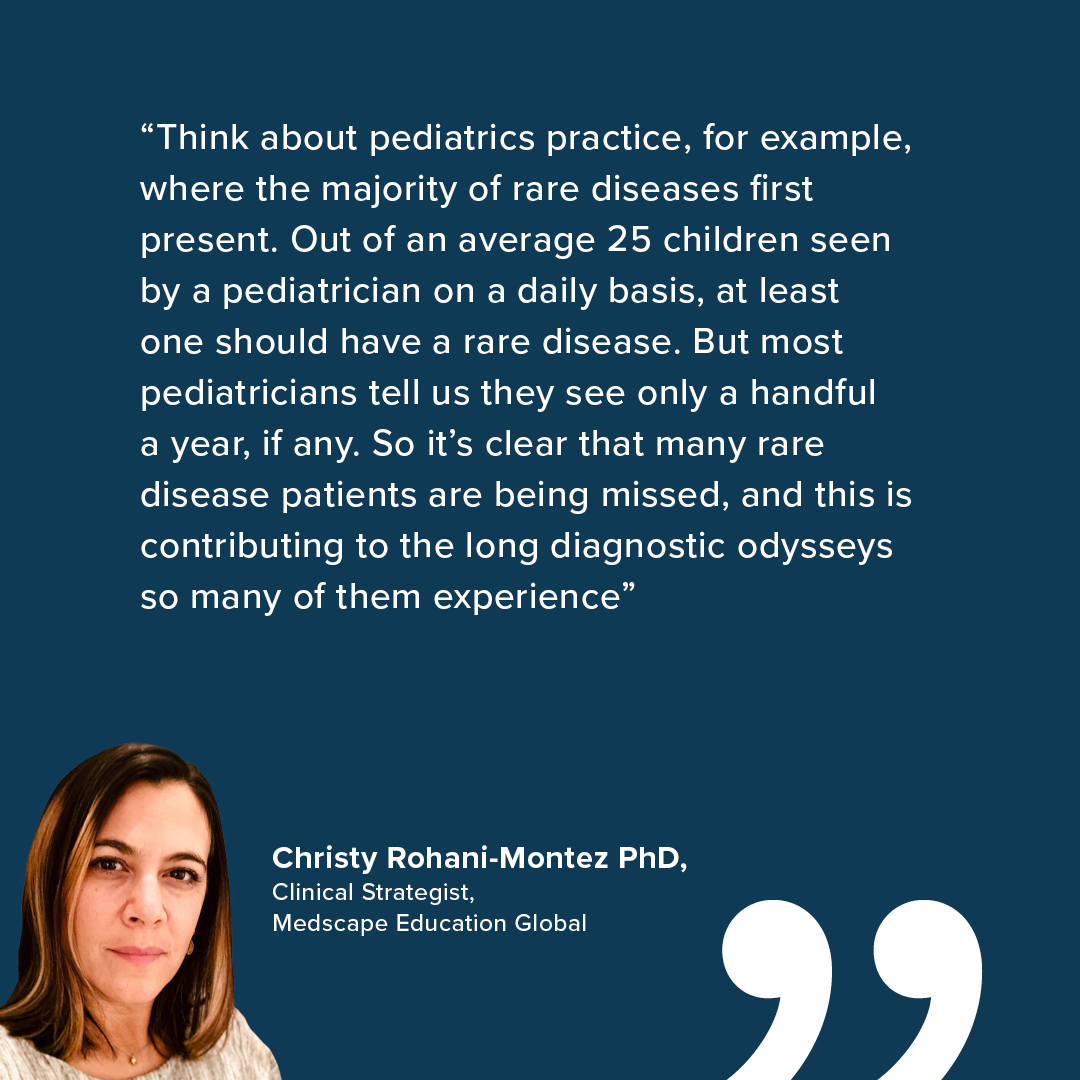
The data show that not only do clinicians want and need education on rare diseases, but continuing medical education (CME/CE) on Medscape.org has a significant impact on clinicians’ knowledge and competence.
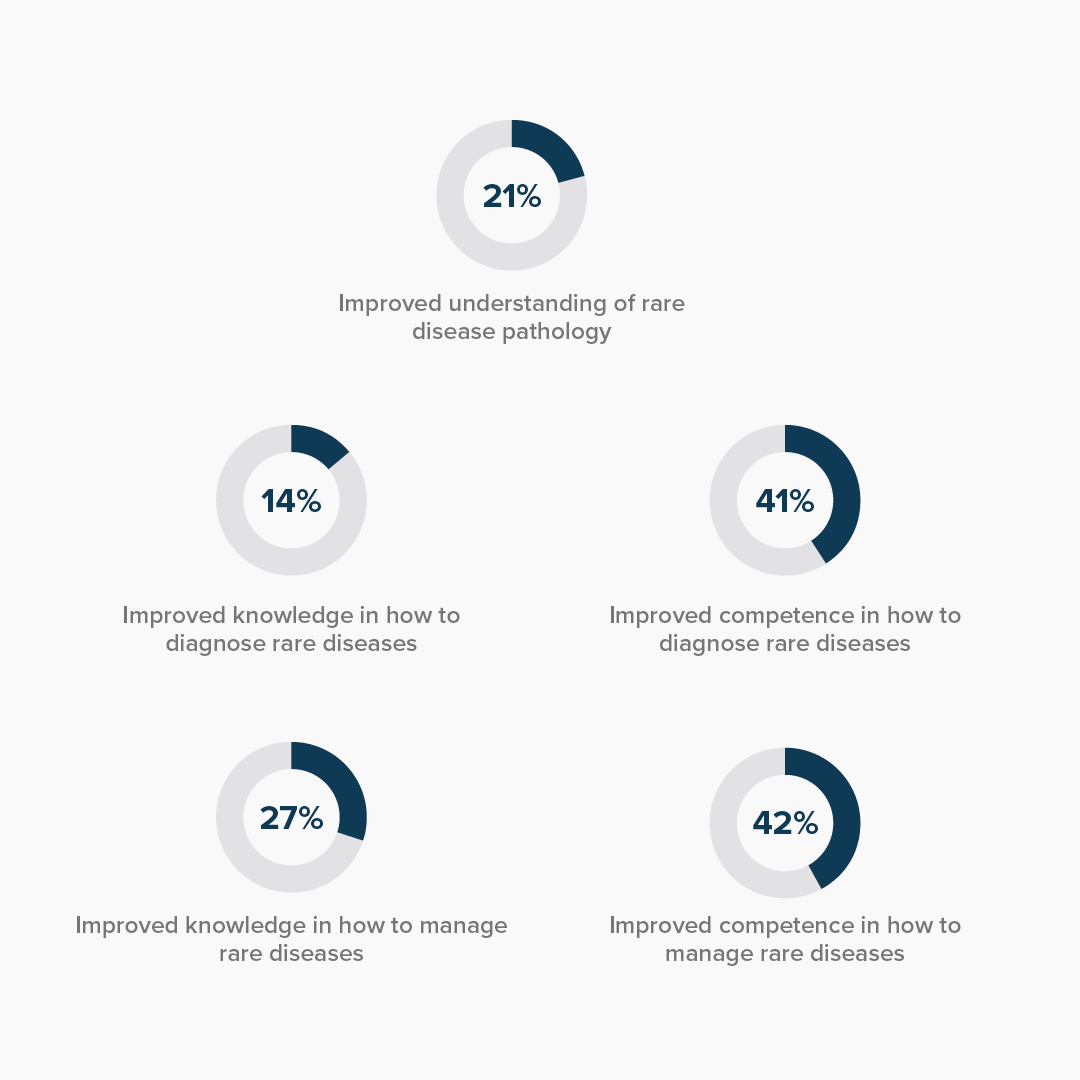
Between 2018 and May 2021, more than 245,000 unique clinicians from around the world engaged in rare disease educational activities on Medscape.org. These physicians had measurable improvements in their knowledge and competence after participating in the activities, as measured by their ability to correctly answer relevant questions pre versus post education, including:

Non-physicians saw similar increases in knowledge and competence, including
Most importantly, this means that 676,000+ patient visits per year now have physicians who are better prepared to identify patients who have a rare diseases, as measured by IQVIA data.
Education is having an impact, but more is needed to fully equip clinicians with the knowledge they need. Medscape Education is committed to developing the education clinicians need and provide it in a centralized location on Medscape.org. Pathways in Rare Disease is a destination page clinicians can return to at any time for the latest education across the spectrum of rare diseases.

To learn more about Medscape Education’s rare diseases education initiatives, please contact your Medscape Representative.
- Nguengang Wakap S, Lambert DM, Olry A, et al. Estimating cumulative point prevalence of rare diseases: analysis of the Orphanet database. Eur J Human Genet. 2020;28:165-173.
- Yan X, et al. Determining How far an adult rare disease patient needs to travel for a definitive diagnosis: a cross-sectional examination of the 2018 National Rare Disease Survey in China. Int J Environ Res Public Health. 2020;17:1757.
- Engel PA, et al. Physician and patient perceptions regarding physician training in rare diseases: the need for stronger educational initiatives for physicians. J Rare Disord. 2013;1:1-15.
- Global Genes. Accurate diagnosis of rare diseases remains difficult despite strong physician interest. 2014. Accessed January 18, 2023. https://globalgenes.org/2014/02/20/accurate-diagnosis-of-rare-diseases-remains-difficult-despite-strong-physician-interest-2/
- Marwaha S, et al. A guide for the diagnosis of rare and undiagnosed disease: beyond the exome. Genome Med. 2022;14:23.
This content was provided by Medscape Education
Company Details

Latest Content from Medscape Education
#ShortenTheJourney
For the millions of people living with a rare disease, the path to a diagnosis (if ever received) is often a long and frustrating odyssey. This delay is frequently driven...
Why We Must Stop Normalizing the “Pregnancy Itch”
In the world of rare diseases, success is often measured by the speed of diagnosis. However, for women facing rare liver conditions like Intrahepatic Cholestasis of Pregnancy (ICP), the medical...
The Greatest Form of Caring: Medscape’s Commitment to Advancing Cardiovascular Health
A February Focus on the Heart While February is known as the month of love, it is also National Heart Month, a time for highlighting the importance of cardiovascular health....
AI, Agility, and Connected Impact at Alliance 2026
Join the Medscape team in Atlanta, February 16–19, 2026, as Alliance celebrates 50 years of excellence in continuing education for health professionals. We’re bringing our 3 decades of experience in...
Why Sleep Health is the Missing Link in Women’s Wellness
While obstructive sleep apnea (OSA) affects approximately 32% of US adults—nearly 80 million people—it remains an "epidemic hiding in plain sight". Perhaps most staggering is that 90% of women with...
The Heart and Mouth Connection Every Woman Needs to Know
For decades, modern medicine has treated the mouth and the body as separate entities. But for Dr. Nieca Goldberg, a renowned cardiologist, and Dr. Maria Ryan, Chief Clinical Officer at...
Uncovering Inequities in Alzheimer’s Disease Screening and Care
On December 5, MAPS hosted an educational webinar exploring recent research in Alzheimer’s disease (AD) screening, testing, and treatment. Experts from Komodo Health and Medscape shared findings from their...
Where Are We Today With Artificial Intelligence (AI) in Rare Disease Diagnosis and Care?
Discover how AI-powered tools are transforming rare disease diagnosis, patient care, and clinical decision-making.
Does Rare Disease Education Work?
For a child with a rare disease, a doctor’s continuing education can end a years-long diagnostic odyssey and unlock access to vital care.
From Genetic Puzzles to Precision Therapeutics
How was a new rare disease discovered through Singapore’s Undiagnosed Disease Program? And how will technology allow us to change how we discover rare diseases in the future? Read more...