




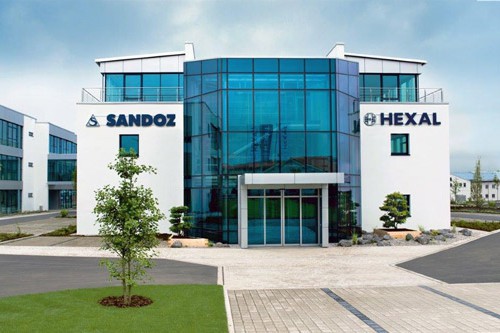
Sandoz has announces a major development, manufacturing and commercialisation collaboration agreement with Shanghai Henlius Biotech, marking another significant step to broaden patient access to high-quality biosimilar medicines worldwide.
The agreement paves the way for the two companies to collaborate on up to ten biosimilars, with an initial bundle of assets already agreed. Under its terms, Sandoz will have global commercialisation rights for agreed biosimilar assets outside China, while Henlius will be responsible for development and manufacturing. The collaboration agreement is milestones-based for a total consideration of up to $322m, with near-term payments associated with the initial assets that could reach up to $100.5m.
Richard Saynor, CEO of Sandoz, said: “By strengthening our collaboration with Henlius through this strategic agreement, one of our largest ever in biosimilars, we are not only underlining our commitment to patients but also taking another step towards capturing a significant share of the unprecedented biosimilar market opportunity that lies ahead.”
One of the initial assets under the agreement will be a proposed cetuximab biosimilar, which is in clinical development. The reference medicine, Erbitux (cetuximab), is an epidermal growth factor receptor-targeted oncology therapy used to treat selected patients with metastatic colorectal cancer and squamous cell carcinoma of the head and neck.
Colorectal cancer is the third most commonly diagnosed cancer and the second leading cause of cancer death worldwide, while close to one million new cases of head and neck cancer are reported annually, according to the latest estimates.
In addition, the collaboration also covers a proposed evolocumab biosimilar used in patients with hypercholesterolaemia and for reducing the risk of major cardiovascular events in adults at increased cardiovascular risk, and a proposed belimumab biosimilar intended for the treatment of active systemic lupus erythematosus in adults and children and active lupus nephritis in eligible patients, in addition to standard therapy.
There is also an option for a recombinant human hyaluronidase to be used in the development of a subcutaneously administered biosimilar, which increases the dispersion and absorption of other injected medicines. The proposed evolocumab biosimilar and recombinant human hyaluronidase are in technical development, while belimumab is in early development.
Overall, the collaboration expands Sandoz’s biosimilar pipeline to 39 assets, with the potential for that to increase to up to 46, and builds on the existing collaboration between the two companies, first established in April 2025 through a global collaboration agreement for oncology therapy ipilimumab.