

From Booth to Bavaria: A Recap of Impact at ESC 2026
September 7, 2026 | CME, Cardiology Education, IME, Patient Impact, cardiology
We have officially wrapped up another year at ESC. For Medscape Education, 4 days on the ground confirmed what 3 decades of cardiovascular education have already shown: when independent, evidence-based education meets clinicians where they are, we are able to change clinical behavior and practice.
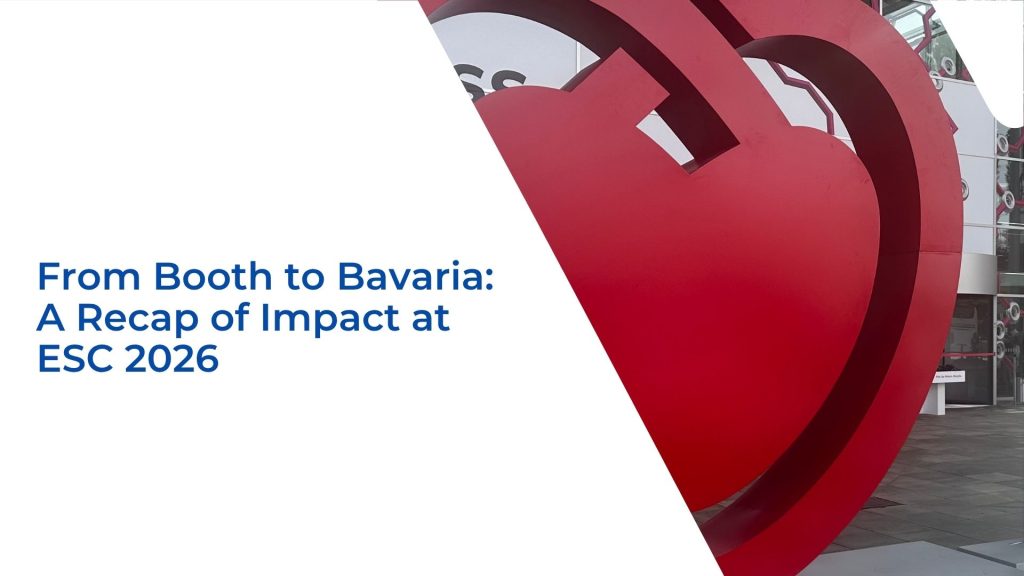
Across the 4 independently developed symposia, we welcomed 1,300+ cardiologists and cardiovascular specialists.
Add to that a steady stream of visitors to the booth, some who were experiencing Medscape AI for the first time, including one of our members from Sri Lanka who noted, “The new AI tool looks great. It gives a lot of versatility to users so they can work through their clinical problems on Medscape and get a better, wider opinion. I think this new AI tool might be a game-changer.”
Beyond the booth, we hosted an invite-only evening at the Hofbräuhaus where Carolyn Lam, MBBS, PhD and Manesh Patel, MD led a fireside chat on AI’s role in cardiovascular care, ESC 2026 becomes another key event and part of a much longer story about closing gaps in cardiology education.
Why does it matter?
This congress didn’t happen in isolation. It builds on a foundation of 695,882 cardiology HCPs reached globally and 387,772 cardiologist learners engaged year-round, work that translates into measurable outcomes: 93% of learners report our activities improve patient care, and advanced-outcomes programming shows a 46% improvement in knowledge and competence.
ESC 2026 was a chance to put that evidence into practice, in person, with the clinicians shaping the future of cardiovascular care.
Source: Medscape Internal Data 2026
For more information on Medscape’s cardiology education, please reach out to your Medscape Education representative.
This content was provided by Medscape Education
Company Details

Latest Content from Medscape Education
Redefining Pediatric Epilepsy Care: Why We Must Move Beyond Symptom Suppression
For families navigating pediatric epilepsy, the condition dictates every moment of their lives. The constant, crippling “anticipatory anxiety” of when the next seizure might hit transforms daily activities like grocery…
What 90 Minutes of Live AI Case Practice Revealed About Physician Readiness
At EHA 2026 in Stockholm, 425 hematologists and oncologists attended an independent, 90-minute Medscape symposium on the practical and ethical use of AI. The format was case-based. The faculty presented…
Rethinking Prenatal Migraine Management: The Clinical Case for Neuromodulation
Disclaimer: Management of migraine in pregnancy typically combines lifestyle strategies, nonpharmacologic approaches, selected pharmacologic options when benefits outweigh risks, and, increasingly, noninvasive neuromodulation technologies.
Advancing the Frontier of Cancer Care: Medscape’s Mission at ESMO 2026
For more than 30 years, Medscape Education’s dedication has been centered on a single goal: building independent, accredited oncology education that improves patient outcomes. This year, at the European Society…
Using AI Responsibly in CME Outcomes Reporting
ICYMI at #AIS2026: using AI in outcomes reporting is a lot like onboarding a research assistant. There’s real efficiency in having the help, and a significant amount of background teaching,…
The Pulse of AI Innovation: From More Data to Better Care
At the European Society of Cardiology (ESC) Congress, two of cardiology’s most influential voices sat down to talk about artificial intelligence at Medscape’s ‘The Pulse of AI Innovation’ event: Professor…
Next-Level Clinical Practice, Real-World Impact: Evolving Patient Simulation with the Clinical Readiness Studio
Healthcare is changing rapidly, bringing unprecedented data and complex treatment pathways to the point of care. Clinical mastery requires active experience, the confidence to make decisions when real patient outcomes…
Medscape Sponsors The John Ritter Foundation’s “Evening From the Heart”
When independent, evidence-based education directly connects with clinicians at the point of care, clinical practice changes. Driven by this vital mission, Medscape Education was proud to sponsor The John Ritter…
From Booth to Bavaria: A Recap of Impact at ESC 2026
We have officially wrapped up another year at ESC. For Medscape Education, 4 days on the ground confirmed what 3 decades of cardiovascular education have already shown: when independent, evidence-based…
Why Modern Dermatology Demands Curiosity Over Precision
In the high-stakes world of healthcare research and product development, success has long been measured by rigid definitions of precision and predictable trajectories. However, as Dr. Hawa Dumbuya, Director of…