




Clinical trials explained: Why branding matters…
November 7, 2023 |
With nearly a decade’s experience supporting clinical trials, find out why we think humanising trials through design is so important.
Let us ask you a question.
What percentage of clinical trials do you think meet their recruitment targets on time?
Half? Maybe less?
Well, in fact it’s a lot less because that figure is typically around 15%. Which not only increases costs, but often delays results too. We know that joining a clinical study can be daunting for people, which is why it’s vital that patient perspective plays a part in helping to formulate the trial.
But trial branding can also play an important role.
Branding your trial can help to:
- Attract your target patient population and enable to you to connect with them at a deeper level
- Reduce possible participation-related anxiety by promoting credibility
- Build patient trust through the use of a consistent look and feel that they can follow throughout their trial experience
- Help to promote a feeling for patients that they are a part of something meaningful
This approach also supports HCPs with effective study delivery – all the way from recruitment through to retention, with patients feeling overall more engaged throughout.
And it is because of this that a strong partnership with a healthcare communications agency is essential; not only will it help to determine the effectiveness of the study branding, but also the subsequent creation of patient and HCP support materials.
With nearly a decade of experience supporting clinical trials, Cuttsy+Cuttsy recognise the importance of taking the time and care to uncover the heart and soul of a study. So, while it can be tempting to rush through the branding stage and jump straight to the delivery of finished materials such as recruitment posters and study aids, our experience shows that systematically conducting a variety of research provides an understanding of patients’ rational and emotional concerns. This enables us to help develop a meaningful, patient-centric branding model that truly resonates. We use this to steer our thinking — from a trial’s purpose, through contextual considerations about what patients need and how they might benefit, to its corresponding ‘personality’:
Our Branding Heart
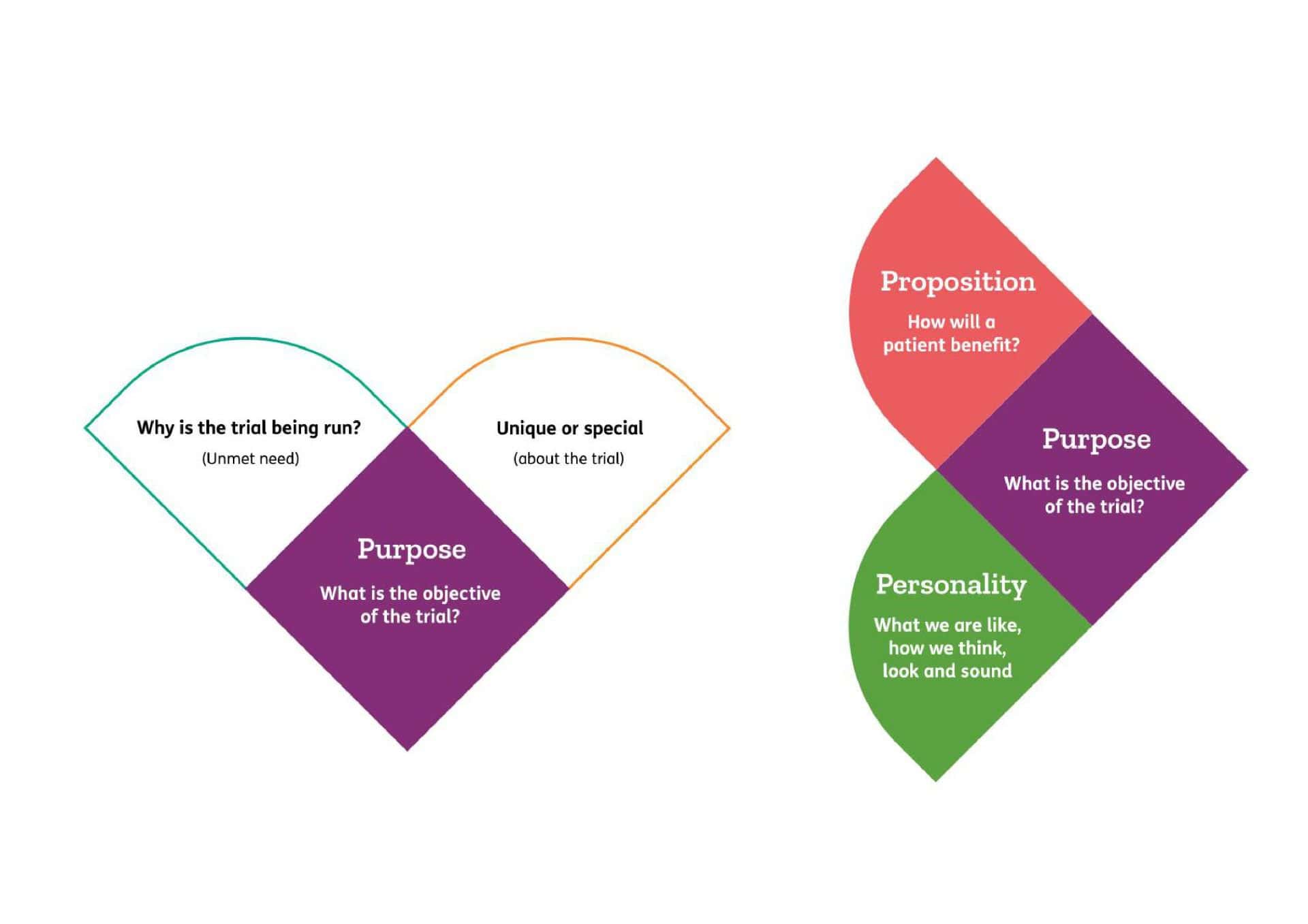
Whatever stage you are at with your clinical study, it is always useful to apply the branding model. Trials that are developed with true insights can improve a participant’s study journey, encourage recruitment and retention, and hopefully provide better patient outcomes. Ultimately, this will always be why we do what we do.
If you would like to work with a healthcare communications agency that will put patients at the heart of your next clinical trial, let’s talk.
This content was provided by Cuttsy + Cuttsy
Company Details

Latest Content from Cuttsy + Cuttsy
Permission to pause: making treatment breaks part of the cancer care conversation
Exploring how empathetic, patient-centred communication can make planned treatment breaks easier to discuss as part of cancer care.
A seat at the table: what the EU HTA reforms really ask of patient involvement
The EU HTA reforms give patients a formal role in assessing new medicines, but meaningful involvement requires more than simply offering them a seat at the table.
Why faster trials make participant understanding more important than ever
As clinical trials accelerate, clear, accessible consent is essential to help participants understand, engage with and remain in a study.
Older trial participants reject bad design, not technology
Older trial participants aren’t rejecting digital technology — they’re rejecting poorly designed, inaccessible experiences that make participation harder.
5 key takeaways from the Patient Centricity and Engagement Conference
Key takeaways from the Patient Centricity and Engagement conference, exploring how trust, inclusion and meaningful partnership can help turn patient engagement from intention into action.
It’s time to stop calling adverse events ‘manageable’
A single word—manageable—can minimise the real burden of treatment side effects, and it’s time clinical trial communication reflected patients’ lived experience more clearly.
The value: why localisation pays off across global trials
Strong localisation reduces trial friction, supports site teams, improves participant understanding and helps global studies run more smoothly, fairly and efficiently.
The solution: Good localisation doesn’t feel translated
Learn what good localisation looks like in clinical trials and why participant-facing materials should feel naturally relevant, culturally appropriate and easy to understand across every market.
Healthcare information is becoming easier to access. Trust isn’t.
Sharing key insights from NEXT Pharma Summit on why trust, clarity and human-centred communication matter more than ever in healthcare.
It was never reluctance: What ASCO 2026 revealed about clinical trial recruitment
ASCO 2026 highlighted that low clinical trial recruitment is driven less by patient reluctance and more by gaps in awareness, communication, accessibility and patient education.