



From text to context: Helping patients see side effects clearly
March 30, 2026 | health information, health literacy, healthcare communications
Discover how thoughtful design, clear language, and structured visuals can transform overwhelming side effect information into accessible, actionable insights for patients in our latest Health Literacy series.
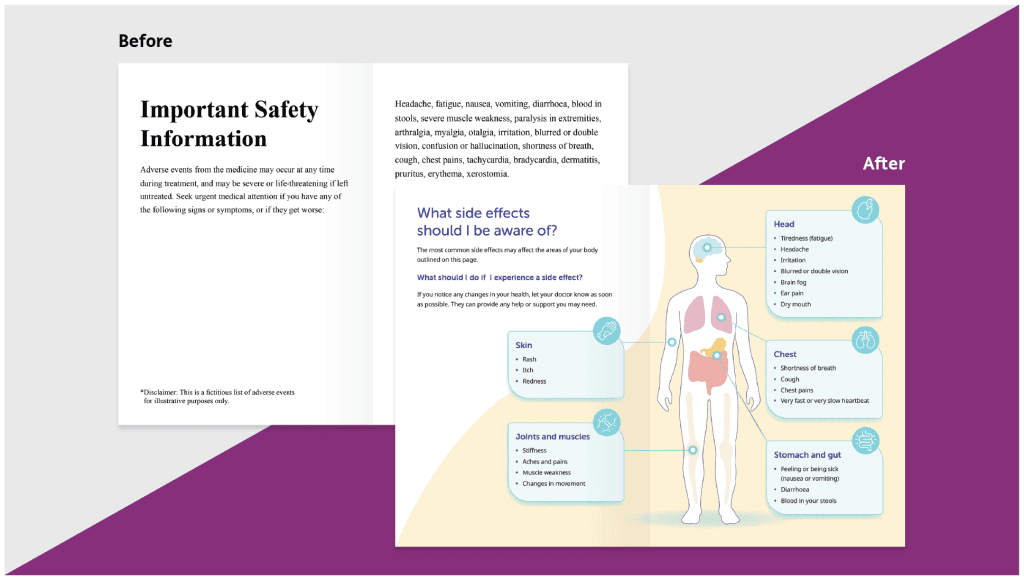
Our Health Literacy series continues, and this time we’re sharing another example of how thoughtful design, structure and language are essential to inform, educate and empower patients — this time in identifying side effects.
If you have read a patient insert for a medicine, or an informed consent form, you will know that side effects lists are often long, confusing, and intimidating. This can make keeping track of what to look out for, and what to do about it, completely overwhelming.
But it doesn’t have to be. For example, our ‘before’ and ‘after’ examples below include the same information, presented in very different ways. And it’s often this that makes the greatest difference to patients: how clearly and accessibly information is communicated.
Before:
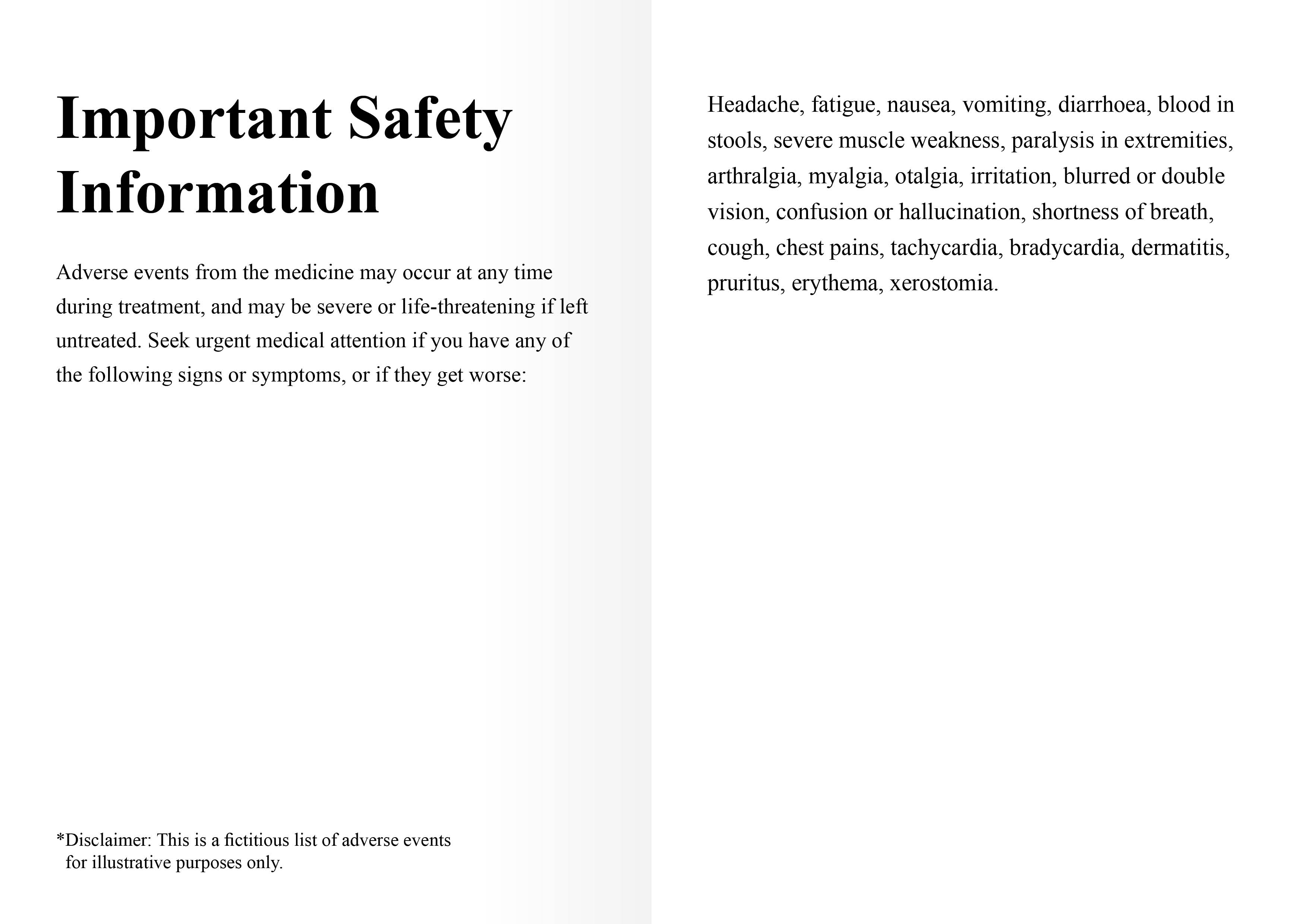
Safety information for patients included a dense, unformatted list of all potential side effects. The descriptions relied heavily on technical terminology, with no context, categories, or cues, making it difficult for readers to take away anything actionable.
After:
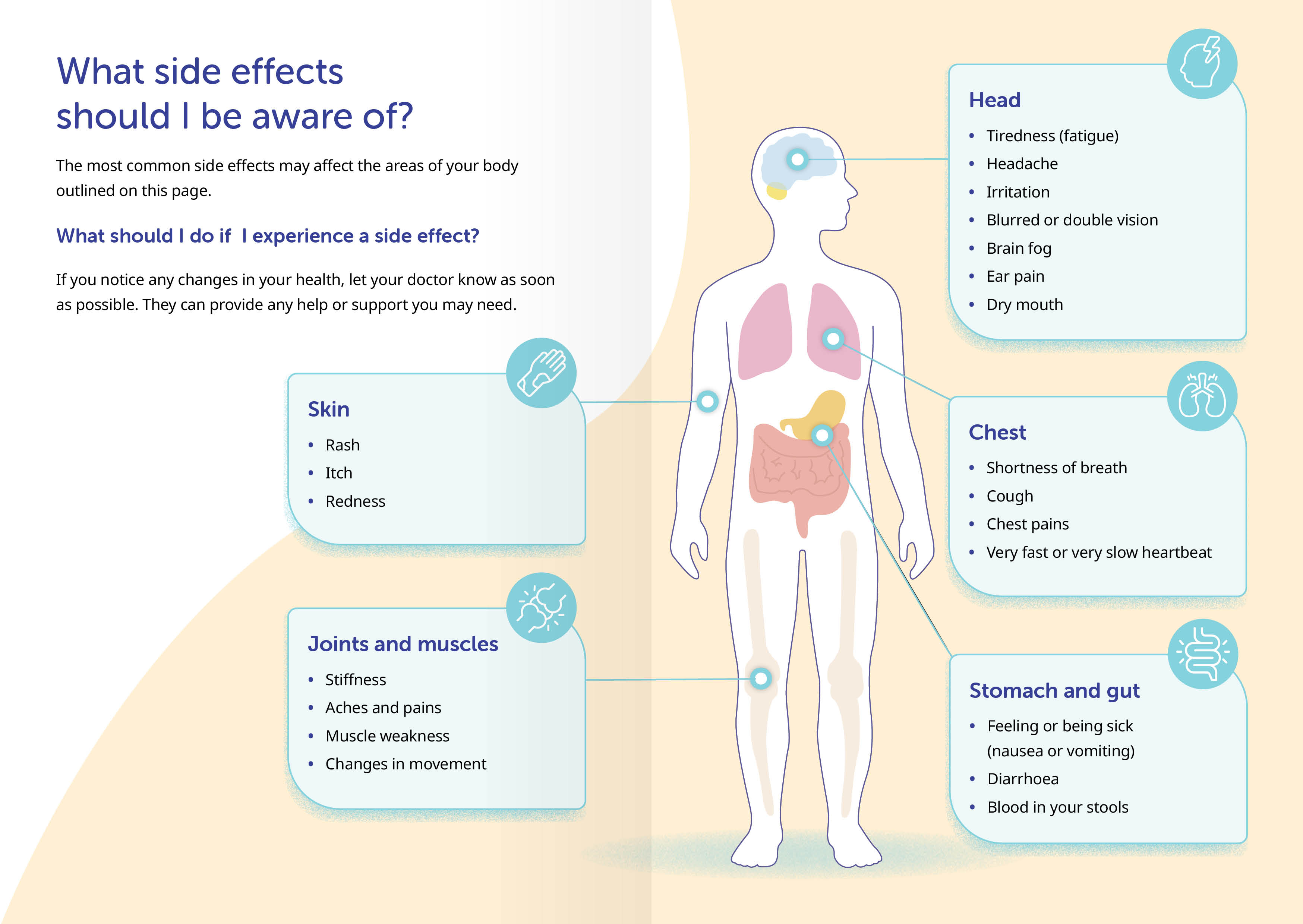
First, we translated all of the technical terms into lay language — “dry mouth” is just easier to process than “xerostomia”.
Next, we grouped everything by body system, so there’s no need to jump around the list for all related side effects.
Finally, we visualised each category on a silhouette, so readers know, at a glance, which body areas might be affected, and which specific changes to look out for.
By combining clear language and intuitive visuals, we’ve made potentially daunting side effect information easier to understand, recognise, and act on.
This content was provided by Cuttsy + Cuttsy
Company Details

Latest Content from Cuttsy + Cuttsy
The outcomes are already chosen. So when can patients really shape them?
Explore why involving patients early in Joint Scientific Consultations is critical to shaping the outcomes measured in clinical trials.
Long-term clinical trial engagement is a behavioural challenge – not just an informational one
Explore why long-term clinical trial engagement is a behavioural challenge, showing how proactive support from site teams can help participants stay connected, confident and committed throughout a study.
Patients are telling the truth — just not to you
Patients are often most honest outside the clinic—revealing vital insights that can help clinical trial teams build trust, improve participation and collect better data.
When what matters to patients is hard to measure
Patient-relevant outcomes sit at the heart of the EU HTA reforms, but ensuring they reflect lived experience requires you to look beyond what traditional clinical endpoints measure.
Permission to pause: making treatment breaks part of the cancer care conversation
Exploring how empathetic, patient-centred communication can make planned treatment breaks easier to discuss as part of cancer care.
A seat at the table: what the EU HTA reforms really ask of patient involvement
The EU HTA reforms give patients a formal role in assessing new medicines, but meaningful involvement requires more than simply offering them a seat at the table.
Why faster trials make participant understanding more important than ever
As clinical trials accelerate, clear, accessible consent is essential to help participants understand, engage with and remain in a study.
Older trial participants reject bad design, not technology
Older trial participants aren’t rejecting digital technology — they’re rejecting poorly designed, inaccessible experiences that make participation harder.
5 key takeaways from the Patient Centricity and Engagement Conference
Key takeaways from the Patient Centricity and Engagement conference, exploring how trust, inclusion and meaningful partnership can help turn patient engagement from intention into action.
It’s time to stop calling adverse events ‘manageable’
A single word—manageable—can minimise the real burden of treatment side effects, and it’s time clinical trial communication reflected patients’ lived experience more clearly.