


Health literacy… it’s not just plain English
December 18, 2017 | Patient-centric, Patient-centricity, data visualisation, health literacy, patient engagement, patient focus
In this day and age, you would think that clear communication would be second nature to us all, but this is not so. In our digital world misunderstanding and confusion can easily occur, especially when dealing with medical information.
Healthcare is complicated, full stop. Bursting with complicated language, random abbreviations, medical jargon and complex statistics, it is no wonder many people find health information so difficult to understand. This struggle becomes even more difficult when you are suffering from an illness or being treated for a chronic condition.
This is where health literacy plays a vital role. It ensures that patients understand the information they have been given but most importantly that they can act upon it. Defined as the communication of health information in ways that others can understand and act on, ‘health literacy’ is a crucial step in helping your patients make informed choices about their own health.
However, health literacy is not just about plain English, it is also about putting the right words into context and simple visualisation to ensure your target audience get the most out of the communication materials you produce.
In this article, we want to share with you some great examples that show when done well, how context and simple clear visualisation can really make a difference.
Blood Test Results
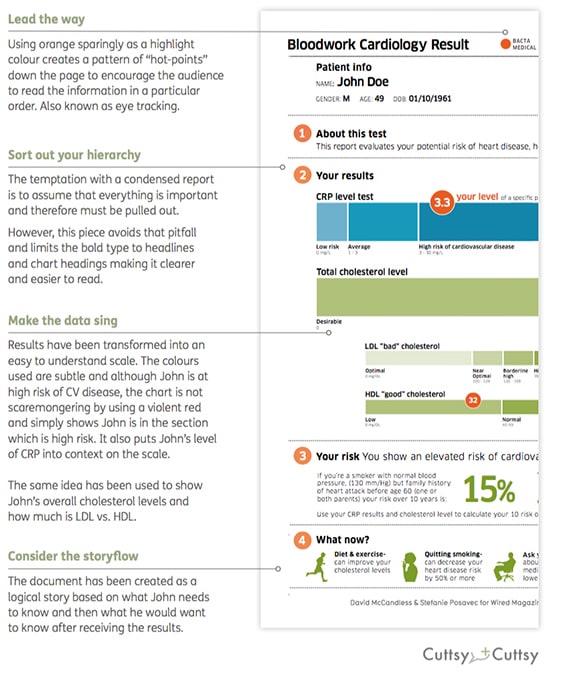
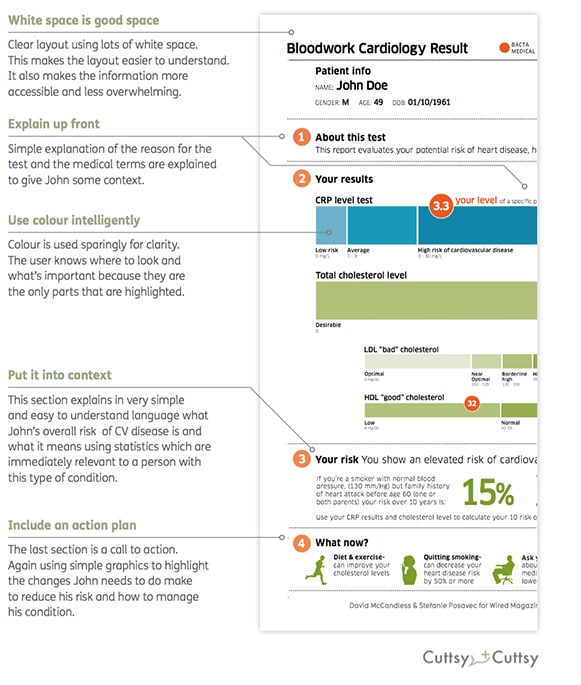
David McCandless, the author of Information is Beautiful and Knowledge is Beautiful, and Stefanie Posavec demonstrate how simple graphics can be used to explain complex medical information. Many of us have been on the receiving end of blood test results, only to be given a sheet of meaningless numbers and figures and told not to worry as everything is fine. But how do you really know everything is fine and there is nothing to worry about?
They took a complex blood test result and transformed it into something that is easy to read, understand and act on; all principles of health literacy.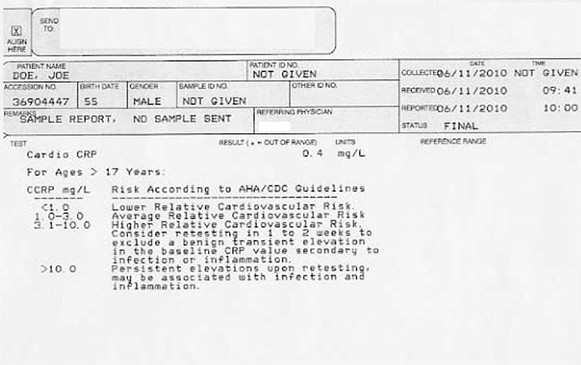
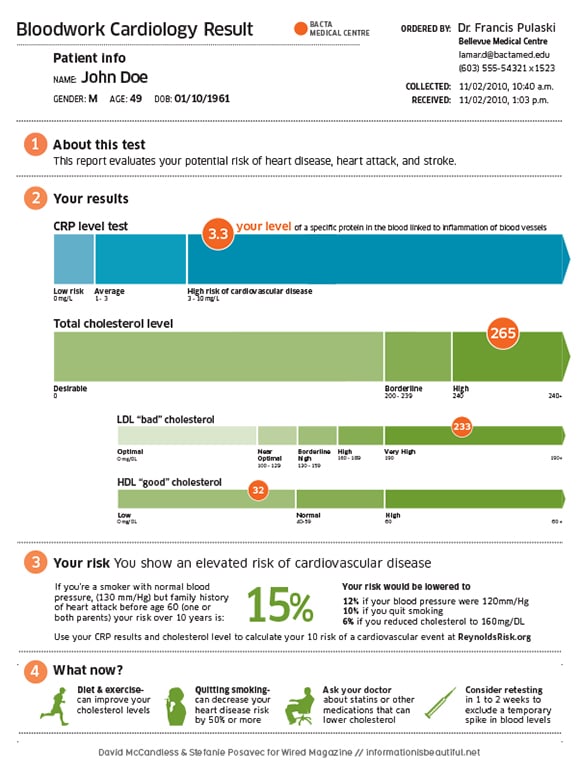
Blood Test Results – a breakdown
Blood Test Results mark 2
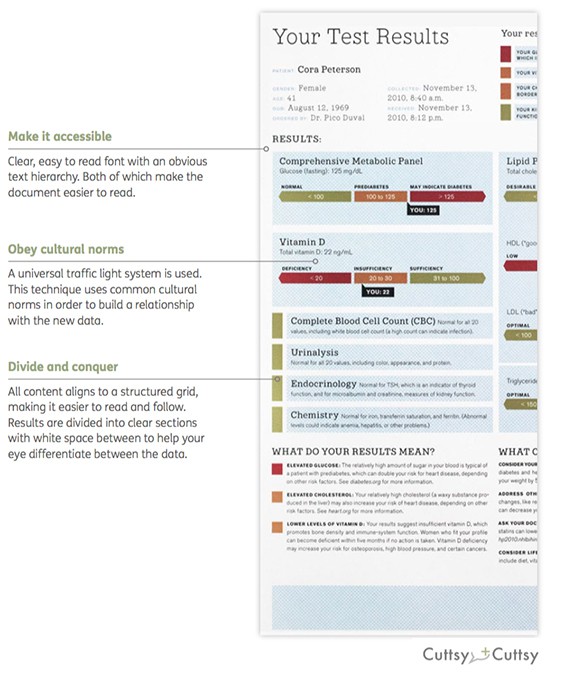
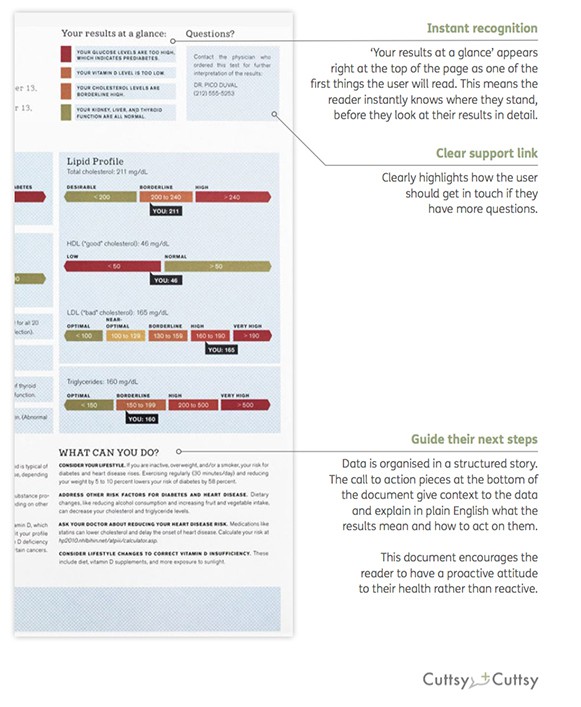
The second example we have chosen by Mucca Design takes another complex set of blood test results and transforms them into an understandable document. Along with clear and concise language, we like the way this example highlights the benefits of simple graphics to explain complex data.

Blood Test Results mark 2 – a breakdown
www.clinicaltrialsexplained.com
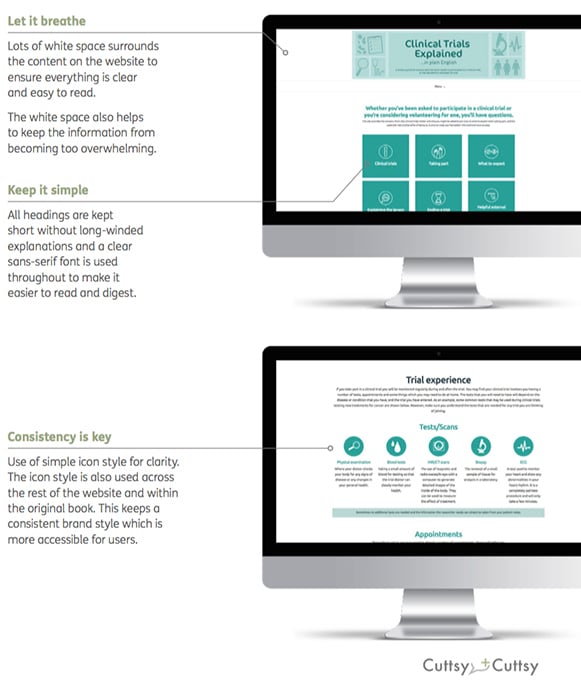
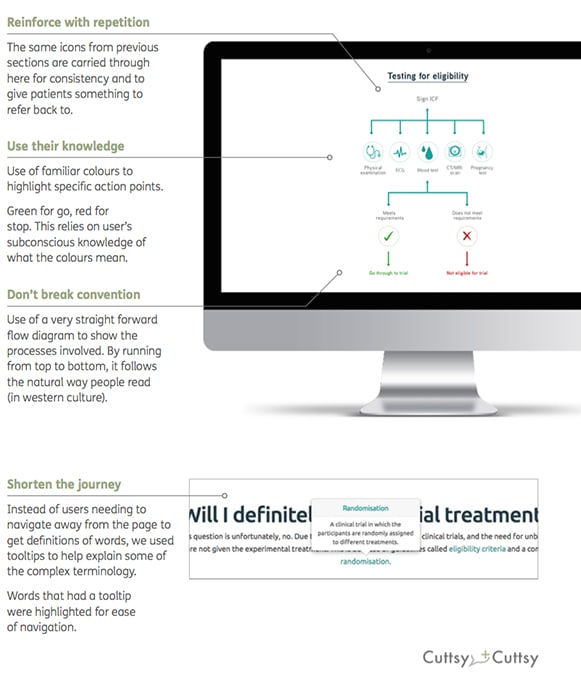
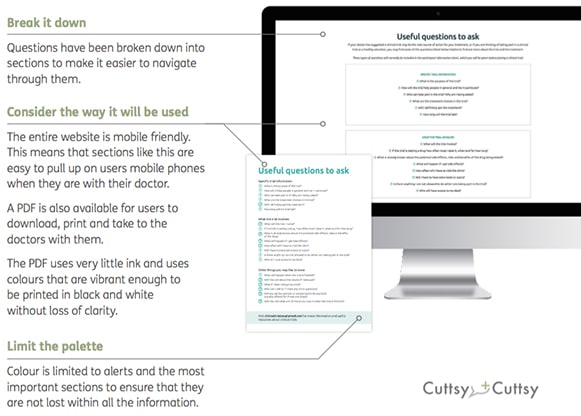
This is an example which we are really proud of. Following the success and endorsement by the Clinical and Contract Research Association (CCRA) of our e-book, we developed a supporting website. The website showcases how health literacy principles can be used successfully across different media to ensure information is understandable for all.
By keeping the website design clean and using splashes of colour for the icons and graphics alongside the use of simple language, we ensured that key points are not lost in a sea of information. 
www.clinicaltrialsexplained.com – a breakdown
Top 5 tips for creating great health literacy pieces
1) Write copy in plain English
2) Always provide context
3) Use clear visualisation and simple graphics
4) Use lots of white space for clarity
5) Include a call to action
A final word
As a healthcare communications agency we have a responsibility to take away the fear of the unknown and ensure patients understand the health information they have been given and when to act.
However, as we have highlighted in this article, understanding health information is not just about using plain English. Visualisation and putting the right words into context are key to maximising accessibility.
By using these principles, we can all help people feel more in control of the choices they make about their own health and actually make a difference to their lives. At the end of the day isn’t that what we all want as patients?
If you would like to find out more email us at letstalk@cuttsyandcuttsy.com
Authors: Dr Liz Walder and Sarah Gracey

Company Details

Latest Content from Cuttsy + Cuttsy
Cuttsy+Cuttsy welcomes three new experts to the team
Cuttsy+Cuttsy is happy to be welcoming three new people to the team this month.
The gap between hype and reality, what patients really say about weight loss drugs
Explore real patient conversations about weight loss drugs, uncovering challenges, support strategies, and the critical need for clear, reliable healthcare communication.
Why patient-centricity depends on site-centricity in clinical trials
Explore why patient-centricity in clinical trials relies on site-centricity, emphasising the need to design trials that empower site teams to better support patients.
From cloudy to clear: visualising complex data privacy information
Discover how clear communication principles can transform complex clinical research topics, as we conclude our Health Literacy series with a practical example on participant data transparency.
UK clinical trial regs are changing — here’s what’s happening
Discover the transformative updates to UK clinical trial regulations, effective from April 2026, and learn how they aim to enhance transparency, participant safety, and trial efficiency.
The invisible influence on trial retention: why caregivers must be part of the plan
Caregivers are vital to clinical trial retention, yet often overlooked—this article highlights their challenges, impact, and how to better support them.
Where it all began: why we wrote ‘The Site Factor’
Discover the story behind ‘The Site Factor’ and how understanding site teams’ experiences can transform clinical trials for participants and researchers alike.
From text to context: Helping patients see side effects clearly
Discover how thoughtful design, clear language, and structured visuals can transform overwhelming side effect information into accessible, actionable insights for patients in our latest Health Literacy series.
Why patient engagement must come first in rare disease trials
Explore why patient engagement is the cornerstone of successful rare disease trials, emphasising the importance of designing studies around the realities of patients' lives to build trust and improve outcomes.
New Cuttsy+Cuttsy research shows why site support matters more than ever
Cuttsy+Cuttsy's upcoming report, 'The site factor: Where protocol meets practice in clinical trials', delves into the critical role of site staff in clinical research, offering insights into their daily challenges,...